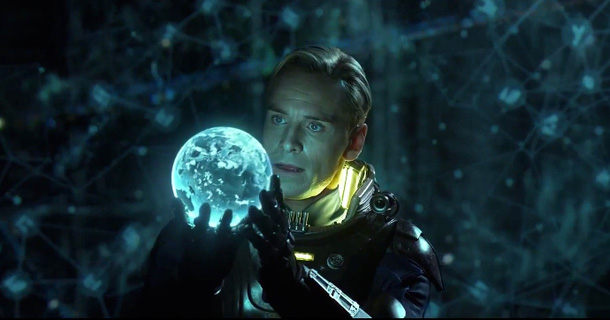
Showing posts with label Editorial. Show all posts

Editorial: The problem with origin stories

The first full trailer for Captain America has been unleashed on us, and, well, it looks OK. Cap is one of a slew of superheroes getting introduced to a cinemagoing audience this summer - the other major ones being Thor and Green Lantern - and this is the final of the headline three to get its own trailer. There have been murmurs of reshoots, which are always seen as a sign of certain doom, but actually are common, although the delay in the promotion of the film has been a bit surprising. Anyway, here it is:


So, it's set in World War II, which is a bit of a change from the normal superhero yarn, and the miniature Chris Evans looks funny, but really, doesn't this just look exactly the same as every other damn origin story we've seen over the last 10 years? I'm now getting totally bored of all these identikit narratives.

Sure, they each have their own variations, such as this one's period setting, but in terms of story beats and framework they are all exactly the same movie. How dull is that? There's always the first act showing the origin, the second as they get used to their new abilities, and the third where some villain arises and our new man in tights has to save to day.

Even Iron Man - held up as one of the best of the bunch - is achingly formulaic, and I actually quite like that one (it's grown on me a bit on home viewings, and I of course love Robert Downey Jr.). They all share the same flaws - i.e. the start is a bit slow as you're just waiting for the title character to show up, and the villain is poor because there's not enough time devoted to his evil schemes. Really, think back: name a superhero origin movie where the villain has been any good: Iron Man, Hulk, Spider-Man, Batman Begins, even Superman: The Movie had dull antagonists. (The original 1989 Batman wasn't an origin movie and hugely benefited from that in the villain stakes.)

Not all of those movies listed above are poor, by any means. I have a soft spot for Ang Lee's Hulk - it tries to do something different and mostly works - and Batman Begins is brilliant, while Superman is heavily flawed but still iconic. Of those, only Batman's origin section is truly compelling, however; the other films are only interesting for different reasons.

The fact is, by their very nature, origin films violate that old storytelling maxim, "start as far into the plot as you can". Cutting to the chase has led to many a great film, e.g. Star Wars, while doing the opposite can have dire consequences (Star Wars Episode I). These films all start right at the beginning, meaning that a lot of exposition that could be delivered much more efficiently (just see the opening of Avatar, say, for an example delivering essential character information quickly) is slowly, predictably dumped into your lap.

What's more, origin stories are never set up to be standalone films, and therefore are rarely completely satisfying on their own terms. They always just a great big tease for the planned sequel, which may or may not ultimately materialise (based on box office takings). It's symptomatic of the curse of blockbuster filmmaking nowadays - the studios are always seeking the next big franchise, and so every story has to be open-ended. The rare exceptions like Inception - which doesn't ask for a sequel and shouldn't get one - are the only films that will have long term shelf lives.

Never has this obvious setting-up-for-a-sequel been more transparent than with Captain America - full title Captain America: The First Avenger - as its main task is purely to introduce the character for superhero team-up The Avengers, due next year. The same is true of Thor. Can these films really hope to have their own identity, when their Marvel overlords are so intent to knit together a big cinematic mythos that apes the comics' labyrinthine interconnections? At least they've been confident enough to make interesting directorial choices - Joe Johnston directs Cap, Kenneth Branagh Thor. (Meanwhile, Martin Campbell of GoldenEye and Casino Royale fame helms DC Comics' competing Green Lantern, which from its trailer looks like a bizarre sci-fi take.)

Yes, I'll probably still watch all these movies, and hopefully I'll like at least some of them. Mainly I hope they manage stand out from the overpopulated superhero origin crowd.

Captain America is out 22 July in the US, 29 July in the UK; Thor 6 May/27 April in UK (yes, earlier!); and Green Lantern 17 June on both sides of the pond.

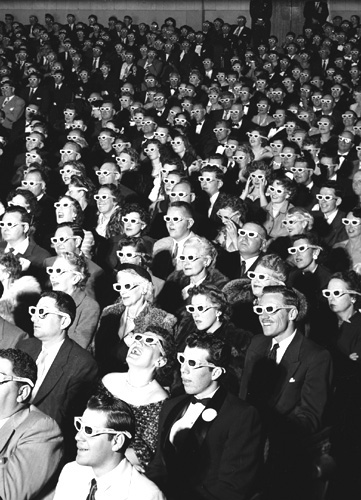
Editorial: Will the future be 3D?

"Just saw Avatar in 3D - amazing!!! I wish real life was in 3D!" - Anonymous Facebook status update...


3D is the latest craze in Hollywood. In the wake of Avatar's record-breaking success, it seems every blockbuster worth its salt is set to get the addition of a third dimension. Alice in Wonderland's huge takings, as the first 3D film since James Cameron's behemoth, have apparently confirmed that punters have latched onto the stereoscopic experience. For now, it looks here to stay.

But is 3D truly the future? The studio bigwigs certainly seem to think (and hope) so. It's their latest effort in the never-ending battle against public apathy towards cinemagoing - an attempt to get viewers, who may normally have been content to wait for the DVD release, off their sofas. A positive side-effect of the 3D is that it makes the films harder to pirate; you can no longer just record the film with a video camera (which would just produce a fuzzy, unwatchable mess).

Let's be honest, though: there's really one reason and one reason only that studios have suddenly become keen to embrace 3D. Simply, they can charge substantially more, often about 30% more, per ticket. Before Avatar, recent 3D films have mostly only found relatively small audiences (such as Zemeckis' mo-cap pictures and a few gimmicky horror flicks), but the Pandora epic proved that people will, in huge numbers, quite happily fork over more of their dough.

The question is, will this continue if the 3D output becomes regularly sub-standard? Avatar has its detractors, but few would argue that it doesn't make spectacular use of the technology, and is at least a very competently made film. Alice received questionable notices but the public at large didn't seem to care. Now there's Clash of the Titans, which has been the source of much controversy.

Clash has been released in so-called "3D" blatantly to cash in on the Avatar crowd. It was only decided ten weeks ago that the film would be converted to 3D. Not only does that mean that the filmmaker, Louis Leterrier, never shot the film with 3D in mind (there are requirements, such as a longer shot time and brighter colours, necessary for 3D to work properly), but also that the 3D conversion process has been a ropey rush-job. I've not seen the film, but by all accounts the 3D ranges from completely invisible (no visible difference when watching through the glasses or not) to god-awful, producing warped, unnatural effects. An that's when the action is discernable, as it is said to descend into a muddy blur quite often.

I'm not here to judge Clash or its 3D - I am not qualified to do so, having not seen it - but if such negative buzz is warranted, what can it mean for the future of 3D films? Will audiences continue to willingly pay the extra pounds/dollars/whatever for an experience that may be no better, or indeed actually worse, than the old 2D version?

Hollywood execs need to be careful to not over-saturate the market with 3D, or the novelty value will be completely lost. History is littered with attempts to introduce new technology to cinemas that have faded away after a scant few years, often due to the standard of the films rather than the technology. (There have been several previous 3D fads, for example, dating back to the 1950s.) A 3D film should remain an event, or that much-feared viewer apathy will inevitably start to creep back in.

Fundamentally, I'd like a choice between seeing a film in 3D or 2D. Having been wowed by Avatar initially, my second viewing was interesting: I still greatly enjoyed it, but began to think that I could take or leave the 3D. And Avatar is a film that executes 3D probably better than any film ever made. I believe that there are only a select few films which merit the added expense of the third dimension, and such films should be made from the start with 3D in mind, rather than having it imposed as an afterthought.

I do not share the opinion of some that 3D is simply a pointless gimmick. I do believe that, used correctly, it can enhance enjoyment and immersion, as it did on my IMAX 3D viewing of Avatar. But it's not always justified, and bad 3D is far worse than no 3D at all. If Hollywood is not careful, this cash cow could soon be milked dry.

Editorial: $80m Spidey - a sign of things to come?


Many movie news outlets have recently reported, with a mixture of disgust and revulsion, that Sony have recently announced they are "rebooting" Spider-Man. Less than ten years since the webbed wonder first hit the big screen, they're going back to the beginning again. The idea, apparently, is to return to Peter Parker's school days when he was dealing (or not dealing) with the death of his uncle. It doesn't just seem like idle gossip, either – Sony have officially hired a director, Marc Webb, who made (500) Days of Summer. Much grumbling about the fact that Sony are blatantly going after the tween Twilight audience, by concentrating on Peter's teenage years before his life as a superhero actually becomes interesting, has ensued.

Let's forget about how absurd it is to basically remake a film that's less than ten years old for a moment. It has intrigued me that another point of some consternation that has been revealed is that Sony only plan to spend $80 million on the film, a pittance compared to most major blockbusters, particularly the $258 million that Sony reportedly coughed up for Spider-Man 3. Whether this proves to be damaging or not is yet to be seen; the massive expenditure certainly didn't exactly make the third film a classic, and other films recently have proven you can look expensive while not costing very much (District 9 cost $30 million), but superhero films are always by their very nature notoriously expensive, and skimping on their budgets has in the past resulted in some turkeys (e.g. Superman IV). Suffice to say, we can expect more teenage angst and relationship troubles than pedestrian-in-peril rescues.

There have been predictions for some time that the Hollywood big-budget bubble must be due to burst at some point. George Lucas himself said in an interview a couple of years ago that he predicts a future when the average Hollywood budget will be sub-$30m, not the $80m+ of today. And with the current economic downturn, some belt-tightening by the studios would not come as a surprise, even though business is currently booming. Admittedly, the monster success of the enormously-budgeted Avatar may have delayed the popping of said bubble for a few years yet. But when we look at the history books, it does seem inevitable that these budgets, greater than the GDP of some small countries, cannot continue to be the norm for ever.

Going back to the early 1960s, for example, historical epics were all the rage, with Ben-Hur having just hoovered up 11 Oscars in the April 1960 ceremony, but then a series of over-expensive flops killed off the genre. Also popular were lavish musicals, which peaked with The Sound of Music but went rapidly downhill afterwards. A period of change at the top followed; the old moguls were out, to be replaced by young blood. The result? The 'New Hollywood', one of the greatest periods of sustained excellence that Hollywood had ever seen – a period driven by talent and ideas rather than big bucks.

Fundamentally, then, if Sony's announcement of an $80m Spider-Man does prove to be a precursor to other studios curtailing their huge budgets – and that remains a big if at this point – it may not be a bad thing. How many $100m+ summer blockbusters in 2009 were actually good? Star Trek is perhaps the only one that immediately springs to mind. Too often the ability to do anything due to virtually limitless funds is actually a barrier to creativity; after all, many of the great films of all time have been made in conditions of adversity (financial or otherwise). Moreover, the sums of money that these films cost do seem quite ridiculous.

I'm not thrilled that Spider-Man is set to return to high school. Neither am I thrilled that the focus is going to be on teen angst. But we can all agree that Spider-Man 3 wasn't very good, and perhaps a change of direction for the franchise will ultimately be beneficial. Plus, if it starts a trend of slightly less expensive blockbusters, perhaps it could lead to directors using some ingenuity again, rather than just smothering everything in CGI – which can only be for the better.

Editorial: Oscar musings


Huzzah! I predicted 8 of the 10 Best Picture nominees. No Invictus and Crazy Heart, whose spots were instead taken by District 9 and The Blind Side (both of which I called in my "possible" mentions). On to some random observations...

  • The 10 BPs represent quite a good spread, from tiny indie (Britflick-that-could An Education) to records-splattering monster (you know what). Funnily enough, though, expanding the field to 10 probably didn't change that very much - if there were still only 5 noms, they almost certainly would've been Hurt Locker, Avatar, Up in the Air, Precious, and Inglourious Basterds, a selection that itself is quite appealingly varied, including two $100m+ grossers (one of which is about to fly past $600m). Very much a contrast to recent sets of nominees, which have been almost exclusively small, minority appeal flicks. Not that they should be any less deserving, of course, it's just nice to have a cross-section.
  • Leading the way are Locker and Avatar with 9 noms each - impressive but not massive as the records go (Slumdog got more last year, for example). Trailing close behind, pleasingly, is Basterds with 8 - and it has a right to feel aggrieved that it didn't get 9 too, as the overlooked Melanie Laurent easily deserved a nom. Nine didn't get 9 noms, incidentally. It got 4.
  • Invictus always looked like it would've been a 'make up the numbers' nominee for BP. That it didn't make it reflects its indifferent reception. Matt Damon getting a nom though was a little suprising - many thought that if he did receive one it would be for The Informant!.
  • Need any proof that the Academy voters are swayed by box office? The Blind Side.
  • Crazy Heart is set to become the latest in a long line of films whose performances clean up in a specific acting category, but get completely overlooked elsewhere. See also: Walk the Line, Monster, The Last King of Scotland, etc. It's a shame, because many of these films deserve to be known for more than just vehicles to get their stars awards.
  • Recent winners of Best Picture usually haven't got much notice in the acting categories. Slumdog Millionaire, Crash, The Departed, Return of the King. The trend will continue this year - either Hurt Locker or Avatar will win, but neither will win any acting gongs. Locker's Jeremy Renner did at least get nominated; none of Avatar's did.
  • It's interesting that many of this year's BPs faced poor or indeed non-existent buzz before they were released. Some even didn't get that much buzz immediately after being released. I didn't hear much about An Education until the BAFTAs suddenly decided it was worth loads of noms. The Hurt Locker, too, though very well reviewed, didn't seem to have much awards traction until recently. Now it's the front runner.
  • Yay for In the Loop getting screenplay notice! I watched it last week and it's fan-f*cking-tastic. Sorry about the swearing, but it seems appropriate for the film.
  • Up becomes the second ever animated film to contest BP, after Beauty and the Beast, though its achievement is lessened by the whole '10 nominees' thing. I would've put money on nearly all Pixar's films being nominated for BP if there had always been 10 noms.
  • Why only three nominees for visual effects? There are loads that deserve a look-in there. Watchmen especially.

That's all I can think of, for now. All in all, a pretty good, well-rounded set of nominations, with few disappointments. Now to name my predictions for the big categories - this year I'm making it short but sweet...

Hurt Locker, Bigelow, Bridges, Bullock, Waltz, Mo'Nique, Boal, Reitman/Turner.

And I'm out.

Editorial: The perfect 10


'Tis that time of year again - tomorrow morning the Oscar nominations will sound forth from the lovely lips of Anne Hathaway. This year the nominations are being followed with (slightly) more interest than usual for one main reason: the Academy have this year doubled the number of Best Picture nominees to 10. The decision is quite clearly commercially motivated, the logic being that 10 nominees mean it is more likely an audience favourite, rather than just niche awards bait, will be noticed, thus bringing in more viewers to the flagging telecast. So goes the reasoning anyway.

With that in mind, it leaves the field slightly more open than usual. In recent years it was often pretty easy to guess what the five would be before they were announced. This year, though, that is not so much the case. There are shoe-ins for at least half the spots, but there is also the opportunity for a slight surprise or two.

Putting my reputation on the line, I now give you what I think the 10 will look like. These are not what I think they should be, just what I think they will be. But enough stalling. Here goes:

The Hurt Locker
Avatar
Up in the Air
Inglourious Basterds
Precious: Based on the Novel 'Push' by Sapphire
Up
Invictus
An Education
Crazy Heart
A Serious Man

The top 5, I think, are certain. Less so with the rest, in increasing order of uncertainty. Other films with a shot include Star Trek, District 9 (both of which received a nom for Best Pic from the Producers' Guild of America, though I would be surprised if they receive the same attention from the Academy), Nine, A Single Man, and The Last Station. Perhaps even Julie & Julia because of the Streep factor, or The Blind Side because of its box office takings.

For the record, I predict the eventual winner will be The Hurt Locker, which is hoovering up most of the big prizes as we speak. So there you have it.

Editorial: Miramax 1979-2010

It has been announced today that the film production company Miramax, founded by Bob and Harvey Weinstein in 1979 and bought by the Walt Disney Corporation in 1993, is being shut down. The writing has apparently been on the wall for some time, with its slate of upcoming films shrinking in recent months, but it still comes as something of a surprise. It's also, in my eyes, quite a sad moment for the industry in general.

Miramax has overseen the genesis of many a film career, including Steven Soderbergh (with Sex, lies, and videotape), Quentin Tarantino (whose collaboration with the Weinsteins has continued for his whole career thus far), and Kevin Smith (Clerks). The company produced and distributed films that the mainstream studios often deemed commercially unviable, be it for budgetary, thematic, language or content reasons. They were arguably the most significant of the 'independent' studios whose films became so influential in the 1990s.

Of course, Miramax's independence in the strict sense of the word ended when Disney bought it in 1993, but this turned out to just be the start of what became a golden period for the company and the brothers Weinstein. Retaining relatively free reign over their films, Miramax had an extremely hot streak, when many of their releases made very good box office totals and, perhaps more significantly, were generously rewarded by the Academy. These included such pictures as The English Patient, Chicago, and Shakespeare in Love.

Let's not forget, though, that the Weinsteins were not universally loved within the industry, and generated some controversy with claims that they 'bought' some of their Oscars with lavish advertising campaigns targeted at voters (the most notorious example being Shakespeare in Love, which beat the likes of Saving Private Ryan, The Thin Red Line and Elizabeth to Best Picture). Likewise their handling of some films that they bought the rights to, particularly foreign films, came under fire, as they tended to favour a practice of re-editing these films against their directors' wishes. Still it must be conceded that, in some cases, if Miramax had not purchased the rights the films may not have seen the light of day in Western markets at all.

Once they hit the big time, i.e. after Disney took them over, their stock-in-trade became the slickly made, relatively high budget prestige piece, with often a talented pro at the helm (Scorsese's Gangs of New York and The Aviator, Anthony Minghella's aforementioned The English Patient, as well as The Talented Mr. Ripley and Cold Mountain, and Peter Weir's Master & Commander, to name just three notable directors who made films under the Miramax banner). While not every film Miramax backed was a success, and some seemed to strive too hard to act as awards magnets and therefore failed, the nature of filmmaking means that absolute consistency is elusive and critical reception is fickle. Miramax's hit rate was better than most.

Even when those credited with much of the success, the Weinsteins themselves, left to traverse pastures new in 2005 (setting up The Weinstein Company, which now also finds itself in financial difficulty, having failed to match Miramax's prior achievements), Miramax continued to produce much excellent, grown-up fare. The zenith in recent years came in 2007, when Miramax had a hand in both No Country for Old Men and There Will Be Blood, two films often cited as amongst the best of the whole decade. But the company will certainly be remembered as the Weinsteins' baby – the company name itself is proof enough of their personal connection (an amalgamation of their parents' names, Miriam and Max).

In the current Hollywood climate, the films being produced are becoming more and more polarised between the low-cost adult-friendly fare which scoops up awards and the high-cost multi-demographic blockbuster; there seems to be little market now or appetite within the industry for expensive, challenging films made for more mature audiences. There has never been a time when there has been as much of a disparity between critical acclaim and box office numbers. I don't like regurgitating old truisms, but the old chestnut "they don't make them like this anymore" really does apply to the likes of The English Patient or Master & Commander. And now Miramax has been dissolved, at the risk of sounding melodramatic, there are even fewer places where such films could hope to find a home.

But let's be honest here. How much will really change? After all, all that has happened is that Disney has closed one of its distribution arms. There are still directors out there whose name alone earns them clout to make personal pictures, even if their number seems to be diminishing. The inexorable dumbing down of mass market entertainment cannot continue forever.

I hope.

Not convinced about Miramax's influence? Check out the filmography on IMDb; it's one impressive list. So long Miramax – it was nice to have known you.

Editorial: Let's be thankful for Avatar


There are no doubt many, many crossed fingers in Hollywood right now, particularly executives at 20th Century Fox. These are the gents who have bankrolled James Cameron's upcoming mega-monster-epic-behemoth, Avatar, to the tune of anything up to $500 million (depending on whose figures are being quoted). Simply put, this film needs to be a massive hit to even come close to breaking even.

It's impossible to deny that the buzz around the film has been poor, and bordering on poisonous in some circles. After years of wait, hype, and speculation, the trailer hit a few months back and met with a resounding "Is that it?" from notoriously fickle, hard-to-please film geeks. Even worse, the general public seem to be completely indifferent. For a film to be a huge hit, the excitement needs to permeate the widest possible demographic, from hardcore fanboys to occasional cinemagoers. Outside publicity/controversy helps (Heath Ledger's passing no doubt added hugely to the mystique and must-see quality that The Dark Knight acquired), and although there has been some discussion surrounding the massive cost of Avatar and its supposedly revolutionary technology, there really seems to be little widespread interest. I would like to be wrong, because it's simply good for the health of the industry if a film hits big, regardless of its quality. But I expect not.

I don't want to offer predictions here, though, whether or not Cameron's folly will be a sensible investment in the long run. What concerns me is that people are judging this film before seeing it. Of course, that happens all the time, especially in the incredibly cynical "we hate everything" world of the rabid geek (just go and read any talkback on Ain't It Cool News). But it slightly saddens me that there aren't more people commending Cameron for not just doing what everyone else is doing, and going for the easy, safe, quick buck.

Seriously, what is the last blockbuster film you can think of that is not a sequel, remake, adaptation, or based on a widely known toy brand? I.e., that is actually an original screenplay? (Those smartypants who claim that Avatar is simply Dances With Wolves in space, or Ferngully, or whatever, can shut up. I'm not suggesting this film will necessarily be a beacon of innovation on a narrative level. But it is bringing us new characters and a new world that has not been seen before.) The days where the likes of The Matrix can come along and shock us with its energy and vision seem to be behind us, as studios simply seek the next pre-sold comic book property to adapt, rather than risk their money on something new. Of course, the brand being sold here is James Cameron himself, but, especially with him having taken a 12-year post-"King of the World" hiatus from narrative features, his name surely carries less weight than it once did.

I'm not even that bothered about Avatar's much-ballyhooed technical advances. All the fancy 3D and amazing effects in the world are simply an adjunct to the most important part, the quality of the film itself. If the technology lives up to the hype, so much the better. But, going by the trailers, absolute photorealism in CGI has still not been achieved. Cameron has not been helping himself in this regard, making typically overblown statements, indicating that the film will change cinema as we know it. Such inflated comments simply add fuel to the sceptics' fire and set up the director for an even greater potential fall, doing the film no favours.

Anyway, I'll be lining up to see it when it's finally unleashed, with an open mind and a sense of tentative optimism. I doubt it'll initiate the cinematic revolution that has been promised, or even be the biggest hit of the year, but I'm sure it will be memorable one way or the other - and at least it's not another bloody sequel. When was the last time Cameron let us down?

Editorial: Watch before reading


Watching Watchmen yesterday, and absolutely loving it (read my review), has brought about a question in my mind: when it comes to film adaptations of novels, is it better to have read the source material before seeing the film, or going into it completely unawares?

I have not read the graphic novel of Watchmen, by Alan Moore and Dave Gibbons. Admittedly I have been vaguely familiar with it for some time and was aware of who most of the characters were (although I had no knowledge of their backstories, etc.), and have flicked through the book on various occasions. Nevertheless, beyond the very basic premise (retired superheroes, one gets bumped off) I did not have any real awareness of the plot.

The reviews have been decidedly mixed for the film. Currently on Rotten Tomatoes it has the "Fresh"-but-only-just rating of 65%, with most reviews apparently awarding it middle of the road scores like 3 out of 5. Reviewers familiar with the graphic novel mostly complain about the things it changed (while, at the same time, often absurdly criticising it for being 'too faithful'). For these critics it seems that their already-held opinions and passion for the source material precluded them from accepting the film on its own terms: the film seems extremely faithful overall, yet the film's occasional necessary alterations for the medium are torn to shreds. These views really sum up the impossible task that Zack Snyder was faced with when he chose to take on the unenviable task of directing the film.

Let me divert from Watchmen for a moment. Another work of literature that had been deemed impossible to adapt to film, The Lord of the Rings, turned out to be a triumph from any angle. When I first saw the first film in the trilogy, The Fellowship of the Ring, I had not read Tolkien's seminal story, and I abosulutely adored the film. After this first instalment I devoured the books, and found that I much preferred the film of Fellowship to the book, which, without wishing to be sacrilegious, is rather (over-)long and self-indulgent at points.

Then I saw The Two Towers, which despite some gripes I felt was probably about as good as the book. I could not wait for Return of the King, which was certainly my favourite of the three original volumes. However, upon the final film's release, I found it very difficult to shift the book from my mind. Jackson's RotK omits several parts from the book, some of which I really missed in the film, and despite really enjoying the film on its own merits, I could never say that I was entirely satisfied. Yet it RotK is often cited as the best of the three films, and the Academy certainly agreed, showering it with 11 Oscars. I still maintain that the best film of the three is Fellowship, followed closely by Towers, with Return bringing up the rear.

I have often been curious as to whether my reactions would have been different had I not read the books at all. Did I love Fellowship most because at the time of my first viewing I had not read the book and therefore was not on the lookout for parts the filmmakers 'got wrong'? Do I find it hard to love Return for precisely the opposite reason, that I had read the book and was by this point a devotee of all things Tolkien? Or is it just the case that Fellowship is simply a more accomplished, better film in its own right than Return? It's a question I can never really answer. I have tended to think the latter, but now having seen Watchmen and experiencing similar feelings to that first viewing of Fellowship, I have begun to reassess that.

Without prior knowledge of the graphic novel, the film basically acted as my introduction to the wonderful world of Watchmen. Instead of noticing parts that had been altered and omitted, I was just able to sit back and absorb an extraordinary sensory feast as it unfolded for the first time before my eyes.

Maybe it's just the case that I'm one of the (apparently quite few) people for whom this film just works on pretty much every level.* Looking at the reviews again, the consensus amongst Watchmen virgins generally seems to be that you need to have read the book to grasp what's going on, and that the film is too long and slow (clearly both points I emphatically disagree with). Some suggest that the film has a similar lack of depth and overbearing feeling of artificiality that Snyder's previous film, 300, had.

Only a few really seem to have loved the film, as I did. Roger Ebert, who, like me, had not read the graphic novel, has showered it with praise and awarded it his top 4-star grade (I do think Ebert hands out the top accolade too willingly and too often but here I certainly agree with him). From the other end of the spectrum, Watchmen nuts Devin Faraci of CHUD.com and Drew McWeeny, formerly Moriarty at Ain't It Cool News, have both revealed their strongly positive opinions of the film. From these it seems like whether you have read the graphic novel or not is irrelevant. As with any film, it's an inherently subjective experience. I'm delighted to say that, from my entirely subjective standpoint, it's a stunning success.


* Similar to my feelings on Speed Racer - I loved all its hyperactive insanity, but not many did. However, I like Watchmen more.
.

Editorial: Oscar Noms '09: Thoughts & Predictions

'Tis that time of year again, the beloved (or loathed...) Awards Season! The Academy Award nominations were revealed today in their time-honoured fashion, and as always they threw up some surprises. Before listing the nominees and revealing my prediction for the winner in each category, I thought I'd offer a few random thoughts and observations. All together now... "What about The Dark Knight?!?!"

  • - In all honesty, I'm not surprised that TDK wasn't nominated, and not overwhelmingly disappointed - yes, it's a good film, but hardly the best thing since sliced bread. More disappointing for me is the lack of love for The Wrestler, which only received nods for Best Actor (Rourke) and Supporting Actress (Tomei - a pleasant surprise, to be fair). It's probably just too niche a film for the Academy.
  • - In terms of numbers, The Curious Case of Benjamin Button is the big leader with an impressive 13 noms, which has only ever been bettered by two films: Titanic and All About Eve. I can't see it winning in any of the major categories though, but at the very least Visual Effects seems a likely win. I need to see this film.
  • - The Reader got a lot of love (5 noms), which is odd considering it's hardly a great film (see my review). It's one of those Oscar Bait films that seem to get nominated just because of their subject matter than because of actual quality. The fact that the Weinsteins are behind it is not insigificant either - they powered Shakespeare In Love to an unfathomable Best Picture win a decade ago.
  • - If Heath Ledger doesn't win for Supporting Actor, I'll be seriously miffed, as his performance is brilliant, regardless of his sad death. However he seems like such an overwhelming favourite that a backlash from voters may occur.
  • - Staying with Supporting Actor, it's great to see a nom for Robert Downey Jr. in Tropic Thunder. Not a brilliant film but he certainly stood out.
  • - Slumdog Millionaire managed a substantial 10 nominations overall, which is all the more impressive considering it's a small film and therefore can't compete in categories like Visual Effects. It's the clear front runner for the big one.
  • - Animated Film really seems like a pointless category; not because WALL-E is undeserving of a win but because there are so few films to choose from. It also prevents any animated films from ever being nominated for Best Picture nowadays.
  • - Likewise this year the Best Song selection is odd - only three noms (usually there are five) and two for the same film, Slumdog Millionaire. Every year one film gets nominated more than once in this same category.
  • - Overall an interesting selection - the Best Pic category looks pretty strong even though I've only seen two of them thus far. But I can't see the ceremony's ratings slide improving; increasingly these days popular films and those deemed awards-worthy are seen as two opposing definitions. It's only when there's another popular hit that also gets lots of noms - another Lord of the Rings or Titanic - that general interest will improve.
With that out of the way, here are the noms and my predictions (in italics), which as always do not necessarily represent my personal preference.

BEST PICTURE
SLUMDOG MILLIONAIRE
MILK
THE CURIOUS CASE OF BENJAMIN BUTTON
THE READER
FROST/NIXON


BEST ACTOR
Sean Penn - MILK
Mickey Rourke - THE WRESTLER
Frank Langella - FROST/NIXON
Brad Pitt - THE CURIOUS CASE OF BENJAMIN BUTTON
Richard Jenkins - THE VISITOR


BEST ACTRESS
Meryl Streep - DOUBT
Anne Hathaway - RACHEL GETTING MARRIED
Kate Winslet - THE READER
Melissa Leo - FROZEN RIVER
Angelina Jolie - CHANGELING


BEST SUPPORTING ACTOR
Heath Ledger - THE DARK KNIGHT
Robert Downey, Jr. - TROPIC THUNDER
Philip Seymour Hoffman - DOUBT
Josh Brolin - MILK
Michael Shannon - REVOLUTIONARY ROAD


BEST SUPPORTING ACTRESS
Marisa Tomei - THE WRESTLER
Amy Adams - DOUBT
Penelope Cruz - VICKY CRISTINA BARCELONA
Taraji P. Henson - THE CURIOUS CASE OF BENJAMIN BUTTON
Viola Davis - DOUBT


BEST ANIMATED FILM
WALL-E
KUNG FU PANDA
BOLT


BEST DIRECTOR
Danny Boyle - SLUMDOG MILLIONAIRE
David Fincher - THE CURIOUS CASE OF BENJAMIN BUTTON
Stephen Daldry - THE READER
Ron Howard - FROST/NIXON
Gus Van Sant - MILK


BEST ADAPTED SCREENPLAY
Simon Beaufoy - SLUMDOG MILLIONAIRE
Eric Roth - THE CURIOUS CASE OF BENJAMIN BUTTON
Peter Morgan - FROST/NIXON
John Patrick Shanley - DOUBT
David Hare - THE READER


BEST ORIGINAL SCREENPLAY
Courtney Hunt - FROZEN RIVER
Dustin Lance Black - MILK
Martin McDonough - IN BRUGES
Mike Leigh - HAPPY-GO-LUCKY
Andrew Stanton and Jim Reardon - WALL-E


BEST ART DIRECTION
CHANGELING
THE CURIOUS CASE OF BENJAMIN BUTTON
THE DARK KNIGHT
THE DUCHESS
REVOLUTIONARY ROAD


BEST CINEMATOGRAPHY
CHANGELING
THE CURIOUS CASE OF BENJAMIN BUTTON
THE DARK KNIGHT
THE READER
SLUMDOG MILLIONAIRE


BEST COSTUME DESIGN
AUSTRALIA
THE CURIOUS CASE OF BENJAMIN BUTTON
THE DUCHESS
MILK
REVOLUTIONARY ROAD


BEST DOCUMENTARY FEATURE
THE BETRAYAL
ENCOUNTERS AT THE END OF THE ROAD
MAN ON WIRE
THE GARDEN
TROUBLE THE WATER


BEST DOCUMENTARY SHORT
"The Conscience of Nhem En"
"The Final Inch"
"Smile Pinki"
"The Witness - From the Balcony of Room 306"


BEST EDITING
THE CURIOUS CASE OF BENJAMIN BUTTON
THE DARK KNIGHT
FROST/NIXON
MILK
SLUMDOG MILLIONAIRE


BEST FOREIGN LANGUAGE FILM
THE BAADER MEINHOF COMPLEX
THE CLASS
DEPARTURES
AUSTRIA
WALTZ WITH BASHIR


BEST MAKEUP
THE CURIOUS CASE OF BENJAMIN BUTTON
THE DARK KNIGHT
HELLBOY II: THE GOLDEN ARMY


BEST ORIGINAL SCORE
THE CURIOUS CASE OF BENJAMIN BUTTON
DEFIANCE
MILK
SLUMDOG MILLIONAIRE
WALL-E


BEST ORIGINAL SONG
"Down to Earth" - WALL-E
"Jai Ho" - SLUMDOG MILLIONAIRE
"O Saya" - SLUMDOG MILLIONAIRE


BEST ANIMATED SHORT
"La Maison de Petits Cubes"
"Lavatory - Lovestory"
"Oktapodi"
"Presto"
"This Way Up"


BEST LIVE-ACTION SHORT
"Auf der Strecke (On the Line)"
"Manon on the Asphalt"
"New Boy"
"The Pig"
"Spielzeugland (Toyland)"


BEST SOUND EDITING
THE DARK KNIGHT
IRON MAN
SLUMDOG MILLIONAIRE
WALL-E
WANTED


BEST SOUND MIXING
THE CURIOUS CASE OF BENJAMIN BUTTON
THE DARK KNIGHT
SLUMDOG MILLIONAIRE
WALL-E
WANTED


BEST VISUAL EFFECTS
THE CURIOUS CASE OF BENJAMIN BUTTON
IRON MAN
THE DARK KNIGHT


The ceremony is on Feb 22nd. Is it really that time already?

Editorial: Is George Lazenby the best Bond?

No, he isn't. Let's get that out of the way first. But he was a damn good incarnation of 007, and his negative reputation - based mainly on the fact he only did one Bond film - is not deserved. Read on to find out why...


For those who don't know or need reminding, Lazenby starred in the sixth James Bond film adventure, 1969's On Her Majesty's Secret Service. Based on one of Ian Fleming's strongest Bond books and sticking closely to it, the film has recently grown in popularity. What was once the most obscure 007 film - it was the last one, pre-Brosnan, that I saw - has, with the availability of the film on DVD, has come to be seen as an overlooked gem.

That is entirely deserved. Eschewing the cartoony aspects of (the still very enjoyable) predecessor You Only Live Twice, OHMSS is an excellent thriller with a tragic and hard-hitting ending, and an emotional story unique to the franchise until 2006's Casino Royale. But what struck me most upon viewing it recently is how well poor ol' Lazenby's performance holds up.

He was cast as an unknown based on his part in a TV advert. The producers liked his looks and his physicality - he proved adept at hand-to-hand stunt combat, which explains the regularity of them in the film. This (notably Australian) non-actor was given the unenviable task of filling Sean Connery's shoes. As has been said elsewhere, at the time replacing Connery would have seemed like someone other than Harrison Ford playing Indiana Jones. Basically, just wrong. Predictably, critics were lukewarm.

I would like to suggest, however, that it has ultimately proven to be a good thing that Connery didn't star in this film. Originally, it was meant to be the fifth Bond, but outside factors led the producers to make the Japan-set You Only Live Twice instead. Although an entertaining action extravaganza, Connery was by this point clearly bored with the role and just coasting along for the paycheque. An uninterested performance of this sort would have absolutely not worked for the powerful and emotional story of OHMSS.

Lazenby is called upon to deliver some heavyweight scenes in the film, not least the reaction to his new wife's sudden and brutal murder. His simple but heartfelt acting here and elsewhere in the film really gets across the tragedy of the scene, and you really believe that Bond was in love. Conversely, I believe it would have been hard to believe Connery's Bond would really fall in love with anyone. Perhaps circa 1963's From Russia With Love it would have been plausible, but by 1967 Connery's Bond had become more of a wisecracking caricature - not purely through the fault of the actor, I have to add, but nonetheless undeniable.

The only part of the film which I feel doesn't work is the portion in which Bond infiltrates Blofeld's mountaintop lair posing as genealogist Sir Hilary Bray. That's mainly because for this sequence Lazenby is dubbed - which is not only distracting, but also disguises the quality of Lazenby's acting. Apparently he had honed a posh British accent for the sequence but the powers that be elected to dub him with the voice of the actor playing the real Sir Hilary. It's a rare misstep in the film, and thankfully is not a major problem.

It's a true shame that Lazenby didn't return for another outing. We ended up getting the risible Diamonds Are Forever, a campy, ludicrous farce that undid all of this film's good work. It's not true that Lazenby was fired, however - despite a decline in box office from the mid-60s heights, OHMSS was still a hit. It was entirely the actor's choice not to return - he believed in the wake of the new wave of American films, including the likes of Easy Rider and Bonnie and Clyde, that Bond would soon be outdated and would not last. He also thought that having done the film he would get plenty of other acting offers. He was, of course, wrong on both counts.

Ultimately, his legacy as Bond is a unique one, and the film he headlined has proven to be one of the best in the 46-year-old series.

Editorial: Indiana Jones and the Perfect MacGuffin

I'm still letting my experience of viewing Indiana Jones and the Kingdom of the Crystal Skull (KotCS) settle in, but I have one overwhelming feeling, that of disappointment.

Another thing I keep thinking is that the perfect Indy 4 has already been made, way back in 1992: Indiana Jones and the Fate of Atlantis.

For those unaware, Fate of Atlantis is a classic point-and-click adventure game released by LucasArts. Not only was it a fantastic game in its own right, it also had a superb script and storyline, at the centre of which was an unbeatable "MacGuffin": the lost city of Atlantis.

("MacGuffin" is a term coined by Alfred Hitchcock to describe an object that is a catalyst for the plot or motivates characters' actions but is ultimately irrelevant. Marion Crane's stash of money in Psycho, which results in her visiting the Bates Motel, is the perfect example.)

There's been a good deal of discussion about the Crystal Skull, the MacGuffin in the new film, and many of the criticisms of the film have identified it as a flaw. Like Temple of Doom's Sankara Stones, it is weak as a plot device because it's too obscure. The Ark of the Covenant and the Holy Grail worked well because (aside from them both having the obvious religious connection) they are well known objects. Everyone's heard of them, so they don't need too much explaining. KotCS, on the other hand, spends so much time explaining its central MacGuffin that it sometimes forgets to actually move the plot forward.

There have been reports that the Skull was the idea of George Lucas, and that Spielberg and Harrison Ford were not altogether happy with it. Nevertheless, the same was said about the Grail in The Last Crusade, but that worked well enough. Apparently Spielberg added the father/son plotline in that film to compensate for the weakness of the central gimmick.

Back to the point. Atlantis is the utterly perfect MacGuffin for an Indy film: a fascinating archaeological mystery that almost everyone has at least heard of. Some claim that the game was based on an early idea for the next Indy film after Crusade which never came to fruition. It's a real shame, because as the game proved, it provides a wonderful premise for an Indy adventure.

The way I look at it, Indy 4 was a huge success that is worthy of its precessors' good name. It was called The Fate of Atlantis.

Editorial: Uwe Boll is a Genius

Uwe Boll is the greatest living director on Earth.

At least, that's what he seems to think. For those who haven't seen his films or even heard of him (the lucky ones), he's a German director of absolutely dreadful, but surprisingly glossy B-movies mostly based on videogames, including House of the Dead and Alone in the Dark. Fairly recently an online petition was started to demand that he stops making films entirely, and Boll has even responded, saying that if there are a million signatures he will actually comply. Currently there are over 206,000. (Find it here if you want to add your name.)

Recently Boll has made a filmed statement relating to this, which has to be one of the funniest things I've ever seen. Enjoy.


If he's serious in the above video, that just proves he is a complete moron. If he's joking, the man may be right - he might be a genius.

This leaves me in a bit of a moral quandary. Yes, he makes awful, dire films (calling them films is an insult to the medium, really) but they are entertainingly terrible. House of the Dead, for example, is absolutely hilarious. In some perverse, masochistic way, world cinema may be a lesser place without him.

There is also a pro-Boll petition, here, which currently has the rather pitiful total of 4,464 signatures. I haven't signed either of the petitions due to my dilemma.

Whatever Boll ends up doing - and I really can't see him giving up, a million signatures or not - his latest "masterpiece", Postal, is due out in the US in May, and early word actually suggests it may not be utter balls. In the UK, we've got the DVD release of In the Name of the King: A Dungeon Siege Tale to look forward to, starring our own Jason Statham and a whole load of other recognisable names who should know better. I can't wait.

Undeserving Oscar Winners #2

With the latest Academy Awards ceremony on the horizon, here we look back at previous years. The Oscars have a history of, er, questionable decisions when it comes to their Best Picture winners, and this series of blog entries will look at some of the more glaring ones and argue which film should have taken home the statuette. Of course, there's no pleasing everyone, and this is mainly based on personal taste, but also takes into account how well certain films have endured compared to others.


Year
2002

Best Picture Winner
A Beautiful Mind


Why it won:
Ron Howard, despite his completely anonymous direction, has proven himself an Oscar favourite over the years. The film practically had "Look at me, Oscars!" stamped all over it.

Why it didn't deserve to win:
Who remembers it? I guess the people involved deserve some credit for making at least a watchable film based on a socially inept mathematician, but watchable is about the best that can be said.


What should have won
The Lord of the Rings:
The Fellowship of the Ring

Why it didn't win:
Mainly, it seems, because the Academy knew there were two more instalments, and saved most of the gongs (11 of them!) for the concluding chapter, The Return of the King, which in hindsight looks like the weakest. But still great.

Why it deserved to win:
It put a forgotten and derided genre back on the map in emphatic style, and began what is now routinely ranked as one of the best film trilogies of all time. Peter Jackson and his collaborators adapted what many called an unfilmable book with supreme skill and sensitivity, and made a brilliant epic action adventure with heart. In the words of one critic (echoing the sentiments of many), it raised the bar for film entertainment.

Other nominees:
Gosford Park
In the Bedroom
Moulin Rouge!

Undeserving Oscar Winners #1

With the latest Academy Awards ceremony on the horizon, here we look back at previous years. The Oscars have a history of, er, questionable decisions when it comes to their Best Picture winners, and this series of blog entries will look at some of the more glaring ones and argue which film should have taken home the statuette. Of course, there's no pleasing everyone, and this is mainly based on personal taste, but also takes into account how well certain films have endured compared to others.


Year
1999

Best Picture Winner
Shakespeare in Love


Why it won:
It had all of the Miramax marketing muscle behind it. Back in the late 90s, it seemed that the Weinstein brothers could just buy Oscar success; the trend thankfully hasn't continued.

Why it didn't deserve to win:
Shakespeare In Love isn't a bad film. It's a likeable, pretty well written but very lightweight romcom set in Elizabethan England. It's successful on its own terms, but Oscar winning material? I don't think so. Especially considering the competition it had.


What should have won
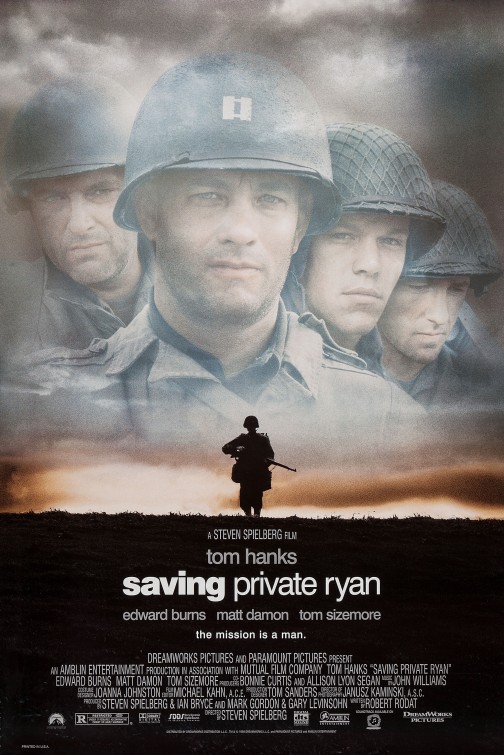
Saving Private Ryan

Why it didn't win:
Possibly because it's a bit dark and gritty for Oscar voters, but that explanation is countered by the fact that Schindler's List won in 1994. Maybe the very fact that Spielberg won it only a few years earlier put voters off, especially considering they're both World War 2 films. Spielberg deservedly look home Best Director for Ryan, but not Best Film.

Why it deserved to win:
What other war film has had more influence, ever? The impact of the opening D-Day landing scene alone is immense and rightly renowned, exhibiting a filmmaker at the very top of his form. The rest of the film is hardly a letdown, though. In terms of depicting war on screen, it remains unequalled. The less conventional The Thin Red Line, also nominated in the same year, was perhaps more daring and also a superb film, but the visceral force of Ryan is extraordinary. Filmmaking genius.

Other nominees:
The Thin Red Line
Elizabeth
Life Is Beautiful

Oscar, schmoscar


The 2008 Oscar nominations are in, and as per usual, there are a few surprises and disappointing oversights. The following are the nominations for all the categories bar the short film ones.


The film names in Bold are my predictions (not necessarily my personal favourites, though).


Film Of The Year
Atonement
Juno
Michael Clayton
No Country for Old Men
There Will Be Blood


No real surprises here, although many were predicting that Atonement would be snubbed, despite its huge haul of BAFTA nominations. Its acclaim isn't really deserved if you ask me. Meanwhile, people continue to be blind to the awfulness of Michael Clayton - my worst film of the year is nominated for Best Picture! No Country is probably the frontrunner, but I'm desperate to see There Will Be Blood, which isn't out yet in the UK.


Best Director
Julian Schnabel -The Diving Bell and the Butterfly
Jason Reitman -Juno
Tony Gilroy -Michael Clayton
Joel and Ethan Coen - No Country for Old Men
Paul Thomas Anderson - There Will Be Blood


For a director of a foreign language film, Schnabel did well to receive a nomination. Otherwise, the only real shocker is again the nomination of Gilroy for Michael Clayton. Some will be sad to see Sean Penn (Into the Wild) and Andrew Dominik (The Assassination of Jesse James) miss out, for me those films were a slight letdown.


Best Actor
George Clooney - Michael Clayton
Daniel Day-Lewis - There Will Be Blood
Johnny Depp - Sweeney Todd
Tommy Lee Jones - In the Valley of Elah
Viggo Mortensen - Eastern Promises


Depp is excellent in Todd, as is Mortensen in the subpar Eastern Promises. Again, I need to see There Will Be Blood.


Best Supporting Actor
Casey Affleck - The Assassination of Jesse James by the Coward Robert Ford
Javier Bardem - No Country for Old Men
Philip Seymour Hoffman - Charlie Wilson's War
Hal Holbrook - Into the Wild
Tom Wilkinson - Michael Clayton


A very strong category overall. Affleck, Bardem, Hoffman are all worthy; my preference, and prediction, is Bardem.


Best Actress
Cate Blanchett - Elizabeth: The Golden Age
Julie Christie - Away from Her
Marion Cotillard - La Vie en Rose
Laura Linney - The Savages
Ellen Page - Juno


Many derided the Elizabeth sequel, so the Blanchett nom here is slightly surprising. Keira Knightley will presumably be upset for no Atonement recognition, but I don't rate her.


Best Supporting Actress
Cate Blanchett - I'm Not There
Ruby Dee - American Gangster
Saoirse Ronan - Atonement
Amy Ryan - Gone Baby Gone
Tilda Swinton - Michael Clayton


Blanchett is much more likely to win here than Best Actress.


Adapted Screenplay
Atonement, Screenplay by Christopher Hampton
Away from Her, Written by Sarah Polley
The Diving Bell and the Butterfly, Screenplay by Ronald Harwood
No Country for Old Men, Written for the screen by Joel Coen & Ethan Coen
There Will Be Blood, Written for the screen by Paul Thomas Anderson


Polley is maybe surprising, as the likes of Aaron Sorkin for Charlie Wilson's War missed out.


Original Screenplay
Juno, Written by Diablo Cody
Lars and the Real Girl, Written by Nancy Oliver
Michael Clayton, Written by Tony Gilroy
Ratatouille, Screenplay by Brad Bird; Story by Jan Pinkava, Jim Capobianco, Brad Bird
The Savages, Written by Tamara Jenkin


Nice to see Ratatouille show up in a category outside Best Animation, even though I don't quite understand all of its adoration.


Best Animated Feature
Persepolis
Ratatouille
Surf's Up


Surf's Up is a pleasant surprise - it wasn't brilliant, but certainly superior to Shrek the Third or The Simpsons Movie.


Achievement in Art Direction
American Gangster
Atonement
The Golden Compass
Sweeney Todd
There Will Be Blood


All very nice looking films. Sweeney Todd stands out.


Achievement In Cinematography
The Assassination of Jesse James
Atonement
The Diving Bell and the Butterfly
No Country for Old Men
There Will Be Blood


Roger Deakins looks to be competing against himself here - he lensed both Jesse James and No Country. Either would be worthy. As would any of them, truth be told.


Achievement In Costume Design
Across the Universe
Atonement
Elizabeth: The Golden Age
La Vie en Rose
Sweeney Todd


As expected. Maybe Hairspray could've snuck in.

Best Documentary Feature
No End in Sight
Operation Homecoming: Writing the Wartime Experience
Sicko
Taxi to the Dark Side
War/Dance


All I can say is that the ingoring of In The Shadow Of The Moon is criminal.


Achievement In Film Editing
The Bourne Ultimatum
The Diving Bell and the Butterfly
Into the Wild
No Country for Old Men
There Will Be Blood


At last, the deserving Bourne gets a look-in. Surprised not to see more of the blockbusters in this category, but not necessarily disappointed.


Best Foreign Language Film
Beaufort (Israel)
The Counterfeiters (Austria)
Katyn (Poland)
Mongol (Kazakhstan)
12 (Russia)


Well done to them.


Achievement In Make-Up
La Vie en Rose
Norbit
Pirates of the Caribbean: At World's End


Holy crap, Norbit is an Oscar-nominated film.


Original Score
Atonement
The Kite Runner
Michael Clayton

Ratatouille
3:10 to Yuma


I didn't even notice much of a score in Michael Clayton. Atonement will probably get it, with an outside chance for Ratatouille.


Original Song
Falling Slowly - Once
Happy Working Song - Enchanted
Raise It Up - August Rush
So Close - Enchanted
That's How You Know - Enchanted


Just like last year (when Dreamgirls did it), one film gets three Original Song nominations. If last year is anything to go by, it won't win. My money's on Once.


Achievement In Sound Editing
The Bourne Ultimatum
No Country for Old Men

Ratatouille
There Will Be Blood
Transformers

Well, they did have sound, I'll admit that. Clueless otherwise.


Achievement In Sound Mixing
The Bourne Ultimatum
No Country for Old Men
Ratatouille
3:10 to Yuma
Transformers

See above.


Achievement In Visual Effects
The Golden Compass
Pirates of the Caribbean: At World's End
Transformers

Compass may have missed out here, but the effects were definitely good. Transformers is the clear winner for me.


Overall, pretty predictable. The overlooking of Zodiac is tragic but entirely expected - its March release basically sealed its fate. Conversely, Michael Clayton in no way deserves the acclaim it has received. No Country For Old Men and There Will Be Blood lead with 8 nominations apiece. The next thing to confirm is whether the ceremony will actually take place, given the continuing writers' strike. Anyway, it's always an entertaining period in the film calendar. Bring on February 24th.

Bottom of the Barrel


We have countless awards ceremonies which applaud the best of our beloved industry, but aside from the notorious Golden Raspberry Awards and the odd scathing review which target specific performances, nothing really wounds an actor's career enough for them to jack the craft in forever. Some of you will undoubtedly dream up some outcast who claims they have retired from the business but has been driven out by studios and critics in actuality, but I'm referring to the shoddy 'thespians' who have somehow still got screen credits in the pipeline and, in some cases, exhaustive filmographies when their talents definitely don't warrant the glitz and fame. The following is a brief selection of imminent has-beens who should be attempting another line of work and, in some cases, should have never made the transition from what they do best – cross-overs of any sort but particularly from music to film and vice-versa just never seem to work. Well… Streisand is an exception to the rule (even though I'm not a huge fan), but Cher and Beyonce? And as for 50 Cent and Eminem, someone must be having a private joke somewhere. Anyway, on with my pick of the most unpleasant cringe-worthy thespians… (one definitely has the capabilities to improve though which is the most frustrating thing!)

Vinnie Jones
Actors are frequently typecast but surely nobody plays exactly the same role as often as the ex-football nutjob. Somehow though the Welshman's extensive career (30+ films in 10 years) seemingly gallops on with no respite. Even the Yanks understand his hardman image these days; his violent soccerball career was legendary and he has even been banned from Virgin flights after causing a fight on the way to Tokyo, but we do not need to be constantly reminded of this sadistic personality with his dreadful on-screen characterisations. Examples of his monotone I'm-going-to-break-your-face attitude can be seen in X-Men: The Last Stand, his collaborations with Guy Ritchie, and The Condemned. His football guise is epitomised however with EuroTrip where he fuses his on the pitch persona into a hooligan character delightfully named Mad Maynard – what a must-see concoction of talent and charisma that appearance is. At least he is trying to play a character in the teen fodder flick though. Mean Machine on the other hand is basically a continuation of a rather mediocre professional career. The prison setting, a result of an assault conviction, simply makes him feel more at home. Go for a role with some substance, Vincent.

Dwayne "The Rock" Johnson
Well the jury is still awaiting Southland Tales evidence but the whispers are not exactly glowing for Richard Kelly's forthcoming film. Johnson's comedic ability was confirmed in his WWE wrestling career and sporadic appearances on Saturday Night Live but as we have seen numerous times before, instances of jesting and coolness in front of the camera do not always translate to a full feature. The Rock is someone on this list though who I actually want to succeed – he has natural talent but his track record so far isn't pretty reading. His double turn as The Scorpion King in The Mummy franchise was generally pitiable but kudos should go to him for actually attempting a role in that particular unoriginal mould. Unluckily however The Rundown and Walking Tall hardly set the world alight and as for Doom, well, as one reviewer stated at the time, "If you go to the box-office and ask for "Doom", that is exactly what you'll get!" Gridiron Gang is a step in the right direction however with a compelling portrayal and Southland Tales may be a constructive choice in hindsight. Hopefully for The Rock his next projects push the envelope in terms of both improving his aptitude and weight as a bankable star. Nevertheless, if he continues on his current trajectory he will rapidly transform into a Hulk 'has-been' Hogan figure if he isn't cautious. I remember eagerly anticipating The Scorpion King a few years ago and when I returned from the cinema one of my friends, who was incidentally just as excited as I was, asked, "Whoa, I didn't know The People's Champion could act?!" I replied with, "He can't." Optimistically though at the present time I hope he soon can.

Keira Knightley
This is a rather short entry as I'm certainly not an expert on the Londoner's career. I do know enough though and it's plain for everyone to see – she cannot act. She is as stiff and inexpressive as I have ever seen an actress and how she has the cheek to continue auditioning for roles is beyond me – Miss Knightley must have one hell of an agent. I haven't seen Atonement but Rich states in his review that director Joe Wright managed to squeeze a performance out of her but if indeed true, this is surely her only decent turn. Domino fans may beg to differ but nobody can escape the tawdriness of her Elizabeth Swann heroine in the Pirates trilogy. Phoniness oozes from her delivery and she always acts like a reality television show winner, only in the film because of strokes of luck. Hopefully her lucky run will soon dry out.
Aside: Also, and this is nothing to do with her acting, her skinny figure is nearly as bad as Winehouse's drug habit as an influence on young girls. Please get it sorted dear, it's not big or clever and it just brings your stock down even more if you gallivant around the world parading as a quasi-anorexic.

Paul Walker
The Fast and the Furious and its sequel, Into the Blue and She's All That. These are not exactly masterworks but then again Paul Walker isn't exactly a masterful thespian. Whereas the Van Dammes, Seagals, and Chans of this world receive offers for films based on their martial arts ability instead of their acting knack, Walker has no redeeming features. He is a prettyboy in an age when the audience doesn't need another with Pitt, Clooney, and Cruise still knocking around, let alone the countless newcomers. Orlando Bloom is the sort of person Walker wants to be. He may be named after a vacationer's paradise and he is an appalling actor but he has two huge franchises behind him – Walker has nothing to rescue him. Running Scared and Flags of Our Fathers are respectable but surely yet another Fast and Furious sequel (currently in pre-production) will cancel them out. Wake up Mr Walker and go and apply for a presenter's job at MTV or something.

I'm sure everyone has an opinion on who is truly god-awful on the silver screen – a friend of mine even detests the supremely likeable Owen Wilson! Is Orlando Bloom surpassed by the trees' acting in LOTR? Is Carmen Electra as wooden as the effect she is on-screen to create? By all means please reply to this post and air your views. Maybe we can boycott their films and drive these wastes of Hollywood skin out of the business. Lawyers, that was a joke, I don't want anyone to be unemployed – just do a job you're good at!

Thanks for reading, take care and be well,


Joel

Striking Gold


A strike has hit Hollywood at the moment, and is taking up plenty of column inches. The Writers' Guild of America (WGA) has shut up shop as they want a bigger share of DVD profits, or something. What this has meant is that many US chat shows have already been cancelled indefinitely, a lot of major TV dramas are in trouble (such as 24) as new episodes are not allowed to be written, and no more scripts are allowed to be submitted to the film studios.

Inevitably this led to a mass of scripts being rushed to completion in time for the deadline before the strike started. The problem is, scripts tend to be modified continuously during production, but with the writers on strike now, no modifications are allowed to the scripts. If they're not right, tough. Due to this, a few big films have already been postponed, most notably the Da Vinci Code sequel Angels & Demons (perhaps not a bad thing). Although the strike shouldn't affect moviegoers for the time being, if it continues for a considerable length of time there will be a noticeable reduction in the number of films reaching cinemas. 2008's blockbusters are mostly locked and in the can already, but 2009's are a different story. We could be in for a barren patch.

For obvious reasons, many have forecasted a time of doom and gloom for the industry if the worst fears are played out. Last time a strike was threatened in 2001 (but one didn't actually happen back then), it resulted in a batch of less than stellar product, such as Tomb Raider and the clearly rushed Jurassic Park III. We could be in for another wave of rushed blockbusters, including Bond 22 - the script for which writer Paul Haggis has said that he's not entirely satisfied with - and the much-maligned Justice League of America movie, featuring Batman, Superman and a bunch of other DC heroes, but intended to be completely separate from the Batman Begins and Superman Returns franchises, which is rumoured to be having difficulties.

Well, I'm here to offer a glass-half-full perspective. The effects of this strike do not have to be all bad. (For example, if JLA was called off, that may not be the worst development.) It would prevent debacles like Pirates of the Caribbean: At World's End from occurring - as mentioned in an earlier blog post, that went into production completely devoid of a script, and the writers were forced to make it up as they went along, which had a profoundly detrimental impact on the eventual film. Now, with no writers allowed to work, no film can be greenlit without a pre-existing script that is at least filmable, if not of particularly great quality.

The unavoidable eventuality if the strike continues is that the number of films released will decrease, but this will most affect the big-budget output, for which scripts tend to be an afterthought. Scripts for lower-budget or independent fare are often refined and shopped around the studios for months or years, and then require relatively few alterations. The Coen brothers are famous for this; once they finish a script, they barely change a word, and even generally prevent the actors from diverting from it at all.

With fewer blockbusters to promote (this summer in particular was overflowing with huge releases, week after week), it could give smaller films a bigger chance at grabbing the spotlight. What's more, the studios will surely be keen for such films to make significant profits so may lavish a higher marketing budget than usual on them. I would argue that a significant reason that blockbusters make the big bucks is simply due to advertising and public awareness rather than content. Give smaller films more attention and their grosses will undoubtedly increase, especially if backed up with critical acclaim.

Hollywood may have more to worry about in a few months' time, however. Then the actors are due to go on strike. I do not intend to suggest that a strike is an ideal situation for anyone, but it could add an extra incentive to enhance the quality of the studios' films as there is more riding on each one. There may be an interesting time ahead.

The New Hollywood = The Genuine Golden Age?


Filmverdict’s creator and resident film geek, Mr Ricardo ‘The Webmaster’ McGlashan, has stated on many occasions how the 1970s seemingly churned out depressing and miserable yarns in an almost conveyor-like manner. Fortunately, he admits the classics of the era still define particular genres even today (Star Wars, anyone?) and as most of you will agree, hours of fun can still be had from watching the vintage works of the era’s movie brats. Indeed, if you fail to acknowledge the everlasting impact on film that Scorsese, Lucas, Spielberg, Coppola etc. have had, you cannot appreciate the art of cinema. Furthermore, one can almost guarantee that in almost any filmgoer’s “Top 100” list the 1970s will be well represented. No matter how much you try and avoid the eternal influence of the decade, one film will always stick out and plop itself into your personally adored films, whether it be The Godfather or Jaws, The Last Picture Show or Apocalypse Now, the New Hollywood has played the part of a permanent marker on A4 – the bold presence of the counterculture-bred, film school-educated, youth-orientated squiggles will never be erased.

Now, it’s still debatable as to what exactly contributes to this magical period of moviemaking. Even though Spielberg and Lucas cancelled out the earlier efforts of their buddies with bigger pictures towards the end of the decade, and consequently marked the beginning of the downhill spiral and frequency of personally energized projects on the smaller scale, they were still made within the actual decade. Inside the confines of our numerous daily filmic discussions, Rich has hinted at how he thinks a shift in tone and structure occurred between the bookends of the era, but for the sake of this blog post and to obey one the greatest authors on the history of the epoch, Peter Biskind, the “1970s” will encompass the films sandwiched between Dennis Hopper’s Easy Rider and Martin Scorsese’s Raging Bull. Granted, Bonnie and Clyde and The Graduate planted the seeds of the artistic renaissance and One from the Heart and Heaven’s Gate brought the whole movement to a conclusion, but they venture too far from the boundaries of the decade to be included. Easy Rider and Raging Bull simply perfectly encapsulate the post-classical feel the directors and studios came to desire.

The term “The Golden Age” is the regular tag given to that exquisite period of cinema from the late 1920s to late 1950s. I use the term “exquisite” very dexterously. Sure, that particular thirty year period gave us classic films such as Casablanca, Gone with the Wind, Citizen Kane and so forth, but the studio system had three times as much opportunity to manufacture hits compared to the New Hollywood age – they even shot themselves in the foot slightly by not welcoming diversity and mostly adhering to the formulaic structures of Westerns, slapstick comedies, musicals, biopics, and occasionally animated features. In fact, the 70s probably served up just as many “classics” in a third of the time. The movie brats even had the cheek to pay respect to their childhood heroes (the directors and stars firmly entrenched in the studio politics of the Golden Age) during their pictures and still mostly surpassed them in terms of quality. Some of you may think I’m not giving the classical period of American film much credit. I realise the technical constraints filmmakers were under back in those days and the factoryesque attitude the moneymen expected these commodities to be contrived with and consequently some sympathies must be expressed. However, unlike certain university lecturers of mine and kiss-ass film critics I’m not willing to bestow kudos upon the usual “classic” films for the integrity of my passion of film criticism or because they are simply old and so therefore “must be good”. Funnily enough though and for the record, I actually like a whole host of films from the aforementioned time, such as Mr Smith Goes to Washington and The Philadelphia Story to name just a few so I by no means detest that era whatsoever, I’m just cautious of hastily using superlatives.

Anyway, enough of that rambling tangent and back on to the matter in hand. The New Hollywood is simply the best period of motion pictures because it encompassed a vast array of genres (gritty realism to psychedelic sci-fi), showcased superb talents (Nicholson and Streep to Spielberg and Scorsese), and compiled a hybrid of irresistible influences to forever effect what constitutes a "motion picture" even today – the talented directors paid homage to international film history (European and Oriental in particular) and developed upon existing techniques and genres in an unprecedented manner. The period contained indies and big blockbuster budgeted hits, the casual flick and the event film, and surpassed the restrictions on sexuality and violence (which is never a bad thing). Films would simply be monotonous, with only the odd blockbuster popping up occasionally, if it had not been for the invaluable movement occurring. A fusion of diverse flair and type make up today's films, a debt owed to the New Hollywood. The Platinum Age has a nice ring to it.
Thanks for reading, take care and be well.
Joel
 
Design by Free WordPress Themes | Bloggerized by Lasantha - Premium Blogger Themes | Customised by FilmVerdict