Showing posts with label 5-Star Discs. Show all posts

Blu-ray Review: Ben-Hur (1959)

When you mention the term 'biblical epic', one film instantly leaps to mind above all others, despite Hollywood having produced numerous examples of the genre. That film is Ben-Hur, William Wyler's legendary tale of a Jewish prince who, freed from slavery in a Roman galley, battles his childhood friend - now Jerusalem's Roman consul - in a mammoth chariot race, meeting a certain carpenter from Nazareth along the way. Everything about Ben-Hur screams epic, from the pacing (slower than most films could get away with), to the scale, and even the poster design, where the title is seemingly chiselled out of rock, towering above human figures. Leading man Charlton Heston, the man whose very name has come to connote the epic, is a similarly towering presence in the film, his gravitas and authority overcoming any acting limitations. This is probably his finest performance, mastering a role that runs the gamut of emotions while also requiring immense physicality. (He spent months learning to drive a chariot himself.)

There's a good reason why Ben-Hur remains at the top of the pile amongst epics, because it's not only one of the most successful (its record-setting 11 Oscars remaining unbeaten, not to mention its box office haul): it's also one of the best. Only Spartacus, released a year later and motivated by Kirk Douglas losing out on the Ben-Hur role, challenges it amongst the sword 'n' sandal school. What makes it work on a level that, say, Cecil B. DeMille's 1956 The Ten Commandments fails to, is by treating the narrative as a human, character-driven story, rather than one where the epochal events drive the characters. Heston's Judah Ben-Hur feels like an active agent rather than a bystander. Anchoring the story in an intimate family struggle also engenders greater engagement with the protagonist plight, which is instrumental in holding the attention for three hours and forty minutes.

Of course, the film's most iconic sequence is the chariot race, and justifiably so. A brilliant combination of seamless scale and dynamic editing, it is this ferocious set-piece that elevates the film to the status of classic (and inspired George Lucas to imitate it in The Phantom Menace). It has been called the first modern action sequence, which may well be the case; with its superb construction, maintaining immense kineticism throughout and showcasing some jaw-dropping stunt work, other action sequences of the period pale in comparison. Just compare, say, the battles in Heston's next epic, the Spanish medieval adventure El Cid (1961): they're logistically impressive but dated and stodgy, which Ben-Hur's chariot race certainly is not.

While you would not call the rest of Ben-Hur modern, it did represent a clear step towards realism in the set design and costuming, which favours the naturalistic over gaudy Technicolor stylings. The lighting is also exemplary, Wyler content to bath swathes of his elaborate sets in deepest shadows, taking some inspiration from film noir. The pacing, on the other hand, is defiantly old-school; you could probably eliminate thirty minutes by just tightening most of the dialogue exchanges, without losing anything, and the middle section and the last hour or so after the chariot race do drag. But that was part of the deal with epics back in the day: the bigger the better, and they don't come much bigger than Ben-Hur.


Release Information
Country: US / Region: Free / Version: Fiftieth Anniversary Limited Edition / Discs: 3 / Distributor: Warner Bros.

Presentation
Ben-Hur has received an 8K restoration, one of the first of its kind, taking full advantage of the 65mm resolution to deliver a truly stunning image. There's almost no grain but DNR is nowhere to be found; this is entirely down to the large-format film stock. Detail is accordingly outstanding and colours shine through - just check out the reds of the Roman cloaks. The picture is stable throughout with not a speck of print damage or dirt having eluded the restorers. This is a grade-A job, and perhaps the best HD transfer of an older film yet seen. It really is like looking through a window at times. The only drawback is unavoidable - with such a wide aspect ratio (2.76:1) the black bars take up a lot of screen real estate.

There was less to work with in the sound department, the capabilities of 1950s recording equipment not quite equalling the visuals. Still, the 5.1 DTS-HD track is perfectly competent, giving Miklos Rosza's stirring score room to breathe; on the other hand, there's little depth or LFE.

Extras
This 3-disc set houses the film on two discs (to maintain the highest bitrate), divided by the intermission, while the third contains the extras. They consist of everything found on the 4-disc DVD, including two hour-long documentaries, the full 1925 silent film of Ben-Hur (even more impressive scale-wise than its remake), screen tests - including Leslie Nielsen! - and more. The documentaries are superb, one being a well-made Ted Turner-produced Making Of from the 1990s, the other a retrospective made for the 2005 DVD release. The commentary - mostly by film historian FX Feeney, but also with some input by the late Heston - is also present and correct.

These are further complimented for the Blu-ray by a brand new 80-minute documentary comprising home video footage shot by Heston's wife during the prolonged making of the film, also encompassing the actor's childhood, and with numerous interview contributors. This US release also contains a booklet featuring reproduced pages from the Heston's diary, which is truly fascinating and shows he was a highly intelligent man who thought deeply about his work. Finally, there's another book too, a large glossy photo book with numerous stills from the film and the production. (The UK release excludes these physical extras and the fancy packaging but is much cheaper - the choice is yours.)


Summary
Ben-Hur epitomises the Hollywood epic, and remains a stirring adventure. The chariot race is justifiably legendary; the rest of the film, sometimes overwrought and sluggish, slightly less so. It probably hasn't looked or sounded better since its premiere.

Blu-ray Review: Alien Anthology (1979-1997)

Is H.R. Giger’s alien the most iconic monster in film history? It’s certainly one of the most perfectly designed, encapsulating death and horror in that dual-mandibled black-as-night visage. The genius of it is that although, due to technological necessity of the late 1970s, the creature boils down to the old fashioned man in a suit, it could not seem more horrifically inhuman in its design, with its long domed head, dorsal spines and prehensile tail. Ridley Scott’s original film brilliantly sustains the illusion through lighting and editing; never once do you question that this really is a finely tuned extraterrestrial killing machine, rather than just an actor in a silly get-up. (The only exception might be at the finale when the alien is finally jettisoned into space, the distinct human outline of the body showing briefly.)

There’s little doubt that the Alien series would not exist without the defining creation at its core, but another constant of the four “proper” instalments contained in this anthology (the AvP misfires don’t count) is Lt. Ellen Ripley, immortalised by Sigourney Weaver. Not only does the series tell the story of the character, it also outlines significant stages in its star’s career – from unknown ingénue, anonymous amongst the crew of the Nostromo, to headlining name earning a multimillion paycheque in her final 1997 outing. She’s never less than superb, even when the films around her begin to decrease in quality (though the accepted wisdom of “films 1 and 2 good, films 3 and 4 bad” is some way off the mark). Her arc throughout the films defines the series, dealing with birth, motherhood, pregnancy, death, and even Christlike resurrection, Weaver clearly relishing such a complex, multifaceted role.

A characteristic unique to the series is the length of time that passed between each film being released (7, 6, and 5 years respectively), which, combined with the bold tactic of employing young, visionary directors each time, gives each film a distinct feel and tone. They also, to some degree, chronicle the changing styles of cinema through the three decades, from uncompromising horror to Reaganite pro-interventionist militarism (according to some), and ultimately the CGI revolution. Each film is a product of its time, which enhances their status as individual entities, albeit part of a larger whole. Regardless of any deeper themes and stylistic concerns, however, they remain simply great examples of hardcore science fiction.

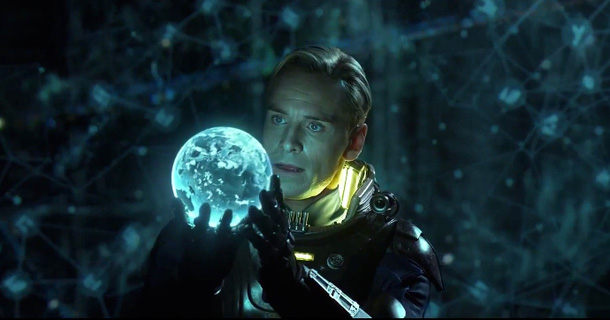
Ridley Scott is currently in production on Prometheus, the film that started life as an Alien prequel and may still operate as one. He has a lot to live up to.

Here I’ll break down the series film-by-film. These mini-reviews are amended versions of those written for the DVD Review of the Alien Quadrilogy set.

Alien (1979)
"A haunted house in space" was the pitch for Ridley Scott's seminal science fiction horror classic. Made in the wake of Star Wars' success, Alien could hardly be more different; it's a lean, mean, shocking and tense experience. The small scale means we get to know each character well, from John Hurt's Kane, the first (and most infamous) victim of the chestburster, to top-billed Tom Skerritt's Captain Dallas, Ian Holm's chilling Ash, and of course Weaver's Ripley.

It was a bold and unconventional move to cast a woman in the lead, and indeed the script had no female characters. The decision has resulted in the film being championed by feminists - aside from the fairly out-of-place scene near the end where she strips to her underwear to prepare for hypersleep - and the sequels developed the inadvertent motherhood theme further. Alien remains the most efficient and claustrophobic of the series, with its impact only dimmed by years of familiarity. Two sequences stand out and remain hugely suspenseful after multiple viewings: Brett's (Harry Dean Stanton) search for Jones the cat, which cranks up the tension while showing off the stunning production design, and Dallas' crawl through the air ducts brandishing a flamethrower. It's scenes like these that make it so memorable, and paired together with H.R. Giger's iconic (and horrific) creature design, a genre masterpiece was born.

Aliens (1986)
James Cameron's more action-oriented sequel typifies what is now the normal attitude when approaching a blockbuster sequel: bigger equals better. Much of the time this proves not to be the case, but many cite Aliens as their favourite in the series, and it is hard to argue against the quality of the film. Cameron wisely chose not to imitate the small-scale slasher film approach of the original, instead upping the stakes; the humans are now mostly space marines with futuristic weaponry, while the enemy threat (as implied by the title) has multiplied considerably. Crucially, though, the all-out warfare does not start straight away, as there is quite a lengthy period spent on establishing atmosphere and character before the action properly commences, which greatly pays off in the end.

The story is not very original – the larger scale cleverly masks the fact that the film is almost a retread of the original, including a company stooge going bad, a countdown to destruction at the finale, and an extra ‘fourth act’ action scene after everything seems to have concluded - but, as is always the case with Cameron's films, it's extremely engrossing and brilliantly constructed. The marines’ banter and interplay makes them extremely likeable, although they are mostly, arguably, caricatures rather than characters; Michael Biehn’s Hicks fares best. Any suggestions that the film embraces '80s macho culture are skewered by the fact that all their bluster and arrogance amounts to nothing when they are torn apart upon first meeting the xenomorphs. Crucially, Ripley herself is a compelling central character, whose arc is further developed in the (albeit mostly inferior) special edition version. Aliens does look more dated than the original these days due to some slightly unconvincing effects shots and the occasionally rubbery appearance of the aliens, but it hardly dampens the enjoyment.

Alien 3 (1992)
Most famous for Sigourney Weaver's shaved haircut, Alien 3 was not very well received on its release, and its many production problems (like starting filming without a finished script) mean that its flaws are unsurprising. A surprise to many was that the film eschews Aliens' action-packed approach in favour of something more resembling the original, with only one alien to fight and no guns. The barren prison planet setting of Fury 161 is very well evoked though the phenomenal production design and cinematography. Continuing the trend of employing promising young directors, David Fincher was plucked from the world of music videos to helm his first feature. Fincher complained throughout about studio pressure and tight schedules, his unhappiness eventually leading to him leaving the project before post-production. The theatrical cut, consequently, is a rather truncated mishmash with subplots that lead nowhere and poorly defined characters.

Even in the improved longer version the film never overcomes the obstacle that none of the characters, barring Ripley herself, are likeable, due to them all being convicted murderers and rapists, which means their deaths have no emotional heft (if anything, you’re willing the alien on). Even Ripley’s integrity is damaged by her sleeping with the prison doctor (Charles Dance), which seems out of character. A religious subplot adds interest, Charles S. Dutton’s Dillon, the prison’s self-appointed preacher, proving to be the most engaging of the inmates. Moreover, the visuals shine throughout, with Fincher showing his obvious eye for detail even at this early stage of his career. Elliot Goldenthal's partially electronic score is unlike the previous films' music but is also a triumph that bears comparison to the work of Goldsmith and James Horner before him. Alien 3 cannot be deemed an unmitigated success, but its sheer bravery deserves applause. It’s an uncompromisingly grim, downbeat affair which doesn’t pull any punches, and is a real achievement.

Alien: Resurrection (1997)
The franchise should have ended, as was intended, with Alien 3. That film provided total narrative closure, albeit a conclusion that many disliked. 20th Century Fox's insistence that Sigourney Weaver returned as Ripley meant that a contrived method to bring her back had to be conceived. The choice of having her cloned resulted in her character being completely unsympathetic, as she's given a few new character traits that make her weird and aloof. Resurrection is actually a passable, even enjoyable, sci-fi action film for a good portion of the running time, but it doesn't possess the atmosphere of earlier instalments; it just doesn't feel like an Alien film. It's hamstrung by a protagonist we don't care about, but the main problem comes in the third act, where the alien/human hybrid is revealed. It's a laughable and woefully misguided plot direction.

Writer Joss Whedon (creator of TV shows Buffy the Vampire Slayer and Firefly, Oscar winner for co-writing Toy Story, and director of Marvel's upcoming Avengers) has somewhat disowned the film, as he attests that his script was mishandled by French director Jean-Pierre Jeunet. To be fair, the film had an uphill struggle the instant that it was decided Ripley had to be resurrected.


Release Information
Country: UK / Region: Free / Version: N/A / Discs: 6 / Distributor: 20th Century Fox

Presentation
Alien is a revelation on Blu-ray. It never looked bad on DVD, but this new remaster brings out colours and textures never before evident. It gives the film a whole new lease of life, feeling as fresh as the first time you watched it. It sounds brilliant too, with superb use of ambient sound and Jerry Goldsmith’s eerie, understated score. You can practically feel the wind battering you when the three crewmembers are exploring the LV-426 planetoid.

Aliens looks fantastic too, having also benefited greatly from a Lowry restoration. It has always looked grainy due to the stock it was shot with (which was discontinued soon after), and it still does, but it’s generally fine and natural, never clumpy or obstructive. Some shots are stunning in their clarity, which leads me to conclude that other shots are softer due to focus rather than transfer issues (depth of field would have been very narrow due to low light conditions). I doubt it could look any better, and compared to the DVD, it's remarkable. The sound, unfortunately, does not make as much use of the surrounds as Alien, mainly staying front-heavy, but it’s clear and weighty with a robust low end.

Alien 3, on the whole, looks better than expected, given that it has not received a remaster, with strong fine detail. The lack of a new spruce-up only reveals itself in some softness here and there and also some noise in shadows, which aren’t always as inky as they could be. In fact the footage added to the 2003 ‘assembly cut’ looks a bit better than the rest, with higher contrast, stronger hues and more ‘pop’, probably because the negative for those elements was more recently scanned. The sound is appropriately dense and deep, with excellent enveloping atmospherics, though sometimes voices tend to get lost. It’s worth mentioning that the sound issues present on the Quadrilogy DVD have been corrected here, as Fox had some original actors return to redub their lines. The end result is seamless.

Alien: Resurrection, the black sheep of the series, is treated as such. It looks really quite poor; soft, hazy, and lacking in both detail and contrast. It barely looks HD, to be honest. Surprising, given it’s the most recent entry, but you can’t blame Fox for not paying to get it cleaned up. The soundtrack is far less problematic, fortunately, benefiting from its lossless rendering.

Extras
Firstly, this is a Fox release, so that means the discs feature resume play functionality, before even seeing the studio logo. Thank you Fox; other studios take note.

Fox's big trump card here is "MU-TH-UR Mode", named, one presumes, after the Nostromo's computer, although that was spelled the more mundane, correct way. It sounds complicated - there's both an instruction booklet and on-screen tutorials included in the set - but really it's just a fancy way of navigating through the discs' copious bonus material. Basically, when watching any of the films, MU-TH-UR Mode lays a graphic over the image that lets you swap between audio tracks, access set photos, and make text trivia appear, and also bookmark certain topics that relate to featurettes on the bonus discs. (The latter seems slightly pointless, as surely most people interested in the behind the scenes material will want to watch it all.) The most useful part is the ability to flick between audio tracks - Alien, for example, offers two commentaries and two isolated score tracks.

Indeed, isolated score tracks are present for all four films, although only the first two get alternative options - composer's original score and final theatrical score. At times they make for very interesting comparisons, such as in the opening titles of Alien. All the films get at least one commentary, Alien receiving two (the second being Ridley Scott's original commentary for the 1999 DVD, not included in the Quadrilogy set). They're all fascinating for their own reasons, particularly those for Alien 3 - despite the lack of Fincher - and Aliens, a patchwork of many participants, including Cameron, which is often revealing and also funny (especially Bill Paxton). All the films come in two versions, and helpfully the additional scenes are also viewable separately, akin to the recent Avatar Blu-ray.

The two bonus discs are named "Making the Alien Anthology" and "The Alien Anthology Archives". The former houses the wonderful documentaries made for the Quadrilogy DVD, along with four-plus hours of new "enhancement pods", which comprise even more fascinating interview footage. The Alien 3 material is uncut, too, meaning there's more criticism of the studio's role in the production problems. In total there's probably 12 hours' worth of watching here, all four films getting their due (and then some). The Archives comprise everything else: deleted scenes, photo galleries, TV documentaries, scene breakdowns, screenplays, EPK featurettes, and the kitchen sink. Note that none of it is in HD but it does certainly take advantage of Blu-ray storage capacity.


Summary
Alien is a masterpiece. Aliens is a classic example of 1980s action cinema, and is not without brains either. Alien 3 is an interesting, brave experiment. Alien: Resurrection is sadly forgettable. Fox's Blu-ray treatment is outstanding.

Blu-ray Review: Taxi Driver (1976)

Martin Scorsese's Taxi Driver has already been reviewed on DVD by FilmVerdict's resident Scorsese expert, Joel. As I can not claim to offer anywhere near as much insight, here I'll reproduce his review of the film and offer Blu-ray specific comments below.

Robert De Niro's surprisingly bogus Mohawk hairstyle is certainly not as attractive as say, Marilyn Monroe's wind-blown skirt or Sean Connery's fully-suited and booted James Bond, but to universal filmgoers it's a striking piece of movie iconography. In fact, all 114 minutes of Martin Scorsese's Taxi Driver are remarkable and the chef d'oeuvre will indeed stay with you forever - every time the Big Apple's finest (Bobby and Marty), taxicabs, or even New York are mentioned in your daily routine, flickers from the chronicle of God's Lonely Man will surface.

Travis Bickle (De Niro) is cinema's best-executed and most famous anti-hero. With so many sensational turns during his extraordinary career, one should be excused for labelling Bickle as De Niro's greatest performance because it is seemingly an impossible and immeasurable task, but the Vietnam-vet-turned-chronic-insomniac-cabbie plants the seeds of über violence, alienation and indistinct subjectivity future De Niro characters came to perfect. De Niro makes Bickle into a person uncomfortable to watch - an attribute screenwriter Paul Schrader wanted to inflict upon the viewer as the loner's story is a nightmare without background answers. Why does he want to venture into the ugly societal underbelly of New York? Murder, prostitution, firearms, drugs, and pornography are all explored as Scorsese invites personal interpretation - scars from 'Nam, mental instability, and cultural disillusionment are all subconscious suggestions but are never fully justified causes for his chaotic mind and frenzied actions.

If you didn't realise already, Taxi Driver isn't simply a masterclass in acting. With assistance from the other half of the film's majestic partnership, Bickle isn't just De Niro's creation. Borrowing from Antonioni, whilst Bickle is trying to ask Betsy (a hearty Cybill Shepherd) on an unlikely date, Scorsese draws the camera away to focus on an empty hallway. The maestro is symbolically turning away from Bickle's plight and treating his existence as a pathetic lost cause in addition to indirectly saying how using camera time on an empty space is more appealing than watching a loser do what he does best. Every directorial flourish Scorsese contributes is a dazzling triumph. The haunting darkness of the urban mise-en-scène complements Bernard Herrmann's chilling score magnificently, the cadence of Bickle's increasingly eccentric actions matches the intensity of his downward spiral into insanity, his secondary players (Harvey Keitel's Matthew, Jodie Foster's Iris, and even Albert Brooks' Tom) all ooze distressing comedy in different ways and upsetting naivety in the latter two cases, and Marty's knowledge of New York's geography shines through. Sun-kissed 1970s New York has been captured astonishingly - America's premier city is certainly cosmopolitan but Scorsese illustrates an applicable and yet agonising sense of inequality, friction and strife below the tourism guidebooks.

Kudos should also be bestowed upon Schrader's excellent script. Granted, Marty and Bob took the bull by the horns and worked to make Travis and his plight their own, but the talented UCLA alumnus dished up the curveball of originality in the first place when his pen rendition of God's Lonely Man was caressed upon the hit-or-miss format of paper - every screenwriter has a nightmarish headache when he cannot fully express 'faultless' ideas onto the hallowed turf. Luckily for the annals of filmdom, Schrader's determination ran straight over any minor glitches and he punched out movie gold in a few rapid weeks.

With the wisdom of hindsight, Taxi Driver solidifies Scorsese's reputation as one of cinema's greatest ever auteurs with his talents shining through in one of cinema's greatest ever works. De Niro justifies his unchallenged position as one of film's super heavyweight players, and Taxi Driver also kick-started a young Miss Foster's illustrious career. All in all, Marty's case study of Travis Bickle is one of budding torment. The urban psychological drama should be painful to view but it's utterly unmissable.


Release Information
Country: USA / Region: Free / Version: N/A / Discs: 1 / Distributor: Sony

Presentation
Taxi Driver, with its gritty urban milieu, hardly strikes you as a film that would really clean up that dramatically for high definition. Such suspicions are initially borne out by the film's opening credits on this Blu-ray, which are soft, hazy, and generally look rough. But, once the credits are over, and the associated problems of optical compositing no longer intrude, the picture becomes a revelation. The painstaking restoration work that has been done for this release is absolutely visible – Scorsese's masterpiece has never been seen in such clarity. The lurid neon colours of 1970s New York come to all their seedy life, while the grubby environs of Travis' apartment and the taxi office can be inspected in minute detail. For a film of its era, this looks simply incredible; grain is present but never distracting, and shadows remain inky throughout. The Grand Guignol finale, with its desaturated colours (making the blood less pronounced, by decree of the MPAA at the time of the film's release) doesn't quite look as crisp or defined, but that seems fitting given the disturbing events portrayed.

The soundtrack is in DTS-HD 5.1 – expanded from the original stereo recording sensitively rather than distractingly. The surrounds are used subtly to enhance the ambience of the city and to expand Bernard Herrmann's final, brilliant score. Dialogue remains mostly centred, though perfectly audible, while gunshots deliver an appropriate punch.

Sony have done themselves proud – this is a classic given the treatment it deserves.

Extras
First impressions of the packaging are good. Eschewing a normal plastic case, Sony instead present Taxi Driver in an attractive fold-out case made from thick rigid card, adorned with stills from the film. Inside you'll find the single Blu-ray disc and a pocket containing art cards.

In terms of the actual disc contents, this release contains everything found on the previous Special Edition DVD, as well as a couple of welcome additions. The main one is a commentary by Martin Scorsese – recorded by the Criterion Collection for their Laserdisc release in 1986. Also featuring Paul Schrader, the two participants are sadly only edited together rather than engaged in a single simultaneous discussion, but it's still a fascinating listen that fills the track with insight from beginning to end. The other new feature is more of a gimmick but of some interest nevertheless: you can choose to display the script alongside the film as it plays, allowing you to compare and contrast.

The rest are the same as the 2006 DVD, so I'll repeat below, in slightly edited form, Joel's comments on the rest. Incidentally, all the extras made for the Special Edition release are here presented in 1080i HD.

The excellent 70 minute 'Making Of' [from the first DVD release] featuring all of the main players is still a fixture. The two [further] commentaries are admirable - Schrader obviously knows his stuff with his effort and Robert Kolker (author of "A Cinema of Loneliness") adds yet more information on proceedings with an intellectual edge. "Martin Scorsese on Taxi Driver" is fine as one learns how the director's vision was influenced by Dostoevsky's Notes from Underground, "Producing Taxi Driver" has a nice interview with director Michael Phillips, "God's Lonely Man" is a wonderful exploration of the protagonist's actions and psyche, "Influence and Appreciation" is a grand admiration of Marty's filmography, "Taxi Driver Stories" are fascinating tales from former and current New York cabbies, "Travis' New York" has some good contributions from former mayor Edward Koch about 1970s New York, "Travis' New York Locations" is a decent then-and-now look at the film's Manhattan sites, and the storyboard feature is of interest to view the filmmaking process. This is a great package with everything included that you could ever ask for.

Sony are due to release the film on Blu-ray in the UK (and in cinemas, for a limited time) in June.


Summary
Taxi Driver is absolutely crucial, outstanding, and chilling must-see cinema. Travis Bickle's descent into homicidal madness becomes ever more gripping on repeat viewings. The Blu-ray is a brilliant example of how classic films should be treated, and is exceptional in every department.

Blu-ray Review: The Expendables (2010)

In the months during their early production, there were mutterings of competition between The Expendables and Tarantino's Inglourious Basterds, mainly because both had been touted as straightforward men-on-a-mission movies. Ultimately the films are profoundly different and any such competition was probably a media-concocted fiction anyway, but it is true to say that writer-director Stallone well and truly sticks to his convictions: this is almost the ultimate expression of the men-on-a-mission template. Stallone is a seasoned enough professional, though, to know that a simple barrage of action is not enough to satisfy (something probably learned from past experience), and he does include several moments of downtime between his extravagant carnage which feel earned and worthwhile.

He's also wise enough to make the reason for the journey more than just a revenge/save the damsel mission. There's a scene between Stallone and Mickey Rourke - pegged by Sly as the most important scene in the film - where the former is convinced to act through the desire for redemption, to regain (or try to hold onto) a vestige of honour that his being a mercenary has stripped from him over the years. Little more than a token attempt at substance it may be, but the gesture is appreciated. There's even a hint of topicality, as the opening sequence involves Somali pirates.

Clearly one of the film's big selling points is its cast list, an impressive who's who of superstar machismo spanning the generations from Stallone to Statham. The poster is confident enough just to list them all by surname alone. Enjoyably, Stallone doesn't just trot out all their usual personas, casting a few of them slightly against type. Jet Li is a family man who makes fun of his own small stature, while the normally monotone Dolph Lundgren is something of a one-liner-dropping wiseass. Both Stallone and Statham's characters - Barney Ross and Lee Christmas - share a certain sense of world-weariness that helps to soften their potentially off-putting bubble of chiselled (if slightly leathery, in Sly's case) manhood. That same world-weariness manifests itself in the tone of the film, which is more interesting for its reluctance to simply celebrate the one-man-army syndrome that Stallone was perhaps partly guilty of popularising in the first place.

That's not to say that the film doesn't have a blast in the action scenes. Anything but, in fact. Stallone puts every dollar of his apparently relatively small-for-a-blockbuster budget on screen, making sure to do everything for real if at all possible - resulting in many a minor and not so minor injury for its cast. Said scenes are brilliantly executed, escalating in scale all the way to the conclusion. Stallone cuts the scenes down to the bone, emphasising pacing above all else, and while his preference for camera shaking may threaten to overwhelm at times, the physical geography of each sequence is importantly never lost. In instances like this where the overused filming style is married to a fundamental understanding of how to construct action, its impact can actually be enhanced, as proven most emphatically by Steven Spielberg in Saving Private Ryan or Paul Greengrass's Bourne films and endlessly imitated since. They also share a reluctance to resort to CGI, which gives the action a tangible sense of heft that markedly increases the stakes.

There are few concessions to anyone who might not be interested in the central conceit - the romantic subplot, for example, is relegated to a grand total of three scenes and about an equal number of minutes in screen time - but a relatively narrow audience niche, starved of similar fare in recent years, led the film to healthy box office returns, vindicating its director's convictions. Sylvester Stallone evidently doesn't believe in the crisis of masculinity.

(Read Joel's cinema review for more - his opinions closely resemble my own.)


Release Information
Country: UK / Region: B / Version: 'Bullet Proof' Limited Edition Collector's Set / Discs: 1 BD, 2 DVDs / Distributor: Lionsgate

Presentation
The image is excellent - not quite the sharpest you'll find but with good rendering of texture and colour. Impressively, even in dark scenes, which comprise a lot of the film, there's no increase in noise or grain, and black levels are resolutely consistent. The audio track, in thunderous 7.1 (but also sounding great on a 5.1 system), is extraordinary, partly down to Stallone's desires (subtlety is not one of his watchwords) and also some brilliant, precise sound design. No wonder that upon starting the film, the first thing you see is an animated DTS-HD logo: this is an advert for the technology. Out of the Blu-ray soundtracks I've heard, this ranks a close second behind Inception.

Extras
Firstly, let's address what separates this Bullet Proof Limited Edition Collector's Set from its standard cousin: the 90-minute documentary "Inferno", which is truly worth paying the extra for this edition. It's simply outstanding, a frank and honest documentary narrated throughout by extensive snippets from Stallone interviews, giving it a sort of stream of consciousness style. It is given its own disc, a regular DVD. (Strangely, it is included in HD on the same Blu-ray disc as the film in the US. There's no technical reason why that has been changed for the UK release - perhaps simply so Lionsgate can charge more for this special edition.)

It's recommended that you watch "Inferno" before the featurette included on the Blu-ray dedicated to the post-production, which is equally fascinating. Then there's the Ultimate Recon Mode - a Picture-in-Picture feature that runs alongside the whole film, with numerous on-screen appearances from Stallone and others. It's very similar to Maximum Movie Mode but perhaps even better, as it fills any gaps between the PiP segments with Stallone's excellent commentary. You can listen to his regular commentary separately too, and it's worth checking out both. A solitary 45-second deleted scene features a wisely chopped bit of Lundgren wisecracking, and the gag reel is what you'd expect. This is a fantastic set, making it clear that Sly really values his fans. The UK version is missing the Comic-Con panel - no huge loss.


Summary
It's not exactly high art, but The Expendables achieves exactly what it sets out to do, in some style. A few clunky moments never prevent it from being an absolute blast from start to finish.

 
Design by Free WordPress Themes | Bloggerized by Lasantha - Premium Blogger Themes | Customised by FilmVerdict