


It has been announced today that the film production company Miramax, founded by Bob and Harvey Weinstein in 1979 and bought by the Walt Disney Corporation in 1993, is being shut down. The writing has apparently been on the wall for some time, with its slate of upcoming films shrinking in recent months, but it still comes as something of a surprise. It's also, in my eyes, quite a sad moment for the industry in general.
Miramax has overseen the genesis of many a film career, including Steven Soderbergh (with Sex, lies, and videotape), Quentin Tarantino (whose collaboration with the Weinsteins has continued for his whole career thus far), and Kevin Smith (Clerks). The company produced and distributed films that the mainstream studios often deemed commercially unviable, be it for budgetary, thematic, language or content reasons. They were arguably the most significant of the 'independent' studios whose films became so influential in the 1990s.
Of course, Miramax's independence in the strict sense of the word ended when Disney bought it in 1993, but this turned out to just be the start of what became a golden period for the company and the brothers Weinstein. Retaining relatively free reign over their films, Miramax had an extremely hot streak, when many of their releases made very good box office totals and, perhaps more significantly, were generously rewarded by the Academy. These included such pictures as The English Patient, Chicago, and Shakespeare in Love.
Let's not forget, though, that the Weinsteins were not universally loved within the industry, and generated some controversy with claims that they 'bought' some of their Oscars with lavish advertising campaigns targeted at voters (the most notorious example being Shakespeare in Love, which beat the likes of Saving Private Ryan, The Thin Red Line and Elizabeth to Best Picture). Likewise their handling of some films that they bought the rights to, particularly foreign films, came under fire, as they tended to favour a practice of re-editing these films against their directors' wishes. Still it must be conceded that, in some cases, if Miramax had not purchased the rights the films may not have seen the light of day in Western markets at all.
Once they hit the big time, i.e. after Disney took them over, their stock-in-trade became the slickly made, relatively high budget prestige piece, with often a talented pro at the helm (Scorsese's Gangs of New York and The Aviator, Anthony Minghella's aforementioned The English Patient, as well as The Talented Mr. Ripley and Cold Mountain, and Peter Weir's Master & Commander, to name just three notable directors who made films under the Miramax banner). While not every film Miramax backed was a success, and some seemed to strive too hard to act as awards magnets and therefore failed, the nature of filmmaking means that absolute consistency is elusive and critical reception is fickle. Miramax's hit rate was better than most.
Even when those credited with much of the success, the Weinsteins themselves, left to traverse pastures new in 2005 (setting up The Weinstein Company, which now also finds itself in financial difficulty, having failed to match Miramax's prior achievements), Miramax continued to produce much excellent, grown-up fare. The zenith in recent years came in 2007, when Miramax had a hand in both No Country for Old Men and There Will Be Blood, two films often cited as amongst the best of the whole decade. But the company will certainly be remembered as the Weinsteins' baby – the company name itself is proof enough of their personal connection (an amalgamation of their parents' names, Miriam and Max).
In the current Hollywood climate, the films being produced are becoming more and more polarised between the low-cost adult-friendly fare which scoops up awards and the high-cost multi-demographic blockbuster; there seems to be little market now or appetite within the industry for expensive, challenging films made for more mature audiences. There has never been a time when there has been as much of a disparity between critical acclaim and box office numbers. I don't like regurgitating old truisms, but the old chestnut "they don't make them like this anymore" really does apply to the likes of The English Patient or Master & Commander. And now Miramax has been dissolved, at the risk of sounding melodramatic, there are even fewer places where such films could hope to find a home.
But let's be honest here. How much will really change? After all, all that has happened is that Disney has closed one of its distribution arms. There are still directors out there whose name alone earns them clout to make personal pictures, even if their number seems to be diminishing. The inexorable dumbing down of mass market entertainment cannot continue forever.
I hope.
Not convinced about Miramax's influence? Check out the filmography on IMDb; it's one impressive list. So long Miramax – it was nice to have known you.
[2/5] Cinema Review: The Amazing Spider-Man
The Spidey saga gets a reboot only a decade after it started. Rich finds out whether Marc Webb's new take manages to justify its existence...

[3/5] Cinema Review: Prometheus
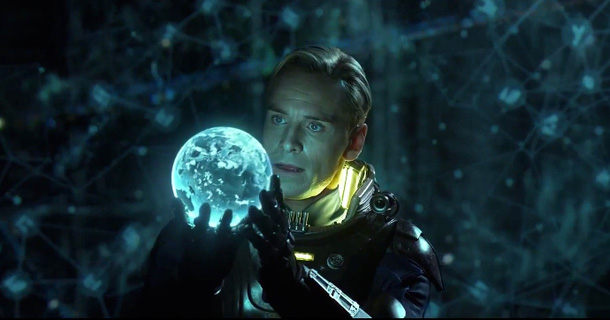
Ridley Scott reaches for the stars as he returns to the Alien universe. Does he bite off more than he can chew?

Editorial: Let's be thankful for Avatar

There are no doubt many, many crossed fingers in Hollywood right now, particularly executives at 20th Century Fox. These are the gents who have bankrolled James Cameron's upcoming mega-monster-epic-behemoth, Avatar, to the tune of anything up to $500 million (depending on whose figures are being quoted). Simply put, this film needs to be a massive hit to even come close to breaking even.
It's impossible to deny that the buzz around the film has been poor, and bordering on poisonous in some circles. After years of wait, hype, and speculation, the trailer hit a few months back and met with a resounding "Is that it?" from notoriously fickle, hard-to-please film geeks. Even worse, the general public seem to be completely indifferent. For a film to be a huge hit, the excitement needs to permeate the widest possible demographic, from hardcore fanboys to occasional cinemagoers. Outside publicity/controversy helps (Heath Ledger's passing no doubt added hugely to the mystique and must-see quality that The Dark Knight acquired), and although there has been some discussion surrounding the massive cost of Avatar and its supposedly revolutionary technology, there really seems to be little widespread interest. I would like to be wrong, because it's simply good for the health of the industry if a film hits big, regardless of its quality. But I expect not.
I don't want to offer predictions here, though, whether or not Cameron's folly will be a sensible investment in the long run. What concerns me is that people are judging this film before seeing it. Of course, that happens all the time, especially in the incredibly cynical "we hate everything" world of the rabid geek (just go and read any talkback on Ain't It Cool News). But it slightly saddens me that there aren't more people commending Cameron for not just doing what everyone else is doing, and going for the easy, safe, quick buck.
Seriously, what is the last blockbuster film you can think of that is not a sequel, remake, adaptation, or based on a widely known toy brand? I.e., that is actually an original screenplay? (Those smartypants who claim that Avatar is simply Dances With Wolves in space, or Ferngully, or whatever, can shut up. I'm not suggesting this film will necessarily be a beacon of innovation on a narrative level. But it is bringing us new characters and a new world that has not been seen before.) The days where the likes of The Matrix can come along and shock us with its energy and vision seem to be behind us, as studios simply seek the next pre-sold comic book property to adapt, rather than risk their money on something new. Of course, the brand being sold here is James Cameron himself, but, especially with him having taken a 12-year post-"King of the World" hiatus from narrative features, his name surely carries less weight than it once did.
I'm not even that bothered about Avatar's much-ballyhooed technical advances. All the fancy 3D and amazing effects in the world are simply an adjunct to the most important part, the quality of the film itself. If the technology lives up to the hype, so much the better. But, going by the trailers, absolute photorealism in CGI has still not been achieved. Cameron has not been helping himself in this regard, making typically overblown statements, indicating that the film will change cinema as we know it. Such inflated comments simply add fuel to the sceptics' fire and set up the director for an even greater potential fall, doing the film no favours.
Anyway, I'll be lining up to see it when it's finally unleashed, with an open mind and a sense of tentative optimism. I doubt it'll initiate the cinematic revolution that has been promised, or even be the biggest hit of the year, but I'm sure it will be memorable one way or the other - and at least it's not another bloody sequel. When was the last time Cameron let us down?
Captain's Blog - Epilogue

Well, this has been a treat. Having now watched these six films I can't believe it took me so long to finally get round to it.
The Star Trek films do not have the greatest reputation amongst the general cinemagoing masses, which is a major obstacle that the J.J. Abrams reboot had to overcome in order to be a success (a feat which it has certainly managed, as it currently stands as 2009's biggest earner). It's always said, as I've mentioned, that all the odd-numbered instalments suck and not even all the even-numbered ones are up to much; indeed only Khan, and to a much lesser extent, The Undiscovered Country and Next Generation entry First Contact, ever seem to be granted any level of respect at all.
I've found that reputation to be wholly undeserved. To my surprise but also delight, I enjoyed every single one of these films, and in particular, found I, II, III and VI to be excellent efforts indeed. My praise for The Motion Picture is probably the most against-the-consensus of those assessments, but while I can certainly admit its flaws, I wholeheartedly enjoyed it. I still think it's the only entry in the series that effectively articulates the sense of wonder inherent in space travel, and it also best captures Trek's central exploration theme. (Now having seen the subsequent five films I can however see how out of step it is with the rest of the Trek saga.)
I can truly understand now why Star Trek has held such allure for so many fans for over 40 years now. As of 2009, the franchise is commercially as strong as it ever has been, even if some hard-to-please diehards have complained about the liberties taken in the new film. As mentioned in my appraisal of The Undiscovered Country, I now find the prospect of watching the original series highly intriguing, and the recently released new DVDs give me the perfect opportunity to savour its '60s charms. Also I'd love to watch the Next Generation films, although I doubt that I will develop such an attachment to the new crew. Sadly those DVDs have gone out of print and Paramount show no signs of re-releasing them in the near future. Perhaps they will when Star Trek XII rolls round in 2011. And I might not even stop there - after all, there are plenty of Trek TV shows for me to catch up on. I've got a long way to go.
A ranking of my enjoyment of these films is pretty immaterial considering that I took so much pleasure out of viewing the series as a whole, but if pushed, I would give this order:
1. Star Trek VI: The Undiscovered Country
2. Star Trek III: The Search for Spock
3. Star Trek II: The Wrath of Khan
4. Star Trek: The Motion Picture
5. Star Trek IV: The Voyage Home
6. Star Trek V: The Final Frontier
It may be heresy to rank Khan as low as third, but in truth the order is fairly interchangeable. And, for what it's worth, Star Trek 2009 would probably slot in about 4th, a notch ahead of The Motion Picture.
I've journeyed where I've never gone before, and it's been a blast.
Captain's Blog - Entry #06
 Star Trek VI: The Undiscovered Country (1991)
So, after watching five motion pictures, each with their own distinct merits (and some with more faults than others), my brief journey comes to a temporary close with The Undiscovered Country. I say temporary because I now find myself rather attached to these characters and fully intend to go back to the beginning and watch the original series. I must admit, I feel a tinge of sadness that I won't see these characters in another cinematic adventure again - notwithstanding their younger incarnations in J.J. Abrams' reboot, of course.
After the relative commercial failure of The Final Frontier - with a gross of $52 million it ranks as second-lowest money-spinner in the franchise, one place ahead of the tenth instalment, Nemesis - as well as its abject reception, the producers turned to their go-to guy for times when the franchise appears to be in trouble: Nicholas Meyer, the man behind The Wrath of Khan. Despite admitting that before he was given the task of concocting Star Trek II he was totally unfamiliar with the series (he sat down and watched every original episode before deciding on the plot), Meyer proves again with The Undiscovered Country that he is the most dependable hand when it comes to transporting Trek to the big screen. It's a gripping, exciting adventure, and a fitting send-off for the beloved crew.
It's almost immediately apparent that this is a more dynamic and confident entry than the occasionally turgid (yet still underrated in my opinion) previous instalment. The difference in the visual panache and energy between the two films makes it hard to believe that they were made a scant two years apart. Indeed I would say out of all of the six original crew films this one delivers the most consistent and believable filmic world for the characters to inhabit, with a level of detail and nuance in the set designs that surpasses any of the previous films and makes it a treat on a visual level. Luckily, TUC has far more to offer than just slick visuals.
The plot begins with a bang, as a huge explosion on a Klingon moon puts their whole civilization under threat. (The explosion is occurs in the vicinity of the Sharship Excelsior, now commanded by the newly promoted Captain Sulu. The reveal of him sitting at the captain's chair was a great touch.) The warmongering race are forced to agree to peace talks with the Federation, and the old Enterprise, about to be decommissioned, is assigned to escort the Klingon ambassador and his entourage to the summit. But after an uncomfortable dinner party on board the Enterprise arranged by Kirk as a courtesy, the Klingon ship comes under attack from, it seems, the Enterprise itself. Two suited assassins then beam onboard the alien vessel and cause havoc, shooting at will. Soon Kirk and Bones find themselves under Klingon arrest, charged with murder, while Spock attempts to unravel the mystery behind the attack.
The setup is truly compelling, combining intrigue with spectacular action. The sequence in which the mysterious assassins board the Klingon ship is superbly orchestrated, featuring some rather stronger violence than has been seen in the franchise up to this point, which only increases its impact (as the Klingon victims bleed from their wounds, their pink blood floats in the zero gravity atmosphere of the ship, and one unfortunate bloke even gets his arm shot off, which all required some elaborate and then-new CGI). The whodunnit aspect proves to be an excellent way to drive the plot and the mystery is effectively sustained right to its conclusion.

There is more linkage here to previous instalments than has sometimes been the case in this series, which is greatly appreciated. It's not surprising, perhaps, given that Nicholas Meyer came up with the character, that Kirk's son, whom he met in Khan and was killed in The Search for Spock, is referenced here, and for the first time Kirk seems truly saddened by his loss, giving the character greater depth than has been glimpsed previously. (Meyer, it seems, is the best at coaxing good performances out of Shatner, not that the actor has ever been terrible.) Also, Meyer resurrects the subplot of the aging crew that he introduced nine years previously, which is fitting considering this is their final adventure.
Meyer's presence also shows itself in the dialogue, which is much more intricate and literary than any of the films since Khan. Much humour, for example, is drawn from the fact that the Klingons - led by Christopher Plummer, who is great in the role and makes General Chang a close runner-up to Khan in the best Trek villains race - are lovers of Shakespeare. ("You have not experienced Shakespeare until you have read him in the original Klingon" is one dialogue gem.)
While the first act is absolutely top-notch, my interest level did drop slightly once Kirk and Bones had been put on trial and sentenced to life imprisonment on a back-of-beyond penal colony planet, if only because I've seen the 'imprisoned protagonist(s)' device used too often before (in science fiction, Planet of the Apes, Return of the Jedi and The Chronicles of Riddick come to mind), and rarely find it particularly compelling. Fortunately these scenes are well executed and relatively brief, as the pair are rescued rather swiftly by the Enterprise, with Spock in command. The prison detour does allow for a great little scene in which Kirk fights himself, or rather a treacherous shape-shifter who has adopted his appearance. (One line in this scene made me laugh out loud but it wouldn't really work if quoted out of context.)
The scenes on board the Enterprise are utterly gripping for the duration, and the stakes escalate beautifully as the finale nears. At the end, Meyer crosscuts between characters and events with positively Coppola-esque aplomb, making for a conclusion that is genuinely thrilling and exhilarating, atoning somewhat for the anticlimax of The Final Frontier. It's the best adrenaline rush of all of the Trek films I've seen, including the 2009 one. The final scenes are pitch-perfect and tremendously moving, which is both a testament to the performances of the cast throughout the whole series and Meyer's superb handling of this fond farewell. I can only imagine what long-time Trekkies/Trekkers felt as the credits rolled and each cast member signs off their name.
It's a close-run thing, but I would have to say that The Undiscovered Country earns its place as my favourite Star Trek. Magnificent.
 5 out of 5
Captain's Blog - Entry #05
 Star Trek V: The Final Frontier (1989)
My inner masochist was geared up for The Final Frontier, ready to witness an absolute trainwreck. I recently read a pretty detailed review that absolutely tore the film apart virtually scene by scene, and going by the impression I gleaned from that, I was expecting something laughably bad. The crew sing "Row, Row, Row Your Boat" around a Yosemite campfire? Right...
Well, I can say that it wasn't as bad as I had feared. Indeed, I would go as far as to call it an overall entertaining entry in the series. It definitely has some rather shaky moments and sizeable plot holes but these, for me, did not ruin the film; they just made it a slightly weaker instalment.
There are quite a number of things going for it. In principle, the plot sounds perfectly decent, involving the Enterprise being hijacked by a renegade Vulcan - who turns out to be Spock's half-brother, no less - in search of a mythical planet that lies beyond the 'Great Barrier' at the centre of the galaxy through which no ship has passed (i.e. the final frontier). Unfortunately, at almost every turn there are rather dodgy scenes of attempted comic relief that do their best to undermine the film's dignity.
By all accounts, The Final Frontier is the least liked of the original crew films, even reviled in some quarters. Much of the blame is often lain at the feet of William Shatner, who having been bossed about by supporting player Leonard Nimoy for two films, had it written into his contract that he would get to direct the next film. And while the direction in some of the scenes comes across as amateurish, it's never distractingly bad. Furthermore, it is noted in the DVD commentary that Shatner's original intention (he receives story credit too) had been for a pretty dark tale, but was shot down by the studio who wanted more of The Voyage Home's style of light-heartedness (it had, after all, been a big hit). So it may be unfounded to blame all of the film's misjudged moments on Shatner.
It is certainly true though that Kirk is shown in a much more flattering light here than in any of the films so far. It's funny that way back in Khan in 1982 there was a subplot involving Kirk's advancing years, about which Shatner was supposedly uncomfortable, but age hasn't been mentioned in any of the films since. In Frontier Kirk is at his most heroic and virile yet, which is taken to a rather hilarious extreme in the film's opening credit sequence when the captain is shown to be climbing a vertical cliff face in Yosemite National Park. Comparisons with the opening of Mission: Impossible 2 come to mind, but it's fair to say that Shatner in his late 50s seems a less likely rock climber than Tom Cruise in his prime. Kirk is also involved in several fights this time and gets to show off some impressive physical prowess. It's hard not to think that there's a degree of ego-stroking on Shatner's part going on here.

The plot initially focuses on the planet of Nimbus III. I found the production design of the planet to be pretty excellent, with a dusty desert look reminiscent of the Mad Max series. In this location at least the limited budget is stretched very well, with the rusty outpost ironically named Paradise City boasting a certain visual authenticity that makes it a compelling setting. The renegade Vulcan, Sybok (Laurence Luckinbill), who takes control of Paradise City in an early action scene before setting up an elaborate ruse to lure the Enterprise to the planet, makes for a interesting antagonist too; he doesn't seem to be evil at all, just deceptive in order to achieve his goals. It's unfortunate that his Jedi-like powers of persuasion are never elaborated upon: does he actually have the capacity for mind control, or is he just a great salesman?
The film just lacks much drive, and despite being one of the shorter Treks (102 minutes), feels sluggish. Its conclusion is slightly dubious too. Sybok is actually looking for God himself and there is a sequence in which a god-like entity appears and talks to Sybok, Kirk, Spock and Bones when they explore the planet beyond the Great Barrier. The implication is that it's not God and is instead an illusion, but there's an infuriating reluctance to elaborate on just what's going on, and I found myself left slightly bewildered, and not in a good 2001 sense.
To my great delight, Jerry Goldsmith returned to scoring duties, and he brings all of his brilliant themes from TMP with him. When his iconic theme kicked in with the opening credits, it really hit home how much I've missed his music in the intervening films, despite the worthy contributions from James Horner and Leonard Rosenman (the latter in The Voyage Home). Goldsmith was given the opportunity to employ his excellent Klingon theme much more extensively here than in TMP, as the Enterprise is pursued by a Klingon captain in search of a worthy opponent. The subplot adds a much-needed dose of suspense to the sometimes uncertain narrative.
Overall I must admit I quite liked the rather cheap 'n' cheerful nature of The Final Frontier. The budget was clearly limited, the effects relatively poor (ILM this time were not available), and the story sometimes confused and far less profound than I feel it was intended to be. Yet its good points - including the production design of Nimbus III, the idea of the Enterprise being commandeered by a villain, the always enjoyable repartee between the crewmembers, and, of course, the music - definitely outweighed the bad. In fact, I suspect this is as close to an Original Series episode as the movies get.
And that campfire scene? I actually found it quite endearing.
 3 out of 5
Captain's Blog - Entry #04
 Star Trek IV: The Voyage Home (1986)
I wasn't sure what to expect from The Voyage Home. Like most people, I knew it as 'the one with the whales', and I had heard enough of the plot to decide that it sounded pretty awful. On the other hand, as one of the even numbered series entries (not that I have found the 'curse' to have any actual basis in reality so far), Voyage has a fairly decent reputation and, I gather, is generally well enough liked by the fans. What's more, until Star Trek 2009 came along, it was the highest grossing of the series and the only one to pass $100 million domestic.
But that plot! To summarise: Continuing directly from The Search for Spock, Kirk and the mutinous crew of the Enterprise set off from Vulcan, heading to Earth (without the Enterprise itself, of course, it having been spectacularly destroyed in a sequence that was a highlight of the last film). Meanwhile, a strange, rather non-descript entity appears in Earth orbit, sending the planet's weather and all electrical systems into meltdown. So far so good, as far as the story's concerned. There are echoes of The Motion Picture in the 'unknown object heads for Earth and brings potential cataclysmic event' plot, but the tone is much more light-hearted, and the direction that the story takes is altogether different.
This is where it gets a bit bonkers. Said spaceship-thing is emitting strange noises that nobody is able to decode. Spock, however, recognises them as the song of the humpback whale, so to stop Earth's destruction they need to get a whale to sing back. Problem is, in the 23rd century humpbacks have long been extinct. Solution: travel back through time to late-20th-century San Francisco and find some whales. Who makes this stuff up?!
Well, one of the creative team this time is Nicholas Meyer, who after masterminding Khan's wrath chose to sit out its immediate sequel. Meyer's return here is easy to take as one indication that the film will probably have something going for it. It's noticeable, for one thing, that the optimism that was present in Khan but less so in Spock returns here with a vengeance. This is a generally light-hearted, endearing film which seems so good-natured that it's hard not to like. Leonard Nimoy directs highly competently for the second time.

The middle hour or so of the film takes place on Earth circa 1986, and it's this chunk which is the hardest to buy. Fish-out-of-water comedy can be great - I wonder what impact the success of Back to the Future in 1985 had on the decision to include time travel here - but there's a very fine line to tread between comedy and forehead-slapping stupidity. Fortunately, for the most part the scenes manage to toe the line, and there are some absolutely hilarious moments, including Spock's attempt to grapple with swearing and Chekov's search for 'nuclear wessels'.
While amusing, though, I did find that sometimes it became a bit too cute and twee, and I never quite managed to swallow the whales (so to speak). Plenty of opportunities are grasped to have a dig at archaic 20th-century practices like atmospheric pollution and, naturally, whale hunting, which are justifiable if a bit unsubtle, but the film only really kicks into gear later on when the script starts to increase the dramatic stakes (Chekov gets critically injured trying to escape an aircraft carrier - the real USS Enterprise! - and the whales that Kirk has earmarked for transportation go missing). Even then, there's never any real suspense or jeopardy.
More could have been done with the actual time travelling process, I thought; if it's this easy to do it (Spock punches some numbers, then they sling the ship round the sun, et voila), why isn't it a routine procedure in the 23rd century? Additionally, the actual time warp sequence itself, featuring some early CGI, was certainly trippy but a bit too bizarre and random for my tastes. Once everything returned to a degree of normality with the crew back in the future, I found the finale to be pretty well done. In particular, the crew's introduction to the brand-spanking-new Enterprise was a great moment that really sent the film out on a high.
Certainly this was my least favourite Trek so far, but given the (unexpected) level of entertainment I've got from all three previous films that's hardly a damning indictment. Although complete fluff with a barmy premise, The Voyage Home worked pretty well on its own terms, and as a comedy it has some genuinely great laughs. Ultimately, however, with its distinctly '80s flavour, I found it to be a bit too rooted in the time of its production and therefore the most dated of the films so far, preventing total involvement on my part.
 3 out of 5
Captain's Blog - Entry #03

Star Trek III: The Search for Spock (1984)
Colour me impressed. It may be bordering on sacrilege to say it, bearing in mind that this is an odd-numbered sequel and therefore bad, but I found The Search for Spock to be possibly the most purely entertaining out of the three Treks I've seen so far. It and Khan serve as very much a complete two-part story - Spock even starts with an obligatory 'previously on Star Trek' prologue - and although the events of this third film basically serve to undo everything changed in the second, I found it to be handled well with a degree of verve.
I lay some of the film's success at the feet of Spock himself, Leonard Nimoy. Spock's demise at the end of Khan had been intended as the character's final farewell, but the film's first weekend box office and, no doubt, a fat wad of cash saw to it that Nimoy reversed his decision to depart the series. He was also tempted back by the opportunity to direct the film, and he proves himself an adept craftsman behind the camera. The whole film is directed with intelligence and sensitivity (an example of which being the scene in which Kirk and Spock's father meet on Earth; Nimoy employs extreme close-ups, which really hammer home the emotion), and its pacing is the most brisk and lean yet.
The title is not only a bit of a spoiler but something of a misnomer too: Spock isn't really searched for. A more appropriate title might have been The Resurrection of Spock or, alternatively, The Return to Genesis (which according to the IMDb was a working title), referring to the continuation of Khan's plot element of a device that can transform lifeless planets into edenic paradises. A fair bit of the film takes place on the Genesis planet, and even though it may have benefited from some location work (again, everything is set-bound), it provides a pleasant variety and an interesting backdrop.
Making up for the noticeable absence of alien races in the first two films (barring a couple of cannon fodder Klingons at the start of TMP and the few Vulcans on Enterprise's crew, Spock included), there's a much greater, er, ethnic diversity this time. The baddies are Klingons, led by Christopher Lloyd, who gets to chew enjoyably on the scenery but does not really convince as an evil warlord. There's also a fun, blatantly Star Wars-inspired scene in a diner, which provides the most colourful selection of species yet.
It's nice to see some of the less prominent members of the crew get more to do this time. Sulu gets his own action scenes, Uhura shows some attitude, Scotty sabotages Starfleet's most advanced ship and Bones gets possessed by Spock's 'Katra' (soul, basically). DeForest Kelley as Bones has been a consistent delight so far, and is quickly becoming my favourite crewmember. His connection with Kirk comes across as truly heartfelt and I'm sure Shatner's performance benefits too.

I'm really loving the old-school effects in these movies. They certainly possess a texture and weight to them that modern CGI, for all its manifest advantages, is not (yet?) able to achieve. The effects in Spock, again supplied by George Lucas's ILM, are consistently superb, with the advances since 1979 already quite apparent.
I've also grown to appreciate James Horner's work on the music more. I still believe that his themes are less instantly striking than Goldsmith's, but they have a likeable melodic quality and certainly contribute to the mood at all the desired points. The continuation of his motifs from Khan adds a pleasing continuity and development that enhances the connection between the two films.
It's true, perhaps, that The Search for Spock could not really work on its own; it relies too much on what Khan has already established to be its own entity. But as a direct continuation of the same story, that could not really be avoided and is not necessarily a flaw. More disappointing is the way in which Kirk's newfound son is unceremoniously dispatched (I wondered where that potentially cumbersome arc would go; the answer is 'nowhere'), but on the other hand, the transformation of Lt. Saavik from Kirstie Alley to Robin Curtis is fairly seamless.
Thus far, the supposed 'odd-number curse' has not materialised at all for me. I can see why some may not like the unusual and slow first film, but for me The Search for Spock was a completely effective and well-judged continuation of what Nicholas Meyer had so successfully started in The Wrath of Khan.
 4 out of 5
Captain's Blog - Entry #02

Star Trek II: The Wrath of Khan (1982)
The Wrath of Khan is so firmly ensconced as the best Trek film that it's basically this franchise's The Empire Strikes Back: anyone who doesn't name it their favourite can certainly lay no claim to being a full(-green?)-blooded Trekkie. Going by the reputation, half of me was expecting really good things, and the other half was getting prepared for disappointment.
I was not disappointed.
Even though I liked The Motion Picture more than it seems most viewers do, my thorough enjoyment of Khan proves that appreciating one does not preclude enjoying the other. They are certainly very different approaches to the material, but, to my eyes, both have definite distinct merits.
The virtues of Khan presumably stem mostly from its director, Nicholas Meyer, who has since been crowned the man who resuscitated Star Trek. The two main attributes that Meyer brings to the film that were lacking last time round are drama and emotion - not insubstantial elements in any successful film, one would suspect. Throughout there is a greater sense of dramatic momentum and immediacy, while the actors are given some opportunities to really stretch their thesping muscles, making a change from their continual gawping at the view screen that they were doing for much of TMP. It has the effect of making the film pass much more quickly; though 18 minutes shorter than TMP (going by the PAL runtimes), the difference feels much greater.
Right from the get-go, there is an evident deference to the source material - the film begins with the familiar notes of the Alexander Courage's theme from the original series - and the characters are given much more time to play off each other. The dialogue is much wittier this time, with several great lines (particularly from Bones, but Kirk is certainly more lively this time too) and a general sense of playfulness pervading the whole enterprise (if you'll pardon the unintended pun). Despite the more playful tone, this Trek is also simultaneously harder-edged than its predecessor. Although hardly extreme, there are some icky moments (space slugs!) and some scenes of injuries of the sort the U-rated Motion Picture shied away from.

The titular Khan, embodied by the supremely watchable Ricardo Montalban, is certainly a great villain and suitable foil for Kirk. His backstory is very interesting and gives him very logical and compelling motivation, which enhances him further as a great antagonist. Khan first appeared in an episode of the original series, a viewing of which I'm sure would help me appreciate this film even more. I would admit, though, I had expected Khan to have more screen time - once he hijacks the Federation ship Reliant and begins pursuing Kirk, he's only really seen fleetingly during the space battles.
Apparently, despite not featuring the direct involvement of Trek creator Gene Roddenberry, Khan manages to be much closer in spirit to the series than TMP was, which I'm sure is one of the main reasons it's thought of so fondly by fans. And while I certainly enjoyed the banter and byplay between the crew and the greater ease at which all the actors seemed to be, I did also enjoy the more cerebral aspects of TMP, which were replaced here with slightly more visceral, if not exactly Star Warsian, thrills. Another element I missed was, of course, Jerry Goldsmith's music. In the attempt to sever all ties with the previous film, Goldsmith's score was jettisoned along with everything else, and while James Horner proves to be no slouch (he's particularly good with action scenes, his score here sometimes reminding me of his Aliens work), the themes he pens are not nearly as memorable.
The markedly reduced budget is quite evident at times too - some sets look rather cheap and over-lit, and the re-using of effects shots from TMP did not escape my attention. But in truth the tighter reins probably helped everyone, forcing more focus to be placed on the story and characters, to the benefit of the film. And the new effects, though fewer in number, are still very good, thanks to the team at Industrial Light and Magic.
A word on the ending (spoilers!): I knew beforehand that Spock dies in an act of self-sacrifice, but it was well handled and did hit the right emotional and dramatic notes. Of course, I also know that he doesn't stay dead for long, as the title of Star Trek III rather clearly suggests. I anxiously await The Search for Spock.
 4 out of 5
Captain's Blog - Entry #01

Star Trek: The Motion Picture (1979)
"Well, that's a nice surprise." This was my first reaction upon beginning Star Trek: The Motion Picture. The reason? It has an overture. Starting films, usually 3+ hour epics, with an excerpt from their musical score set to a blank screen (or static image) was all the rage in the late '50s and much of the '60s - said films almost always had intermissions and exit music too - but these grandiose practices fell out of favour in the revolutionary 1970s. I, however, always find these little sections are a great way to set the mood, and of course it helps when the musical score in question is good. And in TMP's case, it's a humdinger.
Of course, I was familiar with the main theme, as it had later been appropriated for use as Star Trek: The Next Generation's opening titles (a show I never watched, but its theme is firmly seeped into the cultural consciousness). Jerry Goldsmith has a ball here, and is given plenty of opportunities to really let the orchestra loose. There are frequent extended sections of little or no dialogue in the film, which means that the score can really dominate the soundtrack. Orchestral music had come back in fashion with John Williams' Star Wars masterwork, and Goldsmith's contribution here is every bit as instrumental (in both senses!). Veering between lush Wagnerian fanfares and Herrmann-esque menace, with a good dash of Forbidden Planet-style electronic warbles, it's a score of superb variety and richness.
It was probably the consistently delightful and surprising music that kept my attention glued to the screen for the entirety of TMP's run time. That's right, the film that is often dubbed "The Motionless Picture" gripped me for the duration. Sure, there were some very slow sections, but the magisterial score constantly kept me engaged. It'll be interesting to gauge how my interest is sustained on a second viewing, because I'm sure a big part of my engagement was the sense of novelty and wonder that will no doubt diminish second time round.
The effects also assist the immersion. Hoping for Star Wars-sized grosses, Paramount threw money at the film and the results are on screen. With an effects team as qualified as this - including Douglas Trumbull, of 2001 and Close Encounters, and John Dykstra, fresh off Star Wars - impressive sights are to be expected, but thanks to the budget they are really allowed to outdo themselves this time. Especially considering its age and the fact that the effects (in the original theatrical version that I watched) have not been touched up with modern CGI, it's an astounding achievement. Indeed the film can certainly be criticised for prioritising the imagery over the story and character development; it is basically a test case for the argument that spectacle interrupts and halts narrative.

The story does not, on paper, sound promising. An impossibly giant and utterly unfriendly, er, cloud, is found to be on course to destroy Earth in a matter of days. Only one ship, a certain USS Enterprise, can hope to stop it... Yes, the big bad here is basically an enormous - like, 7-billion-miles-across enormous - cloud, but this isn't a case of Fantastic Four: Rise of the Silver Surfer syndrome. The cloud, which does admittedly have an alien ship at its centre, is actually quite threatening, thanks to some superb sound design (this film is really great in the aural department) and a general sense of malicious mysteriousness - just what is it? If the final answer to that question at first seemed underwhelming, on reflection I quite liked the film's philosophical posturing.
I have to say, though, that even if more scenes of crew interaction wouldn't have gone amiss (a problem apparently rectified somewhat in the Director's Edition, not included with these new DVDs), the plot is far from non-existent. At times it even verges on thought-provoking. 2001: A Space Odyssey is rather unashamedly channelled throughout; it even has its very own 'Beyond the Infinity' sequence as a spacewalking Spock floats to the heart of the massive sentient vessel. And while director Robert Wise could never have hoped to emulate the quality of the pinnacle of cinematic space opera, he does not do a bad job of aping some of its imagery while bringing some sense of heart and humanity. There are moments too that are just as baffling as Kubrick's classic, which may or may not be a good thing, depending on taste. Personally I appreciated the ambiguity. By all accounts, Wise - the experienced helmer behind such hits as The Sound of Music and The Day the Earth Stood Still - had a hell of a time dealing with all the conflicting egos and ceaseless rewrites during production, so it's a real credit to him that the resulting film works at all.
In summary, then, Star Trek: The Motion Picture worked for me thanks to two things: (1) the music, and (2) the visuals. Despite its respectable box office grosses, this wound up being the largest-budgeted of the original films, so I am not expecting such spectacle in the later instalments. But up next is The Wrath of Khan, the certified Best Star Trek Film Ever, so I'm hopeful that the quality will only improve from here.
 4 out of 5
Captain's Blog - Introduction
I have recently seen, and greatly enyoyed, the new J.J. Abrams Star Trek. I once saw Star Trek: First Contact on TV, but that was some years ago and I can't really remember it. This is the entirety of my Star Trek experience.
From a self-confessed science fiction obsessive, that may come as a surprising admission. For some reason, the Trek universe had just never appealed much to me; all it seemed to offer was ridiculous-looking aliens with nobbly foreheads and outrageously naff production values. But now I am prepared and willing to dump my preconceptions and properly delve into Trek for the first time.
There are very few whole film series that I have managed to avoid completely (in most cases, these are not films that I have deliberately chosen not to see; I just haven't felt the urge)*. With the release of the 2009 (re)incarnation of Star Trek and its surrounding hoopla, the time feels right to finally see what all the fuss is about, and watch the motion picture saga from the beginning. Helpfully, Paramount have seen fit to re-release the first six - the ones starring the original crew of Kirk, Spock and co - with spiffy new remastered transfers.
I thought it would be interesting for me to note down my first impressions of each film as I watch it. Without the benefit of hindsight, or a detailed foreknowledge of where the series is heading next, my initial observations will hopefully offer some sort of insight into what it's like to observe this venerable series for the first time.
So, as I embark on this voyage into the unknown, I have a degree of trepidation. I have heard about the 'odd number curse' (only the even-numbered sequels are any good, supposedly), and I am therefore aware that The Motion Picture may not get things off to a promising start. Well, there's only one way to find out...
*The only other examples I can think of off the top of my head are the Rocky series, and some horror franchises such as A Nightmare on Elm Street and Friday the 13th. I do intend to finally watch all the Rockys soon; the horror films I am not so bothered about.
.
From a self-confessed science fiction obsessive, that may come as a surprising admission. For some reason, the Trek universe had just never appealed much to me; all it seemed to offer was ridiculous-looking aliens with nobbly foreheads and outrageously naff production values. But now I am prepared and willing to dump my preconceptions and properly delve into Trek for the first time.
There are very few whole film series that I have managed to avoid completely (in most cases, these are not films that I have deliberately chosen not to see; I just haven't felt the urge)*. With the release of the 2009 (re)incarnation of Star Trek and its surrounding hoopla, the time feels right to finally see what all the fuss is about, and watch the motion picture saga from the beginning. Helpfully, Paramount have seen fit to re-release the first six - the ones starring the original crew of Kirk, Spock and co - with spiffy new remastered transfers.
I thought it would be interesting for me to note down my first impressions of each film as I watch it. Without the benefit of hindsight, or a detailed foreknowledge of where the series is heading next, my initial observations will hopefully offer some sort of insight into what it's like to observe this venerable series for the first time.
So, as I embark on this voyage into the unknown, I have a degree of trepidation. I have heard about the 'odd number curse' (only the even-numbered sequels are any good, supposedly), and I am therefore aware that The Motion Picture may not get things off to a promising start. Well, there's only one way to find out...
*The only other examples I can think of off the top of my head are the Rocky series, and some horror franchises such as A Nightmare on Elm Street and Friday the 13th. I do intend to finally watch all the Rockys soon; the horror films I am not so bothered about.
.
Subscribe to:
Posts (Atom)


