Blu-ray Review: The Book of Eli (2010)

There's something uniquely compelling about the post-apocalypse. The barren landscapes, rudimentary technology, dilapidated settlements and their embittered populace are all visual concepts that come across well in film. It is perhaps an oversubscribed sub-genre of science fiction cinema now - in fact, most future Earths depicted on film seemed to have experienced some sort of cataclysmic event - but still, the inherent potential of the setting offers a rich vein of possibilities. The Book of Eli was released soon after fellow dystopic vision-of-the-future The Road, with which it shares a certain aesthetic similarity, although Eli has a more commercial bent.

There are certain tropes that post-apocalypse films have in common with the Western, of course - namely the often bleak surroundings inhabited by the characters, and that sense of frontier spirit that pervades such locales - and Eli sets itself up as a sort of neo-Western, initially. Eli (Denzel Washington) is your typical morally ambiguous man of few words, who emerges from the desert with an air of mystery. Shane/A Fistful of Dollars/High Plains Drifter, etc., come to mind. But Eli's on a quest - yes, involving the titular Book - so, unlike in a Western, he does not stop for long at the first town he comes to, despite its local despot's (a fairly reigned-in Gary Oldman) wishes to the contrary. Instead, he continues walking towards his destination, which he simply states is "west".

As you would guess, there's a lot of walking in Eli, some of it even in slow motion (to emphasise that he's really walking a long way, presumably), but it does mostly avoid the monotony that could entail. Partly it's through shameless employment of the conventions of the genre - yes, there is a biker gang, and yes, there are cannibals - and partly it's through that central MacGuffin, the book. (At first, the film does its best to hide the book's identity, but it's not hard to guess, and, fortunately, the reveal is not the film's big twist, which it saves for the end.) Eli's unshakeable sense of purpose lends a similar drive to the narrative, even though it's more mild curiosity at its ultimate goal, rather than real engrossment. The Hughes Brothers clearly want to make a film that is deeper than just surface entertainment, but they go too far sometimes; despite their best intentions, it's not particularly profound, and at times plods.

Denzel "Mr. Gravitas" Washington has no problems holding your attention, despite having little more apparent personality than his greying beard. He convinces as a complete badass in the action scenes, which are well staged by the Brothers Hughes; in particular, one early confrontation that takes place under a highway overpass, shown entirely in silhouette in one held shot, sticks in the mind. The visual style, though, is a bit more divisive: this has probably the most digitally manipulated colour palette yet seen, reducing everything to various shades of brown and grey. It certainly gets across the aridity and bleakness of the landscape, but it does tend to suffocate the life out of the excellent production design.


Release Information
Country: UK / Region: B / Version: N/A / Discs: 1 / Distributor: Entertainment In Video.

Presentation
Picture: Quandaries about the stylisation aside, there are problems with this transfer. The high contrast, almost monochrome look clearly gives the disc's encode difficulties; aliasing around sharp edges (such as windows), banding, and macroblocking (particularly in the cloud formations) are not rare. The clouds also sometimes have green tints, which seems out of place with the colour palette - but this may be intended. The picture is clean and grain-free, although a possible consequence of shooting with the Red One camera is that detail can get a bit smeary. It's not terrible, but I can only assume it's a different transfer from Warners' US release, which has received generally good write-ups.

Sound: Not as much to complain about here - convincing environmental effects envelop you throughout, and the action has a satisfying heft. Directionality is superb, a prime example being in the homestead siege. However, much of the dialogue is hushed whispers, which gets a little trying; you may have to fight the urge to yell "Speak up!"

Extras
Sadly WB's Maximum Movie Mode is not ported over, but the Picture in Picture track is still pretty decent. The separate featurettes total about 45 minutes, and treat the film reverentially. There's a short Motion Comic-style piece giving Carnegie (Oldman's character) some backstory. The deleted scenes are brief.


Summary
More been there, done that than anything truly new, The Book of Eli is serviceable fare that aims for profundity but achieves, at best, only some small resonance. There's never quite enough to keep you hooked.

Feature: Review of 2010

Welcome to FilmVerdict's now-perennial look back at the previous year of films. As usual, it takes the form of a list of the 10 films I liked most in the year just gone. It's not given in strictly an order of quality; rather, it simply reflects my level of affection for each film seen during the given 12 months. Do keep in mind that I didn't see nearly as many new films in 2010 as I would have liked, so I don't claim that this list is exhaustive or definitive. Click the provided links to go to the review of each title (where one has been written) - and don't be surprised to find that my opinions have changed from first viewing!


10. The Princess and the Frog [Cinema Review] - Disney's return to hand-drawn animation was a big success for me, resulting in probably the best traditional Disney since The Lion King. The songs are toe-tapping, if not particularly catchy, and the characters are enormously endearing. Best of all though is the artwork - a sumptuous, romanticised recreation of jazz-era New Orleans.


9. The American - This is the first of two films on this list that I watched on a plane and I don't feel such conditions give you a true impression of a film - hence the lack of a review - but I do know that I was gripped by The American throughout. Its Day of the Jackal-esque examination of the minutiae of an assassin's life is absorbing in its moral conflictions, while the thoughtful pacing is an ideal match for the material.


8. Green Zone [Blu-ray Review] - Underrated much? Paul Greengrass and Matt Damon's first collaboration that isn't Bourne was a film with just as much energy and thrilling action. It may not have as much to say about the Iraq war as it might promise to, but as a compelling thriller with a real-world canvas, it further reinforces Greengrass's reputation as amongst the best in the business.


7. The Ghost - Who knows how Roman Polanski's career would have gone had he been available to work in America for the last thirty years. What we do know is that he has still been able to crank out a few works of a master in his European exile. The Pianist is one; Frantic, perhaps, another - and The Ghost certainly belongs in that category. In tone and feel it's surprisingly close to Polanski's Chinatown, keeping you in its vice-grip until the inevitably unforeseen end. Its great achievement is the atmosphere of dread that is built up despite not much actually occurring to justify it, and confirms Polanski as one of the greatest purveyors of such unease since Hitchcock.


6. The Lovely Bones [Blu-ray Review] - Call me a Peter Jackson apologist, but I was a complete sucker for The Lovely Bones. I don't find its representation of "the in-between" (a limbo of sorts) completely convincing, and there's one CGI-overload montage that is utterly cringemaking, but nevertheless the film emphatically won me over. The two main performances - Saoirse Ronan and Stanley Tucci - are both exceptional, and Jackson shows a directorial flair that sometimes had got lost amidst the spectacle of prior efforts.


5. Toy Story 3 [Cinema Review] - Full disclosure time: Toy Story 3 is a brilliant film - faultless, perhaps - but I still feel a slight emotional disconnect with CG animation as opposed to their best hand-drawn brethren or live action. It's a rare CG film (such as The Incredibles) that really manages to worm its way into my most-watched pile. As such, this film that I rated 5 stars finds itself ranked below some others that I, in general, found more faults with. Toy Story 3 remains an incredible achievement though, besting the first sequel by some margin and sometimes touching quality of the original.


4. The Social Network - The other film on this list that I enjoyed at 36,000 feet, I can't be completely sure of The Social Network's ranking here before I watch it again, but I love the typically Sorkinese dialect spoken by the characters, and the intricacy and tempo of the editing. David Fincher's presence at the reigns is as low-key as I can remember it in a film, but that is an observation rather than a criticism. It's a film of people talking and typing, and as such it's incredible just how much drama and excitement the Fincher/Sorkin dream team inject into the potentially mundane.


3. Unstoppable [Cinema Review] - Unexpected. Undemanding. Unapologetic. Unstoppable is the ultimate edge-of-seat nailbiter. Yes, I enjoyed it that much. (Going by its Rotten Tomatoes score - 86% - I'm not the only one.)


2. Inception [Cinema Review] - I was harsh to Inception on release - probably due to a combination of expectation and befuddlement - but on repeat viewings the film that everyone else has been raving about has emerged for me. That's viewings, plural - since I've had it on Blu-ray this has proved to be a film that has kept calling me back for more, and I just can't get enough. It's certainly a visual and aural tour de force (Hans Zimmer's best score in years, perhaps ever), and, though the script can be clunky and too verbose, the momentum generated by the editing, music, and sheer bravado pulls it through. It also helps that the plot becomes slightly clearer on repeat viewings, albeit still impenetrable on occasion.


1. The King's Speech [Joel's Cinema Review] - The problem with Top 10 lists from a UK perspective is that a lot of the Oscar hopefuls, often some of the best films of the year, come out here in January or February, having reached US cinemas a couple of months earlier. That means that UK lists can look a year out of date. The King's Speech was released on Jan 7 on these shores, but I saw it on December 31 in Australia - therefore, I'm putting it on the 2010 list. It's an absolute masterpiece, and will be a deserved winner of the Best Picture Oscar should it achieve that, as it looks destined to. Basically it's a two-hander between Colin Firth and Geoffrey Rush; the former of which looks set to take home the gold man, but arguably it's the latter who brings most warmth, humour and humanity. Meanwhile the supporting players are superb too, notably Helena Bonham Carter as the future Queen Mum and Guy Pearce as Edward VIII (only Timothy Spall as a caricature of Winston Churchill strikes a bum note). For a film with a relatively small budget, director Tom Hooper - who impressed me a lot with HBO's John Adams and Brian Clough biopic The Damned United - brings a commendable sense of period and even some scale. It's impeccable craftmanship, and completely undeserving of any barbs pointed at stuffy British heritage cinema. Majestic.


Honourable Mentions
The Town, Clash of the Titans, The Expendables, Kick-Ass, Iron Man 2, Edge of Darkness, The Last Station, Robin Hood, Shutter Island, Tron: Legacy, A Single Man.

2010, over and out.

Blu-ray Review: The Town (2010)

Few actors-turned-directors have made more impressive starts to their career behind the camera than Ben Affleck did with Gone Baby Gone. Mature, gripping, and with a superb sense for capturing his hometown of Boston, the film was quite the calling card. He returns to similar territory with The Town (geographically and thematically), a follow-up with a bigger scale and loftier ambitions. Affleck makes the task even more challenging for himself by also taking on the lead role. For a guy whose career was seemingly in the post-Gigli gutter just a few years ago, he has certainly gone a long way towards reinventing himself.

The titular 'Town' is Charlestown, an area in Boston across the river from the city's downtown. As an opening text tells us, its square mile has been the breeding ground for more bank robbers than anywhere else in America. The story focuses on a group of four such bank robbers, led by Affleck's Doug MacRay. Soon after one heist, Affleck finds himself drawn to the manager of the bank, played by Rebecca Hall, striking up a romantic relationship while she remains unaware of his misdeeds. The hint of melodrama inherent in that synopsis indicates one of the film's only real failings: it's sometimes a little too far-fetched to truly convince. Otherwise, the depiction of the life of Boston criminals reeks of seedy authenticity; these are not guys who live millionaires' lifestyles, preferring to blow most of their misbegotten cash on drugs or booze.

Affleck plays both the de facto leader and the most level-headed of the bunch. It's partly due to the nature of his character - he's mostly detached and low-key - but he's thoroughly eclipsed on the acting front by Jeremy Renner as the posse's resident loose cannon, Jem. Renner is a screen psycho in the best sense, never overplaying the character's volatility but also never leaving you in any doubt that he could explode into violence at any time. A scene in which Jem uncovers Doug and Claire's tryst is memorably tense mainly due to Renner's dangerous presence. Hall hits the right notes too with her character, sufficiently vulnerable but never helpless; she's only hamstrung by her character's slightly implausible actions near the end (which do admittedly work in a dramatic context).

The film is punctuated by three main action sequences, roughly at the start, middle and end, all heists in differing circumstances and all very well handled by the actor-director. In particular a car chase and lengthy climactic shootout are superbly edited and paced. The strength of these scenes and some of the minor ones goes some way to compensate for a choppy pace that flags from time to time. Some characters also seem underserved, such as Jon Hamm's FBI Agent Frawley and Blake Lively's Krista; the problem is addressed somewhat in the extended cut included on this disc, but the pacing issue is never fully resolved. Still, it remains an accomplished and assured work from an emerging talent who clearly has much more to give both in front and behind the camera.


Release Information
Country: UK / Region: Free / Version: Extended Cut, Triple Play / Discs: 1 BD, 1 DVD / Distributor: Warner Bros.

Presentation
The Town's Blu-ray transfer is as solid as they come: nice rich colours (particularly blues - Affleck mentions in the commentary that he shot with tungsten film stock), healthy contrast, and light grain. It shows how good file compression is getting that despite a low bitrate - sometimes barely double that of a DVD - the image exhibits no noticeable compression-related shortcomings. The soundtrack is not the most enveloping, but it's crisp and clear, and the soundfield does open up appropriately when bullets start to fly.

Extras
An apparently meagre selection looks more substantial if one includes the extended cut as a bonus feature (it's not available on DVD). 25 minutes longer, it's not an improvement but is an interesting alternate version nonetheless. Mainly, more screentime is given to the love interest plotline. Ben Affleck's commentary, duplicated on both cuts but edited accordingly, is excellent - the sort of great commentary that can enhance your view of the film it accompanies. Six "Focus Points", half an hour in total, give a glimpse inside the production but more would have been welcome.


Summary
A satisfying action film for grown-ups: a rare breed indeed in recent years. The Town dodges its shortcomings through the passion and commitment of its cast and crew.

Cinema Review: Unstoppable (2010)

To call Unstoppable a throwback might seem a stretch, but that's exactly what it is - a return to the 1980s/90s when the "High Concept" ruled, before the current obsession with superheroes and CGI excess. They were the years that produced the likes of Die Hard and Speed - crowd-pleasing action films set, superficially, in the real world. Unstoppable belongs to that same ilk, its high concept being as good, and a simple, as any of them: an unmanned freight train carrying deadly chemicals runs out of control and has to be stopped before it derails in a populated area. It's based on a real incident that happened in the US in 2001, albeit with the usual fictionalised embellishments. Behind the reigns is a man no stranger to the 80s era - Tony Scott, director of Top Gun. If in the years since his breakout he has lagged behind brother Ridley in the prestige stakes, he's arguably been more consistent, churning out enjoyable actioners at a commendable rate. That continues here: Unstoppable is clearly the work of a man who knows his craft.

Firstly, the script (by Mark Bomback, who's not done much to write home about before) gets the essentials right. There's sufficient backstory to flesh out our main characters just enough that they don't feel like the cardboard cutouts their descriptions suggest - Denzel Washington's veteran train engineer Frank, and Chris Pine's rookie conductor Will - but not too much to bog down the beginning of the film. Washington's laid-back gravitas meshes well with Pine's eager cockiness; the latter's impressive showing in Star Trek was apparently no fluke. In fact Unstoppable is a very lean film, milking the full potential its perfectly paced 98 minutes. It gets to the point, the runaway train, quickly, before building up the suspense in such a brilliantly sustained way that any longer would have become too exhausting to bear (and it would probably have deflated like an overloaded house of cards at any rate).

The most refreshing part is that Scott has apparently insisted on keeping everything as physical as possible in the effects department. There's either very little CGI used, or, more likely, there's a fair bit of CGI but the placement of it is judged well enough that it is rarely, if ever, noticeable. The stuntmen must have enjoyed their work on the picture as they get more to do here than in most films these days where computers can eliminate safety risks but simultaneously dampen the thrills. There's one stunt that looks real where a character is dangling between two railway carriages on the speeding train; it evokes images of the most famous stunt of them all, in John Ford's Stagecoach.

The director is also clearly well aware that he needs to keep the adrenaline pumping the whole time for the film to reach its potential, and to this end his camera is never stationary, injecting even a simple scene of talking with immediacy and urgency. His unmotivated crash-zooms do sometimes irritate, but it's a minor issue; there's none of the seizure-inducing experimentation seen in his divisive Domino. Scott here has precision-engineered ideal blockbuster fare: not too taxing but not dumb, outlandish but not ridiculous, melodramatic but not overwrought.


Summary
Unstoppable couldn't have been named better - it's unstoppably entertaining.

Cinema Review: The King's Speech (2010)

Through the decades cinema has thrown up a countless stream of intriguing rivalries which are too extensive to list. Who would have thought then that despite the fact The King's Speech, a relatively small British film funded by a host of production companies and with the support of the redundant UK Film Council, would be causing such a storm with critics when it's essentially about one man's phobia of a piece of technology which will connect him to his people? With a stammering monarch as its protagonist in constant battle with a seemingly harmless radio, director Tom Hooper and writer David Seidler have created a masterpiece which is no less intense or memorable than a conventional thriller.

Colin Firth plays Albert (Bertie to friends), the Duke of York and the second in line to the English throne. Albert (George VI as king) is a dutiful royal, but is hampered by a debilitating stammer. He takes some comfort in the knowledge that his glamorous, playboy brother (a delightful Guy Pearce) will be the next king. Sensing his distress and public embarrassment, Albert's wife, Elizabeth (Helena Bonham Carter plays the young Queen Mother beautifully) seeks out noted speech therapist Lionel Logue (Geoffrey Rush). The eccentric Australian may be unorthodox in his methods, but Albert overcomes his initial reluctance, and begins to seek help for what he considers to be his affliction.

The educated know what happens next - brother Edward abdicates the thrown to shack up with American divorcee Wallis Simpson and Albert finds himself as King of England. 2011 is surely the year for Colin 'Mr Darcy' Firth to follow in the footsteps of Dame Helen Mirren and win the big golden statuette for portraying a royal - incidentally, George VI is Elizabeth II's father. With such a flawless performance, the audience is front and centre with Bertie and sympathizing with him for each and every second of the drama as he battles with various microphones, desperately seeking a normal voice for his country to hear. Already the Oscar frontrunner, potential nominees such as James Franco (127 Hours) and Mark Wahlberg (The Fighter) can only hope for a sniff of recognition during awards season as Firth is clearing up. Even Jeff Bridges' excellent turn in the Coens' True Grit may go unrewarded and not make it two in a row for him after last year's Crazy Heart.

The King's Speech works on two levels. It's an intimate portrait of the relationship between two very different men; the pampered royal figure who's terrified of the responsibility that looms in front of him, and the downtrodden working-class man who dreams of making an impact on the world. Firth and Rush give such nuanced, passionate and heart-breaking performances. But this is also an historical drama, and director Hooper, who's had acclaim with television dramas on Elizabeth I and American President John Adams, understands the weight of this material perfectly, littering the narrative with historical incidents but never straying from the sensitive main point of the film, the speech impediment which could have easily destroyed Albert's regal aura.

The film comments on so many things, such as the inaction of the British Government to deal with the Nazi threat, the scandal caused by the abdication, and the way the media (particularly radio) was beginning to change the way the public perceived important figures such as the royal family. While Firth and Rush lead the charge in the dramatic stakes, they are supported by such acting luminaries as Derek Jacobi, Timothy Spall, Michael Gambon and the aforementioned Pearce in a scene-stealing role. One of the most startling performances though is by Helena Bonham Carter as the future Queen Mother. She is warm and tender, while exuding an effortless royal presence. After years of scenery chewing in husband Tim Burton's works, it's nice to see a more delicately shaded performance from her.

Regardless of how Hooper's 1930s sets look extremely authentic and the perfect dialogue never misses a theatrical beat with its equal measure of low self-esteemed drama (from Firth) and cheeky comedy (from Rush), one can never escape how this is pure and simply an awards-friendly outing undertaken exceptionally well. Firth, the Englishman typecast for so long by romantic comedies until last year's A Single Man, looks a shoe-in for Academy recognition and it would be a crime if Rush was not at least nominated for Best Supporting Actor.


Summary
The King's Speech may focus on a stammer as its central theme, but Tom Hooper's exquisite film cannot help but hammer home in a crystal clear manner how it's an exercise in pure class. Brilliant.

Cinema Review: Morning Glory (2010)

As soon as Harrison Ford shows up in Morning Glory, you're left in no doubt that this is the most engaged and entertaining he's been in years - perhaps dating back to The Fugitive. Amusingly, his best role in ages sees him playing a curmudgeonly grouch with a giant chip on his shoulder who seems to hate everyone and everything. He's Mike Pomeroy, one-time respected news anchor, now relegated to the little leagues. Worse, he's forced into presenting a struggling breakfast TV show called Daybreak (the unintended irony of which will not be lost on most UK viewers) by an upstart young producer intent on turning its - and his - fortunes around. But before Ford threatens to hog most of the words in this review, let's get one thing straight: he's a supporting player. The aforementioned young producer is the film's central character, Becky Fuller (Rachel McAdams), hired on a hunch by Jeff Goldblum's bastard exec.

McAdams is practically heroic in this movie, and not just in the usual protagonist sense. She carries it along on her shoulders, investing the part with masses of energy and likeability - not a scene goes by (and she's in nearly every one) in which she isn't working like a mad thing. It could be exhausting to watch, but instead it's hugely engaging and engrossing. At the start of the film, she's fired from her previous producing job; a subsequent montage shows her being rejected multiple times by prospective employers. She only manages to get the Daybreak job through sheer desperate begging, and it's thought of as a poisoned chalice anyway, as its ratings are in an apparently terminal nosedive. Cue a typical underdog-comes-good story told very well indeed, with a lively tempo and an enjoyable sense of humour that stems from the characters rather than being forced in like a bad sitcom. You do have to feel for weathermen though, who always seem the butt of the joke.

Much of the film has echoes of TV show Studio 60 on the Sunset Strip - one of Aaron Sorkin's rare blips - but where that failed (it was set behind the scenes on a comedy show, but the comedy bits weren't funny), Morning Glory succeeeds (it is funny, despite depicting the world of news reporting rather than comedy). The winning characters - and the unscrupulous slimeballs - are all well written and immaculately performed. The only element that comes across as rather rote and unnecessary is the romantic subplot with Patrick Wilson, which is little more than window dressing - an apparent concession to genre convention. Director Roger Michell has past experience in quality comedy-drama, though (he directed Notting Hill), and he keeps a knowledgeable, sturdy hand on proceedings, ensuring they never dip too far into gushy sentiment.


Summary
Snappily written, tightly directed and very well performed, Morning Glory is a triumph. For Ford it could be the start of a career renaissance, and for McAdams, perhaps a deserved stepping stone to bigger stardom.

Cinema Review: Tangled (2010)

Tangled is the second film in John Lasseter's quest to return Disney animation to its classic roots, the Pixar supremo having previously overseen The Princess and the Frog. Both are fairytales in Walt's grand tradition. Tangled - which lost its original, more familiar, title of Rapunzel after The Princess and the Frog made less money than had been hoped, blamed on the girl-skewing connotations of the "Princess" part - is the first fairytale to be told entirely via the modern wonder of CG animation. It's certainly a triumph of pixel mapping, presenting a lush, glistening, beautiful fantasy land, and with a lead character who owns implausibly long but lovingly rendered hair.

If going the CG route can be seen as an attempt to update the fairy tale for contemporary audiences, so too can the manner in which the story is told. It's a jaunty affair that splits its attention between the tower-bound Rapunzel (Mandy Moore) and dashing outlaw - notably not a prince - Flynn Rider (Zachary Levi), soon to be her unwitting saviour, in an obvious attempt to keep both boys and girls interested. Flynn's scenes are the stronger, adding a good helping of excitement and swashbuckling, while Rapunzel is saddled with some dreary songs that err occasionally towards the sound of a Taylor Swift B-side - hardly the sort of orchestral romanticism that one expects from such subject matter. Indeed, Alan Menken's songs are generally underwhelming, although the composer behind the music of Beauty and the Beast and The Little Mermaid does produce some minor, if unmemorable, gems. Two of the musical highlights are devoid of lyrics, but are certainly lyrical in a different sense: one occurs when Rapunzel, free of her shackles, finally reaches the city with Flynn and engages in an impromptu dance with passers by; the other is a magical scene involving her watching hundreds of floating lanterns being released from the city at night.

Flynn also delivers a knowing, semi-postmodern voiceover narration at the beginning and end which comes off as a little too desperate to be cool, but thankfully the film never opts for DreamWorks-style pop-culture references. Instead, it develops its central story with admirable restraint, featuring a central romance that doesn't seem too forced or cliché. The animal characters steal the show, though - Pascal the chameleon (Rapunzel's shoulder-mounted sidekick), and Maximus the horse that thinks it's a dog - generating the biggest laughs, purely through their movements, gestures and facial expressions, as they remain resolutely mute. The way in which the story has been developed from the very simple original tale is quite ingenious, as unlike, say, Sleeping Beauty, the pacing never feels elongated or devoid of sufficient incident. It's a pleasure to see a film so happy to embrace an old-fashioned story style, setting it apart from the glut of competing CG 'toons that are ten a penny these days.


Summary
Some of the attempts to pander to modern, multi-demographic audiences fall flat, but otherwise Tangled is an enormously endearing update to the Disney fairytale framework of old.

Blu-ray Review: Alice in Wonderland (2010)

Almost without anybody noticing, Alice in Wonderland recently crossed the $1 billion worldwide mark. In the shadow of Avatar ($2.7 billion) that may seem like small fry, but it's only the sixth film to ever manage it. How did it do it? Several reasons seem to be most likely: well-known source material (the title, at least, and the idea of "going down a rabbit hole"), Tim Burton's track record, Johnny Depp, effective advertising, and, possibly most significant of all, the added draw - and ticket prices - of 3D. Alice was, fortuitously, the first 3D film to be released after Avatar, striking while the iron was hot in terms of this newfangled craze. In some ways the films have similarities beyond the third dimension, namely the idea of exploring a fantastical, otherworldly environment (entirely created with CGI) through the eyes of a protagonist who is as unfamiliar with it as the audience are.

In this case, it's not that the main character has never been to this place before, it's that she can't remember it. Alice in Wonderland is actually a sequel of sorts to Lewis Carroll's books Alice's Adventures in Wonderland and Through the Looking Glass, echoing the likes of Return to Oz and Spielberg's oft-reviled Hook. The title, in fact, is a misnomer - Alice in Underland would have been more accurate (that's what the characters call the wondrous yet now dishevelled place they inhabit). The sequel idea is a relatively clever conceit that can accommodate both newcomers to the story and those familiar with the world already, but here it's not really capitalised on. Even for a viewer not versed in the Carroll originals, much of their iconography is indelible due to generations of visual depictions. This go-round of the classic fable just seems like a Greatest Hits compendium or a theme park ride through Wonderland - here a smoking caterpillar, there a floating, smiling cat - all of it vaguely familiar. It never forges a plot of its own; it's more like a simple join-the-dots exercise. As such, it never achieves any sort of real engagement beyond a surface "isn't it pretty" one.

Is a striking visual sense enough for a film to get by? Commercially, perhaps, but we should expect more from Tim Burton. All of the cast are at the mercy of the graphics, so few forge their own characters (many of them only make fleeting appearances anyway, like Matt Lucas' Tweedles Dee and Dum). The above-the-title Depp is amusing as the Scottish Mad Hatter, but little more. Helena Bonham Carter is good value as central villain the Red Queen, and Anne Hathaway as her opposite number the White Queen glides across the scenery with clever mannerisms. Of those who only lend their voices, Stephen Fry is easily the best, perfectly cast as the Cheshire Cat.

In the lead role, Aussie newcomer Mia Wasikowska presents a something of a dichotomy: there's clearly the sort of intelligence and spark behind her eyes that distinguishes the more talented young actresses, but she never really gets to exhibit it. Her Alice, perhaps because of the script, is bland and lifeless (visually, too: her makeup is a ghostly pale white throughout). Most of the time she's a passive protagonist, watching the events that occur rather than influencing them. The only time that really changes is in the action finale, an obligatory skirmish between two opposing armies, in which she takes on the Jabberwocky as has been prophesised earlier (there's always a prophesy involved these days). The showdown feels perfunctory and uninspired, despite being visually impressive. The same could be said for most of the film. It's sad to say that of all the reasons that could be suggested for Alice's surprisingly huge success, one attribute seems to have been irrelevant: quality.

Presentation
Even though it's only available (for now) in two dimensions, there's no denying that Alice looks the business. Ironically, there's a certain flatness to the CGI environs and Alice herself sometimes does not seem to exist within the same plane, but overall the effects are convincing and excellently delivered on Blu-ray. The DTS-HD really gets thumping in the action sequences, perhaps overpoweringly so, but the soundscape is rendered faithfully.

Extras
An ungenerous selection of extras indicates a future 3D special edition is on the horizon. There are three featurettes here, only 8 minutes long each. They look at the Mad Hatter, Alice herself, and the effects, but are only brief glimpses into a protracted production process. Following the now-usual practice for Disney releases, this is available in a Blu-ray/DVD combi-pack, or one which also has a digital copy disc.


Summary
The sixth film ever to reach $1 billion is also easily the worst. There's fun to be had with Alice, especially for children and those with low expectations, but it's less than the sum of its parts.

Blu-ray Review: Adventureland (2009)

[This section is a reproduction of my original cinema review.]

Adventureland, named after the slightly dilapidated theme park around which the events of the film take place, is a coming-of-age story set in 1987. Jesse Eisenberg's James has finished college and wants to go to Columbia University in New York, but when his father's paycheque is cut he suddenly sees his graduation present - which he was going to use to go on a summer trip to Europe - disappear. To earn enough money to make it to Columbia, he's forced to work at Adventureland because nowhere else will employ him. There he meets an assortment of misfits, outcasts and hotties. Kristen Stewart's Em instantly catches his eye and they embark upon an initially unlikely romance - unlikely because James is a bit of a nerd and Em is a stunner.

So far, so ho-hum. Based on the synopsis above, Adventureland may sound mildly appealing but it certainly doesn't sound in any way unique or special. But there's a tangible sense of reality to the events that occur; the film in many ways feels autobiographical. Director Greg Mottola last made the hugely successful Superbad, which originated from a Seth Rogen/Evan Goldberg script; this time he claims sole writing credit, and the resulting film feels much more personal and heartfelt, as well as far less manic and profanity-strewn. Adventureland is a relatively restrained affair, frequently funny if rarely hilarious, but it's elevated to a higher level because it's surprisingly compelling dramatically. Making excellent use of Pittsburg locations, the story and situations seem to spring organically from the setting rather than being forced in for a laugh or thrill.

The characters are all rounded and relatable. For one, there's no "boo-hiss" villain to act as antagonist. It would seem at first that Ryan Reynolds' Connell fits that bill, but he's just as likeable - and flawed - as the others. Eisenberg's James is a geek but not completely socially inept; you can just about believe he might manage to get with someone like Em. And you can see why he falls for her - Kristen Stewart is not only gorgeous but also, on this evidence, a talented actress, nailing both the fragility and intelligence of the character. There are numerous minor characters too that all have a role in making the world of the film feel completely realised. Bill Hader and Kristen Wiig deserve particular mention as the couple who run the theme park, providing many of the funniest moments in the film.

Adventureland's only real failing, as the above summary may indicate, is that underneath the very personal and unusually character-driven '80s-era surface, it's fundamentally formulaic. The romance between James and Em follows precisely, beat-for-beat, the same arc as in virtually every rom-com ever made, with the predictable break-up at the end of the second act. But for once this is a romance that really makes you care. The formula feels earned and appropriate. The loving attention paid to the film by its director really shines through, making it a film that invites, and achieves, a real emotional investment.


Presentation
Much of the film is bathed in a warm golden hue and the lush colours come across excellently on Blu-ray. The transfer does have a slight softness and light grain that prevents it from being demonstration material but it seems entirely in keeping with the 80s setting. My only slight gripe is that sometimes blacks err towards blue, but it's barely noticeable. No quibbles with the excellent DTS-HD soundtrack.

Disney, who released this disc via their now-defunct Miramax label, deserve praise for the user-friendliness of their Blu-rays: an automatic bookmarking feature remembers where you left the film if you stop in the middle (including if you access one of the extras, or eject the disc), and a small bar pops up at the bottom of the screen when the film is paused, which enables quick chapter selection.

Extras
There's not much in the way of bonus material here, but it is all, like the film, genial and endearing. The good-natured commentary with director Mottola and Eisenberg starts off with them joking around (Mottola attempts a Scorsese impersonation), but the track also offers plenty of interesting insight. Unsurprisingly, Eisenberg comes across much like his onscreen character, only with a slightly quicker wit. The making-of featurette is a fast 16 minutes, while the three deleted scenes total only 2 minutes and are not missed from the feature. The most amusing extra is an mock induction film for Adventureland employees, which is one of four in-character "Welcome to Adventureland" shorts, made to imitate 80s commercials. There are also two brief pieces hosted by the actors who play Frigo (showing that the character's propensity for hitting guys in the balls spread around the set) and Lisa P (who doles out fashion tips).


Summary
A wholeheartedly excellent, if occasionally conventional, coming-of-age yarn, Adventureland overflows with nostalgic charm. It's a relatively modest, unassuming film but it is hard to overstate simply how good it is. One of 2009's best.

Editorial: Will the future be 3D?

"Just saw Avatar in 3D - amazing!!! I wish real life was in 3D!" - Anonymous Facebook status update...


3D is the latest craze in Hollywood. In the wake of Avatar's record-breaking success, it seems every blockbuster worth its salt is set to get the addition of a third dimension. Alice in Wonderland's huge takings, as the first 3D film since James Cameron's behemoth, have apparently confirmed that punters have latched onto the stereoscopic experience. For now, it looks here to stay.

But is 3D truly the future? The studio bigwigs certainly seem to think (and hope) so. It's their latest effort in the never-ending battle against public apathy towards cinemagoing - an attempt to get viewers, who may normally have been content to wait for the DVD release, off their sofas. A positive side-effect of the 3D is that it makes the films harder to pirate; you can no longer just record the film with a video camera (which would just produce a fuzzy, unwatchable mess).

Let's be honest, though: there's really one reason and one reason only that studios have suddenly become keen to embrace 3D. Simply, they can charge substantially more, often about 30% more, per ticket. Before Avatar, recent 3D films have mostly only found relatively small audiences (such as Zemeckis' mo-cap pictures and a few gimmicky horror flicks), but the Pandora epic proved that people will, in huge numbers, quite happily fork over more of their dough.

The question is, will this continue if the 3D output becomes regularly sub-standard? Avatar has its detractors, but few would argue that it doesn't make spectacular use of the technology, and is at least a very competently made film. Alice received questionable notices but the public at large didn't seem to care. Now there's Clash of the Titans, which has been the source of much controversy.

Clash has been released in so-called "3D" blatantly to cash in on the Avatar crowd. It was only decided ten weeks ago that the film would be converted to 3D. Not only does that mean that the filmmaker, Louis Leterrier, never shot the film with 3D in mind (there are requirements, such as a longer shot time and brighter colours, necessary for 3D to work properly), but also that the 3D conversion process has been a ropey rush-job. I've not seen the film, but by all accounts the 3D ranges from completely invisible (no visible difference when watching through the glasses or not) to god-awful, producing warped, unnatural effects. An that's when the action is discernable, as it is said to descend into a muddy blur quite often.

I'm not here to judge Clash or its 3D - I am not qualified to do so, having not seen it - but if such negative buzz is warranted, what can it mean for the future of 3D films? Will audiences continue to willingly pay the extra pounds/dollars/whatever for an experience that may be no better, or indeed actually worse, than the old 2D version?

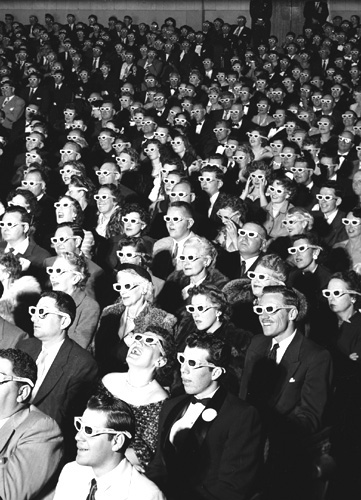
Hollywood execs need to be careful to not over-saturate the market with 3D, or the novelty value will be completely lost. History is littered with attempts to introduce new technology to cinemas that have faded away after a scant few years, often due to the standard of the films rather than the technology. (There have been several previous 3D fads, for example, dating back to the 1950s.) A 3D film should remain an event, or that much-feared viewer apathy will inevitably start to creep back in.

Fundamentally, I'd like a choice between seeing a film in 3D or 2D. Having been wowed by Avatar initially, my second viewing was interesting: I still greatly enjoyed it, but began to think that I could take or leave the 3D. And Avatar is a film that executes 3D probably better than any film ever made. I believe that there are only a select few films which merit the added expense of the third dimension, and such films should be made from the start with 3D in mind, rather than having it imposed as an afterthought.

I do not share the opinion of some that 3D is simply a pointless gimmick. I do believe that, used correctly, it can enhance enjoyment and immersion, as it did on my IMAX 3D viewing of Avatar. But it's not always justified, and bad 3D is far worse than no 3D at all. If Hollywood is not careful, this cash cow could soon be milked dry.
 
Design by Free WordPress Themes | Bloggerized by Lasantha - Premium Blogger Themes | Customised by FilmVerdict