Continuing a franchise when the original lead actor has called it quits is always a tricky proposition, and one that rarely leads to ongoing success. Instead of going the Bond route of recasting the main character, Tony Gilroy, writer of all the Bourne films and now promoted to director too, wisely chose to continue the same storyline with a new character at its centre. (It will be tricky to continue having "Bourne" in the title if Matt Damon's absence remains, though, but that will be a problem for any future instalments.) The Bourne Legacy hits a few early speed-bumps - mainly due to the inherent problems in restarting a narrative that has, essentially, ended - but Gilroy does find his groove, and the resulting film is probably far better than most expected.
[2/5] Cinema Review: The Amazing Spider-Man
The Spidey saga gets a reboot only a decade after it started. Rich finds out whether Marc Webb's new take manages to justify its existence...
[3/5] Cinema Review: Prometheus
Ridley Scott reaches for the stars as he returns to the Alien universe. Does he bite off more than he can chew?
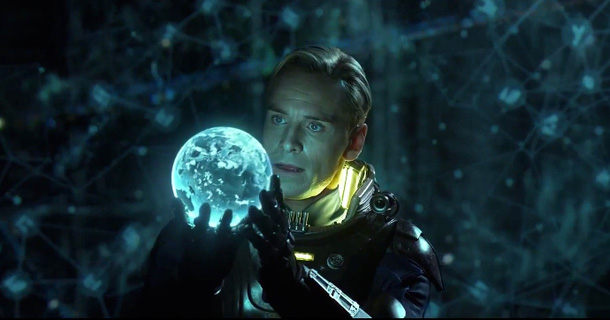
Cinema Review: The Dark Knight Rises (2012)
Hype: it's a blessing and a curse. If a film receives a lot of it, it must be onto something good. But it can also be cruel, building up expectations that no film could hope to meet. When the hype reaches fever pitch levels, as it has for The Dark Knight Rises, there's an even greater height from which to fall, and an even greater potential for backlash from a disappointed fanbase.
The Dark Knight Rises surpasses the hype.
Categories:
5-Star Films,
Cinema Review
Cinema Review: The Amazing Spider-Man (2012)
As a general rule, the current average cinemagoer likes to know exactly what they're getting with any given film. Anything that's slightly challenging or unexpected tends to face a backlash and invariably slumps at the box office, a few Christopher Nolan-flavoured exceptions notwithstanding. That's a big reason why sequels are so popular - basically, audiences just want the same thing over and over again. The Amazing Spider-Man takes this to the extreme, because it is essentially a remake of a ten-year old film. It retells the same origin story that Sam Raimi's Spider-Man did, covering many of the exact same beats - spider bite, learning new powers, school bully, Uncle Ben, yada yada. The fact that it still manages to feel fresh and interesting is almost a miracle, and is mostly down to the excellent cast and director Marc Webb's more realistic take on the material.
Categories:
Cinema Review
Blu-ray Review: Hara-kiri - Death of a Samurai (2011)
Hara-kiri: Death of a Samurai is director Takashi Miike’s second dip into the waters of feudal Japan in as many years, and like the well received 13 Assassins (see my review – although note that I now like the film more than I did when I wrote it, enough to rank it my eighth favourite film of last year) it is a remake. The original in this instance, though not as well known as Kurosawa’s many samurai classics, is revered as a masterpiece, so Miike was taking a bit of a risk in updating it – in 3D no less. But, even more so than 13 Assassins, Hara-kiri is a restrained piece; largely contained within two small locations (a feudal lord’s palace, and an impoverished samurai’s own house) and with a marked economy of motion in both camera and actors.
Categories:
Blu-ray Review
Blu-ray Review: Super 8 (2011)
Super 8 sets its stall out early with its opening logos. After the familiar Paramount peak, we see a boy cycling in front of the moon: the Amblin logo, Steven Spielberg's company, its iconic motif of course spawned from E.T.. Only then is it followed by J.J. Abrams' Bad Robot insignia. Not only does it show just how reverently Abrams regards Spielberg, it also encapsulates the tone, subject matter and even time period of the film to follow. Super 8 is a shameless Spielberg riff through and through - and manages to be the best Spielberg film since the heyday of The Beard himself. A cinematic love child of Close Encounters and E.T., albeit with a rather less friendly alien beastie at its centre, Super 8 encapsulates exactly the sort of exuberant fun, married to real heart and soul, that propelled the young Spielberg to such unmatched heights of critical and commercial success.
Categories:
5-Star Films,
Blu-ray Review
Cinema Review: Prometheus (2012)
In the months prior to the release of Prometheus, Ridley Scott has been trying his hardest to distance his new film from Alien, refusing to call it a prequel. All the early signs suggested a prequel is exactly what it is, and indeed, in the sense that it depicts events that take place before those in the 1979 classic, it fulfils the prequel brief to a tee. However, expectant viewers should retain Sir Rid's comments in their head before watching, because Prometheus certainly doesn't play the simple join-the-dots game that may have been anticipated. It really doesn't dovetail much into Alien, and provides few clear answers to any of the burning questions, such as, "where is the alien from?" or "how did the derelict spaceship full of eggs end up crashed on that planet?" If answers are what you're here for, prepare to be disappointed.
Categories:
Cinema Review
Blu-ray Review: Braveheart (1995)
It's clear throughout Braveheart that it is very much Mel Gibson's baby. Gibson's typically Australian antagonism towards the English, continued in 2000's The Patriot, is given plenty of airing here. Taking on the unenviable task of both starring in and directing (for the first time) this monstrous, "they don't make 'em like this any more" three-hour epic, Gibson's lion-maned William Wallace dominates the film. The actor's Scottish accent may have been the subject of some ridicule since, but Gibson nails the essential charisma and physicality demanded by the part; you can understand why men would follow him into battle, and factor that the leading men in some subsequent historical pictures such as Alexander and Kingdom of Heaven have struggled to emulate. In the light of his subsequent directorial effort The Passion of the Christ, precursors in Gibson's direction can be identified, and indeed, the theme of heroic, selfless sacrifice is central to both, even if it takes up more of the running time in The Passion. (Wallace is even attached to a crucifix for the climactic torture sequence.)
Categories:
Blu-ray Review
Blu-ray Review: Mad Men, Season One (2007)
The likes of The Sopranos, The Wire and The West Wing now long gone, it has fallen to Mad Men to hold the current mantle of 'the best thing on TV'. The first venture into drama by US network AMC (who have since have a major hit with The Walking Dead), Mad Men started life as a relatively small and unassuming show, albeit one with a strong pedigree - creator Matt Weiner cut his teeth on The Sopranos. Four years later, it had won the Best Drama Emmy for each of its four seasons. Unlike previous Emmy hoarders, though, Mad Men has never quite caught on with the general public, its critical adoration and small but ardent fanbase keeping it alive despite low ratings.
Categories:
Blu-ray Review,
TV
Cinema Review: The Avengers (2012)
It's difficult to think of another film that has been teased for so long before finally appearing, so The Avengers (official UK title: Marvel Avengers Assemble, which I will ignore) has a lot to live up to. Beyond the usual trailers and TV spots, you could say that this film's marketing campaign has consisted of five actual movies: Iron Mans 1 and 2, The Incredible Hulk, Thor and Captain America. All of those films shared to varying degrees an identical problem: none of them felt like complete films within their own right, with that everpresent distraction of The Avengers lurking on the horizon. Laying such groundwork for a future film has been a ballsy plan by Marvel and a first in cinema, but the signs are that it will pay off big time. Finally, at last, here is a film with no obligation to build up to a figurative "To be continued". Sure, there will no doubt be further sequels, but this is the main event.
Categories:
Cinema Review
Blu-ray Review: Hugo (2011)
Hugo is Martin Scorsese at play. Never before has he had such a toolbox at his disposal. It is his first venture into 3D and also his most extensively effects-based movie yet, and the master does not disappoint. Hugo is a technical tour de force but also a completely enchanting picture, its extravagant effects and sumptuous production design used in the service of telling a charming story. Scorsese has said he made this film so that his 12-year-old daughter could finally watch one of his films, but Hugo isn't just a children's film; indeed, it will probably hold much more interest for adults, especially those with a love of Paris and cinema history.
Categories:
Blu-ray Review
Blu-ray Review: Wuthering Heights (2011)
After Red Road (2006) and Fish Tank (2009), a pair of highly acclaimed gritty urban dramas, Andrea Arnold is one of the current champions of British independent cinema. For her third feature, she has taken a detour to what initially sounds like costume drama territory: Emily Brontë's Wuthering Heights, the classic story of a doomed romance on the Yorkshire Moors. Unsurprisingly, though, the result is a big departure from the typical confines of heritage cinema. With its sparse dialogue, naturalistic filming style and occasionally uncompromising brutality it's designed to shock those expecting another Pride & Prejudice (although those with any knowledge of the story should know its harshness well enough already).
Categories:
Blu-ray Review
Blu-ray Review: Game of Thrones, Season 1 (2011)
Game of Thrones is HBO's latest sensation, and deservingly so. Based on George R.R. Martin's as-yet-unfinished series of novels called A Song of Ice and Fire, it's a fantasy saga that's more medieval than Middle-Earth. The title, taken from the first book of the series, could not be more apt, as the series' main preoccupation is the constant intrigue surrounding the seven kingdoms of Westeros, with numerous contenders claiming their right to the throne that unites them all. (The throne itself, made of hundreds of melted-down swords, is already an iconic image.) There's also the everpresent threat of an invasion of mysterious, demonic 'White Walkers' from the north, a frontier that is protected by a massive ice wall, which is where the pilot episode begins.
Categories:
5-Star Films,
Blu-ray Review,
TV
Blu-ray Review: Cleopatra (1963)
"Surely Cleopatra will come to mark the end of a Hollywood era... There will always be movies of course, and presumably better ones than there ever were before; and yet they won't be quite as grand, as foolish, as wonderful as they used to be." These were the prophetic words of Cleopatra publicist Nat Weiss, written in 1962 after his first viewing of the film. He's not wrong: you don't get films more grand or more foolish than Cleopatra, whose production woes are perhaps more legendary than the film itself. Star illnesses, production delays, director firings, studio relocations, and the real-life celebrity romance of celebrity romances - this one had the lot.
Categories:
Blu-ray Review
Cinema Review: John Carter (2012)
Since I saw it about two weeks ago, John Carter has already gone down in the record books as one of the most costly flops of all time. That will therefore be its legacy, rather than the quality (or otherwise) of the film itself, which is the criteria by which I intend to judge it. Clearly greenlighted in the wake of Avatar's success, John Carter's story shares superficial similarities, primarily the central theme of a normal Earthling thrust into an alien world, who then learns to adapt to the new world's ways and cultures. Disney's hype machine have made sure to point out that Avatar was in fact one of many sci-fi stories inspired by the John Carter tale, which is nearly a hundred years old, its origins being Edgar Rice Burroughs' A Princess of Mars, first published as a novel in 1917. The film's original title was John Carter of Mars - infinitely better than the totally bland moniker we ended up with.
Categories:
Cinema Review
Feature: The Top 10 Films of 2011
It's that time of year again, finally, when I roll out the Official Filmverdict Top 10 of the Year. What better time than the day the Oscars take place? Tonight's runners and riders at the big awards jamboree may be largely absent from this list (I haven't seen many of them, and several count as 2012 releases in the UK) but here are my favourites that I have seen from 2011...
Categories:
Features
Feature: Best of 2011 - The Contenders
January's nearly over, and I still haven't produced the annual Filmverdict Top 10 Films of the year.
Never fear! I have a good reason for this: I simply haven't seen as many of the best reviewed films to come out in the UK in 2011 as I like. I am, however, slowly catching up, now that several of them are being released for home viewing.
Well, that's not the only reason. I also haven't settled on the order yet. I find, when looking back, certain films I perhaps didn't love initially have grown on me, and others have gone down in my estimations, so the rankings may not reflect the star ratings I gave at the time, if I reviewed them.
Anyway, with the Oscar nominations having just been announced, I thought I'd offer a list of 'nominations' currently vying for a place in my own personal Top 10 Films of 2011. These are ordered alphabetically so that the order does not indicate preference.
The countdown commences...
Never fear! I have a good reason for this: I simply haven't seen as many of the best reviewed films to come out in the UK in 2011 as I like. I am, however, slowly catching up, now that several of them are being released for home viewing.
Well, that's not the only reason. I also haven't settled on the order yet. I find, when looking back, certain films I perhaps didn't love initially have grown on me, and others have gone down in my estimations, so the rankings may not reflect the star ratings I gave at the time, if I reviewed them.
Anyway, with the Oscar nominations having just been announced, I thought I'd offer a list of 'nominations' currently vying for a place in my own personal Top 10 Films of 2011. These are ordered alphabetically so that the order does not indicate preference.
- 127 Hours
- 13 Assassins
- The Adjustment Bureau
- The Adventures of Tintin: The Secret of the Unicorn
- Animal Kingdom
- Arrietty
- Black Swan
- Captain America: The First Avenger
- The Fighter
- The Girl With the Dragon Tattoo
- Green Lantern
- Harry Potter and the Deathly Hallows Part 2
- Morning Glory
- The Next Three Days
- Paul
- Rise of the Planet of the Apes
- Sherlock Holmes: A Game of Shadows
- Source Code
- Super 8
- True Grit
- TT3D: Closer to the Edge
- The Way Back
The countdown commences...
Categories:
Features
Cinema Review: The Girl With the Dragon Tattoo (2011)
The craze for 'Nordic Noir' has been sweeping the nation in recent times, thanks largely to Danish TV show The Killing - already remade in the US - and, especially, Stieg Larsson's bestselling "Millennium" trilogy of novels, beginning with The Girl With the Dragon Tattoo. Having already been adapted to film in its native Sweden, now Hollywood has jumped on this bandwagon too. Normally the prospect of an American remake of a successful foreign film is likely to induce groans and scorn, but this time things seem a little different, thanks largely to the man in the director's chair, David Fincher. Never a simple director for hire, Fincher evidently saw a story that he felt able to put his stamp on, and financial backers Sony were only too happy to oblige him, coming off the critical heat of The Social Network.
After the departures of The Social Network and The Curious Case of Benjamin Button, this does have the air of Fincher getting back to his old stomping ground of the gritty adult thriller. For those who have, like me, managed to avoid both the books and the Swedish films, the plot revolves around a murder mystery. Disgraced journalist Mikael Blomkvist (Daniel Craig) is recruited by an elderly corporate magnate (Christopher Plummer) to investigate the unsolved disappearance of his daughter forty years ago. Plummer's Henrik Vanger lives on his own island, which is also home to many members of his dysfunctional family, and Blomkvist moves into an empty house there to commence his investigation. Where the titular Girl comes into it is uncertain for a good half of the running time. During this period, Fincher frequently cuts back and forth between Blomkvist and tattooee Lisbeth Salander, their plotlines remaining separate until he eventually recruits her as his research assistant.
The search for an actress who could play this extremely complex, forbidding character - she's a outcast loner rocking a goth/punk look, declared socially incapable by the state, and a computer genius, her frightening exterior hiding a vulnerable, sensitive soul - was legendarily extensive, but Fincher eventually admitted that the best choice was an actress who he worked with in The Social Network, Rooney Mara. Great choice. She is incredible, completely submerging herself in the character, managing to be completely convincing in her every skill and nuance. There's an incredibly fine line to walk with this character, but Mara balances on it like an expert. Noomi Rapace received stellar notices for her original take, but I find it hard to believe Mara fails to equal her.
Fincher exhibits a confidence throughout that evinces justified faith in the source material. An attention-grabbing title sequence that recalls the similarly creative openings of Se7en and Fight Club starts us off with unexpected gusto, but the ensuing opening of the film proper is a little bewildering, throwing several characters at us, thickly accented dialogue (although Craig keeps his own natural accent) and some apparently unmotivated intercutting. Never fear, though, for we are in the hands of a master: before long the plot chrystallises and its grip tightens like a vice as the temperature plummets. As soon as Blomkvist's interest is piqued on learning of this missing girl, so is ours. Just try turning away from the screen during the next two hours.
The cross-cutting between Blomkvist and Salander for the first half does make for an occasionally lurching pace, but the rhythm soon settles down. The tempo feels akin to Zodiac, as does Fincher's masterful use of time-compressing montage, but this is a film whose thrills are more immediate, though no less intense. Its fictional origins also allow its mystery to be solved in a way that Zodiac's couldn't be, and it's a resolution that's unforeseen, satisfying, and slightly convenient all at once. The search for the killer proves, ultimately, to be a little bit of a red herring, as the film continues for a stretch after the big reveal. It is then that the film reveals itself to really be about its lead pairing, whose relationship is fascinating and perfectly judged. Structurally, the shape of the narrative doesn't quite fit the template, but that is presumably down to the source. And anyway, what would Fincher want with something conventional?

Summary
Fans of the novel and/or the Swedish film(s) may have a different perspective, but The Girl With the Dragon Tattoo is utterly compelling, and looks a lot like a new Fincher masterpiece. A word of warning, though: its original Swedish title, Men Who Hate Women, gives a clue to its uncompromising content.

After the departures of The Social Network and The Curious Case of Benjamin Button, this does have the air of Fincher getting back to his old stomping ground of the gritty adult thriller. For those who have, like me, managed to avoid both the books and the Swedish films, the plot revolves around a murder mystery. Disgraced journalist Mikael Blomkvist (Daniel Craig) is recruited by an elderly corporate magnate (Christopher Plummer) to investigate the unsolved disappearance of his daughter forty years ago. Plummer's Henrik Vanger lives on his own island, which is also home to many members of his dysfunctional family, and Blomkvist moves into an empty house there to commence his investigation. Where the titular Girl comes into it is uncertain for a good half of the running time. During this period, Fincher frequently cuts back and forth between Blomkvist and tattooee Lisbeth Salander, their plotlines remaining separate until he eventually recruits her as his research assistant.
The search for an actress who could play this extremely complex, forbidding character - she's a outcast loner rocking a goth/punk look, declared socially incapable by the state, and a computer genius, her frightening exterior hiding a vulnerable, sensitive soul - was legendarily extensive, but Fincher eventually admitted that the best choice was an actress who he worked with in The Social Network, Rooney Mara. Great choice. She is incredible, completely submerging herself in the character, managing to be completely convincing in her every skill and nuance. There's an incredibly fine line to walk with this character, but Mara balances on it like an expert. Noomi Rapace received stellar notices for her original take, but I find it hard to believe Mara fails to equal her.
Fincher exhibits a confidence throughout that evinces justified faith in the source material. An attention-grabbing title sequence that recalls the similarly creative openings of Se7en and Fight Club starts us off with unexpected gusto, but the ensuing opening of the film proper is a little bewildering, throwing several characters at us, thickly accented dialogue (although Craig keeps his own natural accent) and some apparently unmotivated intercutting. Never fear, though, for we are in the hands of a master: before long the plot chrystallises and its grip tightens like a vice as the temperature plummets. As soon as Blomkvist's interest is piqued on learning of this missing girl, so is ours. Just try turning away from the screen during the next two hours.
The cross-cutting between Blomkvist and Salander for the first half does make for an occasionally lurching pace, but the rhythm soon settles down. The tempo feels akin to Zodiac, as does Fincher's masterful use of time-compressing montage, but this is a film whose thrills are more immediate, though no less intense. Its fictional origins also allow its mystery to be solved in a way that Zodiac's couldn't be, and it's a resolution that's unforeseen, satisfying, and slightly convenient all at once. The search for the killer proves, ultimately, to be a little bit of a red herring, as the film continues for a stretch after the big reveal. It is then that the film reveals itself to really be about its lead pairing, whose relationship is fascinating and perfectly judged. Structurally, the shape of the narrative doesn't quite fit the template, but that is presumably down to the source. And anyway, what would Fincher want with something conventional?

Summary
Fans of the novel and/or the Swedish film(s) may have a different perspective, but The Girl With the Dragon Tattoo is utterly compelling, and looks a lot like a new Fincher masterpiece. A word of warning, though: its original Swedish title, Men Who Hate Women, gives a clue to its uncompromising content.
Categories:
5-Star Films,
Cinema Review
Cinema Review: War Horse (2012)
Steven Spielberg has said numerous times that one of his favourite films is Lawrence of Arabia, so much so that he supposedly watches it before starting production on every movie he makes. War Horse is perhaps the first time that Spielberg’s reverence for David Lean has clearly manifested itself on screen. Its moments of Leanesque grandeur – especially a massed cavalry charge that recalls Doctor Zhivago, albeit with less snow – sit comfortably with more intimate character beats, as exemplified in Lean’s epics. Spielberg is a director whose own style is far from anonymous, however, and he adds his signature crowd-pleasing bravado and penchant for sentimentality to the mix. That heady concoction coalesces to form one of the more satisfying films in the director’s recent career, and a pleasing throwback to old-fashioned Hollywood in the best possible way.
War Horse has its origins in a Michael Morpurgo children’s novella, but the catalyst for this film was the acclaimed West End stage play that gave Spielberg the belief that this narrative originally told from a horse’s first person perspective could be transformed into a film. It’s a real weepie too, wearing its heart on its sleeve as to few films have the confidence to do any more; some moments teeter into mawkishness, especially in the early going, but the sheer sincerity wins you over. The story follows horse Joey from birth in rural Dartmoor through battle in the First World War. During this time he is owned/adopted by numerous people, from farmhand Albert (newcomer Jeremy Irvine, endearing if over-earnest at times) – whose father buys thoroughbred Joey despite his being utterly unsuited to ploughing work – who is the film’s main human protagonist, to an English officer, to a pair of young deserting German solders. Keeping its attention for the most part on Joey, the film is unavoidably episodic but it doesn’t prove to be a drawback in this instance as each individual episode is heartwarming and/or gripping within its own right.
Never shy of a barnstorming set-piece, Spielberg delivers some humdingers here. The aforementioned horse charge is superb, as the British cavalry emerge from fields of tall wheat and sweep through a German encampment. There’s also a prolonged detour into the Battle of the Somme, one of the few times the narrative departs from Joey, which, while owing something to Kubrick’s Paths of Glory as with every subsequent film featuring trench warfare, instantly brings to mind Saving Private Ryan: there’s still no-one better in the business at shooting war. Having said that, War Horse doesn’t replicate the gritty, washed out look that everyone copied after Ryan; it takes a very beautiful classical approach, and is probably the most gorgeously lensed film to come from the Spielberg/Janusz Kaminski partnership. Some could criticise it for being too romanticised, with Dartmoor perpetually bathed in golden sunshine, not to mention the most perfectly cinematic sunset since Gone With the Wind, and even the trenches have an eerie, ethereal beauty.
Spielberg may not quite have the box office clout he used to but he’s still a master manipulator of the emotions. He plays the audience like a fiddle throughout, eliciting laughs, shocks, and a few tears with perfect timing and judgment. One standout scene is a quiet one in which an English and German soldier team up to free Joey from some barbed wire is funny but completely natural and human, not to mention really moving, highlighting the basic insanity of war. Seeing War Horse with a full audience is a joy, as the audience gasps and laughs along in unison. Only the best movies sweep you along as War Horse manages to. It never flinches from the harsh reality but remains a cross-generational crowdpleaser. It’s what event movies used to be like.

Summary
Just as with his recent Tintin, I find myself using the word ‘old-fashioned’ when describing Spielberg’s War Horse, but it’s a word I use in an entirely complimentary sense. War Horse is grand, thrilling entertainment, providing the sort of excitement, emotion and catharsis for which the cinema exists.

War Horse has its origins in a Michael Morpurgo children’s novella, but the catalyst for this film was the acclaimed West End stage play that gave Spielberg the belief that this narrative originally told from a horse’s first person perspective could be transformed into a film. It’s a real weepie too, wearing its heart on its sleeve as to few films have the confidence to do any more; some moments teeter into mawkishness, especially in the early going, but the sheer sincerity wins you over. The story follows horse Joey from birth in rural Dartmoor through battle in the First World War. During this time he is owned/adopted by numerous people, from farmhand Albert (newcomer Jeremy Irvine, endearing if over-earnest at times) – whose father buys thoroughbred Joey despite his being utterly unsuited to ploughing work – who is the film’s main human protagonist, to an English officer, to a pair of young deserting German solders. Keeping its attention for the most part on Joey, the film is unavoidably episodic but it doesn’t prove to be a drawback in this instance as each individual episode is heartwarming and/or gripping within its own right.
Never shy of a barnstorming set-piece, Spielberg delivers some humdingers here. The aforementioned horse charge is superb, as the British cavalry emerge from fields of tall wheat and sweep through a German encampment. There’s also a prolonged detour into the Battle of the Somme, one of the few times the narrative departs from Joey, which, while owing something to Kubrick’s Paths of Glory as with every subsequent film featuring trench warfare, instantly brings to mind Saving Private Ryan: there’s still no-one better in the business at shooting war. Having said that, War Horse doesn’t replicate the gritty, washed out look that everyone copied after Ryan; it takes a very beautiful classical approach, and is probably the most gorgeously lensed film to come from the Spielberg/Janusz Kaminski partnership. Some could criticise it for being too romanticised, with Dartmoor perpetually bathed in golden sunshine, not to mention the most perfectly cinematic sunset since Gone With the Wind, and even the trenches have an eerie, ethereal beauty.
Spielberg may not quite have the box office clout he used to but he’s still a master manipulator of the emotions. He plays the audience like a fiddle throughout, eliciting laughs, shocks, and a few tears with perfect timing and judgment. One standout scene is a quiet one in which an English and German soldier team up to free Joey from some barbed wire is funny but completely natural and human, not to mention really moving, highlighting the basic insanity of war. Seeing War Horse with a full audience is a joy, as the audience gasps and laughs along in unison. Only the best movies sweep you along as War Horse manages to. It never flinches from the harsh reality but remains a cross-generational crowdpleaser. It’s what event movies used to be like.

Summary
Just as with his recent Tintin, I find myself using the word ‘old-fashioned’ when describing Spielberg’s War Horse, but it’s a word I use in an entirely complimentary sense. War Horse is grand, thrilling entertainment, providing the sort of excitement, emotion and catharsis for which the cinema exists.
Categories:
5-Star Films,
Cinema Review
Blu-ray Review: Transformers - Dark of the Moon (2011)
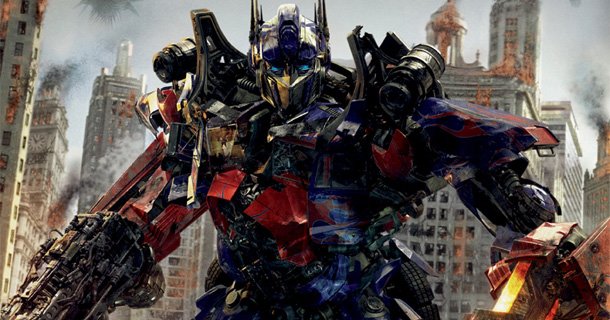
For his third bite at the Transformers cherry, Michael Bay has gone back to the drawing board, or at least made a gesture in that direction. After the cacophonous Revenge of the Fallen, a film Bay himself has admitted some shortcomings of (which can’t have been helped by the writer’s strike forcing a half-written script to be produced), Dark of the Moon feels slightly more in the vein of the first, successful, outing. Bay certainly hasn’t reinvented the wheel, and indeed this third instalment is no less bombastic than its processor (more, perhaps, if that’s possible), but it is less muddled and convoluted. In fact, after misguidedly trying to forge some sort of epic mythology in the second film, this time it’s relatively more streamlined, with a more straightforward plot. The opening ten-minute prologue sets it all up nicely, showing how an Autobot ship crashlanding on the moon was the catalyst for NASA’s Apollo missions. A clever melding of actual archive footage and CG-assisted reconstructions delivers the necessary exposition efficiently, allowing the rest of the film to move forward without getting too bogged down.
Unfortunately, but predictably, the first hour or so thereafter is largely uninspiring. We’re back with Shia LaBeouf’s Sam Witwicky and his new implausibly hot girlfriend played by English model Rosie Huntington-Whiteley, Bay and Megan Fox having had a public spat. Her replacement is not quite as awful as you might expect in the acting department, but her role is as token as it gets (look great in spotless white clothes while running though scenes of massive destruction). LaBeouf has marginally toned down his manic antics and thankfully a lot of the dead weight characters from the prior films have been dropped, replaced by a some enjoyable newcomers like an orange John Malkovich, smarmy Patrick Dempsey, and the grizzled voice of Leonard Nimoy but this first hour still feels slightly aimless. Also trimmed is the writing team, Ehren Kruger now receiving sole credit, but that hasn’t eliminated the traditional Transformers propensity for gaping plot holes. As suspected, it proves largely to be just treading water to delay the grandstand finale, which consists of an hour or more of alarmingly scaled carnage.
Bay knows how to put his budget on screen like few others. The finale basically sees the whole of Chicago engulfed in mechanised warfare, and it’s thrillingly staged, if a little overextended at points (e.g. when an enormous Decepticon worm-thing demolishes a skyscraper, which goes on far too long). It’s spectacle in its purest form, narrative cast by the wayside in the quest for ever bigger bangs, which could be a good or a bad thing. For my part, I must admit, on a visceral level I found it extraordinary. It’s rare to see scale this monumentally huge, and despite all Bay’s detractors, he can certainly construct an action scene. For the most part the geography remains clear and concise, and he tends to hold back slightly from his music video cut-cut-cut style, allowing each shot a bit more time to breathe and the viewer more time to take it all in (it’s hardly Kubrick, though). This may be a consequence of his employing 3D for the first time. It’s a combination that seems a recipe for a headache, but Bay’s wise easing of his more ADHD tendencies pays off, even when watching in good old two dimensions. Strangely, given all the bombast, the end is again abrupt, as if Bay is saying, “Right, you’ve got what you paid for, so I’m done.”

Release Information
Country: UK / Region: Free / Version: N/A / Discs: 1 / Distributor: Paramount
Presentation
As you'd expect, the disc is a treat for the eyes and ears - an advert for Blu-ray. The film was mostly shot digitally in native 3D (this Blu-ray is 2D), but it looks very filmlike throughout, albeit retaining Bay's usual penchant for extremely saturated colours. Detail and clarity is beyond reproach and the effects are seamless. The soundtrack comes in Dolby TrueHD 7.1 - Paramount being one of the only studios preferring Dolby to DTS-HD these days - and it's fantastic, making some of the best use of surround sound I've ever heard. With endless depth, impact and nuance, it's beyond reproach.
Extras
Nothing whatsoever - Paramount are saving them for the 3D edition.

Summary
A definite improvement over the second film, Dark of the Moon is no revelation but it does deliver everything most fans could want out of a Transformers flick, never skimping on the phenomenal action.


Unfortunately, but predictably, the first hour or so thereafter is largely uninspiring. We’re back with Shia LaBeouf’s Sam Witwicky and his new implausibly hot girlfriend played by English model Rosie Huntington-Whiteley, Bay and Megan Fox having had a public spat. Her replacement is not quite as awful as you might expect in the acting department, but her role is as token as it gets (look great in spotless white clothes while running though scenes of massive destruction). LaBeouf has marginally toned down his manic antics and thankfully a lot of the dead weight characters from the prior films have been dropped, replaced by a some enjoyable newcomers like an orange John Malkovich, smarmy Patrick Dempsey, and the grizzled voice of Leonard Nimoy but this first hour still feels slightly aimless. Also trimmed is the writing team, Ehren Kruger now receiving sole credit, but that hasn’t eliminated the traditional Transformers propensity for gaping plot holes. As suspected, it proves largely to be just treading water to delay the grandstand finale, which consists of an hour or more of alarmingly scaled carnage.
Bay knows how to put his budget on screen like few others. The finale basically sees the whole of Chicago engulfed in mechanised warfare, and it’s thrillingly staged, if a little overextended at points (e.g. when an enormous Decepticon worm-thing demolishes a skyscraper, which goes on far too long). It’s spectacle in its purest form, narrative cast by the wayside in the quest for ever bigger bangs, which could be a good or a bad thing. For my part, I must admit, on a visceral level I found it extraordinary. It’s rare to see scale this monumentally huge, and despite all Bay’s detractors, he can certainly construct an action scene. For the most part the geography remains clear and concise, and he tends to hold back slightly from his music video cut-cut-cut style, allowing each shot a bit more time to breathe and the viewer more time to take it all in (it’s hardly Kubrick, though). This may be a consequence of his employing 3D for the first time. It’s a combination that seems a recipe for a headache, but Bay’s wise easing of his more ADHD tendencies pays off, even when watching in good old two dimensions. Strangely, given all the bombast, the end is again abrupt, as if Bay is saying, “Right, you’ve got what you paid for, so I’m done.”

Release Information
Country: UK / Region: Free / Version: N/A / Discs: 1 / Distributor: Paramount
Presentation
As you'd expect, the disc is a treat for the eyes and ears - an advert for Blu-ray. The film was mostly shot digitally in native 3D (this Blu-ray is 2D), but it looks very filmlike throughout, albeit retaining Bay's usual penchant for extremely saturated colours. Detail and clarity is beyond reproach and the effects are seamless. The soundtrack comes in Dolby TrueHD 7.1 - Paramount being one of the only studios preferring Dolby to DTS-HD these days - and it's fantastic, making some of the best use of surround sound I've ever heard. With endless depth, impact and nuance, it's beyond reproach.
Extras
Nothing whatsoever - Paramount are saving them for the 3D edition.

Summary
A definite improvement over the second film, Dark of the Moon is no revelation but it does deliver everything most fans could want out of a Transformers flick, never skimping on the phenomenal action.
Categories:
Blu-ray Review
Feature: Harry Potter Marathon, Epilogue
After watching all eight films in the space of a week, I feel like I've known Harry Potter for years. I do slightly regret not seeing them before now, and particularly I can imagine seeing the final film with a cinema audience could have been a great communal experience. Also in my sprint through the films perhaps I slightly missed out on the anticipation that would build from film to film, but on the other hand, I feel that the wait between each instalment might have been too frustrating, given each film's reluctance to be truly satisfying in its own right.
I definitely have a newfound respect for J.K. Rowling after watching the series; her imagination is extraordinary. Even if many of the individual elements of her mythos are familiar fantasy tropes, they've never been combined in this way before, and I'm certain that her saga is unique and will probably remain so; it's unlikely that something similar will come along again.
The success of the series in both the filmic and literary worlds still seems remarkable, despite the evident quality of both. Few film series have manage to last so long and hold onto so much of their core audience, especially in such a serialised format that discourages new viewers mid-series (as it did me). The fact that the final film was the highest grossing film in the series shows that the filmmakers and Rowling certainly got a great deal right, and even before the big finale, the box office consistency ($900 million worldwide or thereabouts each time) is unparalleled. Sure, if you were being pedantic, you could argue that accounting for ticket price inflation the audiences gradually decreased in number, but that doesn't lessen the achievement.
The first film launched soon before that other blockbuster fantasy series The Lord of the Rings, and compared to the Peter Jackson trilogy Potter was never as successful in its adaptation of the books so suffered in comparison; the critical acclaim and awards recognition that the former received has never been quite matched. In some ways, you could say screenwriter Steve Kloves had a tougher job than Jackson and his collaborators in that he was adapting a series that was still being written and so did not know what elements would later become important, thereby making the necessary trimming that much more difficult. The first two films were accordingly very conservative adaptations; it's only when the books grew longer and the directors more adventurous that the stories became truly filmic.
From the third film onwards, Potter managed to come into its own. Azkaban was the first film to really gave hints of the heights the series could attain, and remains a high water mark five films later. Looking back, though, it probably isn't quite my favourite one. I'd rank them in this order, worst to best:
8. Philosopher's Stone - The hesitant first steps, hampered by poor acting from its inexperienced lead actors, cheap looking effects and a lack of purpose and plot.
7. Chamber of Secrets - A big improvement from the first, but still slightly lacking in terms of pacing and narrative construction.
6. Order of the Phoenix - A downbeat middle chapter which I find I like more in hindsight than I did while watching it.
5. Deathly Hallows Part One - Too meandering for its own good, but an engrossing and enjoyably character-driven set-up for the finale.
4. Goblet of Fire - Seems to be unfairly maligned by hardcore fans, but I found it a fun, action-packed adventure with great drive and humour.
3. Deathly Hallows Part Two - The emotional, epic finale delivered just about everything I wanted.
2. Prisoner of Azkaban - When Potter really started to mean business. The most beautiful film of the series with a superb second half, a real sense of threat and great acting.
1. Half-Blood Prince - The Potter formula honed to its most thrilling and gripping point. Darkly compelling, with a killer (literally) ending, entertaining character beats and everything you'd want from a year at Hogwarts.
That's that, then. Twenty years of work from the author, ten years by the filmmakers, and a week for me to watch. I do regret not seeing the films before now, but I'm glad I finally have. Their success is deserved. It has been fun.
I definitely have a newfound respect for J.K. Rowling after watching the series; her imagination is extraordinary. Even if many of the individual elements of her mythos are familiar fantasy tropes, they've never been combined in this way before, and I'm certain that her saga is unique and will probably remain so; it's unlikely that something similar will come along again.
The success of the series in both the filmic and literary worlds still seems remarkable, despite the evident quality of both. Few film series have manage to last so long and hold onto so much of their core audience, especially in such a serialised format that discourages new viewers mid-series (as it did me). The fact that the final film was the highest grossing film in the series shows that the filmmakers and Rowling certainly got a great deal right, and even before the big finale, the box office consistency ($900 million worldwide or thereabouts each time) is unparalleled. Sure, if you were being pedantic, you could argue that accounting for ticket price inflation the audiences gradually decreased in number, but that doesn't lessen the achievement.
The first film launched soon before that other blockbuster fantasy series The Lord of the Rings, and compared to the Peter Jackson trilogy Potter was never as successful in its adaptation of the books so suffered in comparison; the critical acclaim and awards recognition that the former received has never been quite matched. In some ways, you could say screenwriter Steve Kloves had a tougher job than Jackson and his collaborators in that he was adapting a series that was still being written and so did not know what elements would later become important, thereby making the necessary trimming that much more difficult. The first two films were accordingly very conservative adaptations; it's only when the books grew longer and the directors more adventurous that the stories became truly filmic.
From the third film onwards, Potter managed to come into its own. Azkaban was the first film to really gave hints of the heights the series could attain, and remains a high water mark five films later. Looking back, though, it probably isn't quite my favourite one. I'd rank them in this order, worst to best:
8. Philosopher's Stone - The hesitant first steps, hampered by poor acting from its inexperienced lead actors, cheap looking effects and a lack of purpose and plot.
7. Chamber of Secrets - A big improvement from the first, but still slightly lacking in terms of pacing and narrative construction.
6. Order of the Phoenix - A downbeat middle chapter which I find I like more in hindsight than I did while watching it.
5. Deathly Hallows Part One - Too meandering for its own good, but an engrossing and enjoyably character-driven set-up for the finale.
4. Goblet of Fire - Seems to be unfairly maligned by hardcore fans, but I found it a fun, action-packed adventure with great drive and humour.
3. Deathly Hallows Part Two - The emotional, epic finale delivered just about everything I wanted.
2. Prisoner of Azkaban - When Potter really started to mean business. The most beautiful film of the series with a superb second half, a real sense of threat and great acting.
1. Half-Blood Prince - The Potter formula honed to its most thrilling and gripping point. Darkly compelling, with a killer (literally) ending, entertaining character beats and everything you'd want from a year at Hogwarts.
That's that, then. Twenty years of work from the author, ten years by the filmmakers, and a week for me to watch. I do regret not seeing the films before now, but I'm glad I finally have. Their success is deserved. It has been fun.
Categories:
Features,
Harry Potter
Subscribe to:
Posts (Atom)


